Ever typed something into Google and wondered why one website shows up first while a hundred others are buried on page five? That’s SEO at work. It’s one of those terms that gets thrown around constantly in marketing meetings, yet most people who use it can’t fully explain what it does behind the scenes.
This guide explains what is SEO in digital marketing really means, how it works, why it matters, and how you can start using it whether you’re running a small business site or managing marketing for a bigger brand.
Here’s a number worth keeping in mind: the vast majority of online experiences start with a search engine, and most people never scroll past the first page of results. If your business isn’t showing up there, you’re essentially invisible to a huge chunk of your potential audience.
What Is SEO, Exactly?
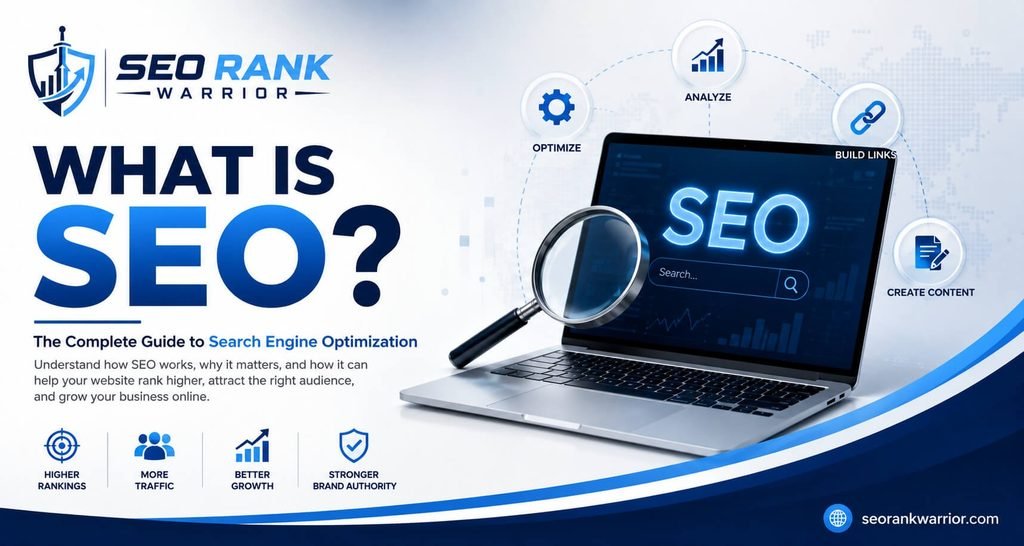
SEO stands for Search Engine Optimization. In simple terms, it’s the process of shaping your website its content, structure, and reputation so that search engines like Google rank it higher for relevant searches. In digital marketing, that translates into free traffic. No ad spend, no bidding wars, just people finding your site because it genuinely matches what they were looking for.
That’s the part that separates SEO from something like PPC advertising. With paid ads, visibility disappears the moment you stop paying. SEO works differently it’s slower to build, but once you’ve earned those rankings, they tend to stick around and keep sending traffic your way month after month.
Why Does SEO Matter So Much in Digital Marketing?
Ask any marketer why SEO deserves a spot in their strategy, and you’ll probably get a version of the same answer: it’s one of the few channels that keeps paying off long after the initial work is done.
It keeps working after you stop paying attention.
Traffic from SEO doesn’t stop the second your budget runs dry. A page that ranks well can keep pulling in visitors for years with little extra effort. There’s also a trust factor — people tend to click on organic results more readily than ads, partly because ranking well feels like an implicit endorsement from Google itself.
It attracts people who are ready to act.
Someone searching “best CRM for small business” isn’t casually browsing they’re actively looking for a solution, which makes SEO traffic some of the highest-converting traffic you can get.
It’s cheaper than it looks.
SEO isn’t free it takes time, sometimes tools, occasionally outside help but per lead, it’s usually far cheaper than running ads indefinitely. And the side effects aren’t bad either:
- Faster load times benefit every visitor, not just search` engines
- Cleaner navigation reduces bounce rates
- A well-structured site supports every other marketing channel — content, email, even paid ads perform better on top of it.
How Search Engines Actually Work

Before optimizing anything, it helps to understand what’s happening under the hood. Search engines send out automated programs called crawlers (Google’s is nicknamed Googlebot) that constantly scan the web, following links from page to page, gathering information about what each one contains. Everything they find gets stored in a massive database called an index.
When someone runs a search, the engine searches that index, not the live internet, then ranks matching pages using an algorithm that factors in hundreds of signals — relevance, page speed, trustworthy links, and plenty more Google keeps close to the chest. SEO, at its core, is just the practice of aligning your site with those signals as closely as possible.
The Three Pillars of SEO
Most SEO work falls into one of three buckets.
On-page SEO
Everything you control directly on your own site:
- Keyword placement in titles, headings, and body content
- The quality and originality of the writing itself
- Meta titles and meta descriptions
- Internal links between related pages
- Image alt text and file sizes
- Clean, descriptive URLs
Off-page SEO
What happens outside your website that still affects your rankings:
- Backlinks from credible, relevant sites the big one
- Brand mentions and citations
- Social shares and engagement
- Guest posts and digital PR outreach
Technical SEO
The plumbing making sure search engines can actually crawl, load, and understand your site without hitting obstacles:
- Fast load times and healthy Core Web Vitals
- Mobile-friendly, responsive layout
- HTTPS security
- A sensible, crawlable site structure
- Structured data (schema markup) to help search engines interpret content correctly
What Actually Influences Rankings
Google has never published its full ranking algorithm, and it probably never will. But years of testing and observation across the SEO industry have narrowed things down to a handful of factors that consistently matter:
| Factor | Why It Matters |
| Content quality & relevance | Search engines favor content that genuinely answers the query |
| Keywords & search intent | Matches your page to what people are actually typing |
| Backlinks | Act as a vote of confidence from other sites |
| Page experience (speed, mobile UX) | Affects how easily people can actually use your content |
| E-E-A-T (Experience, Expertise, Authority, Trust) | Google’s framework for judging credibility |
| Technical health | Broken links and crawl errors quietly tank visibility |
SEO and Content Marketing Are Basically Partners
These two get used almost interchangeably sometimes, but they’re not the same thing. Content marketing is about creating things worth reading guides, blog posts, case studies, videos. SEO makes sure people actually find that content instead of it sitting there unseen.
The hub-and-spoke model
A structure a lot of marketers lean on:
- Pick one central “hub” page for a core topic
- Build supporting blog posts (“spokes”) that dig into related subtopics
- Link everything back to the hub
This matters even more now because of E-E-A-T original research and real expertise are exactly what search engines, and increasingly AI tools generating answers, look for when deciding what deserves to rank.
White Hat vs. Black Hat SEO
Worth knowing the difference before you start reading random “SEO hacks” online.
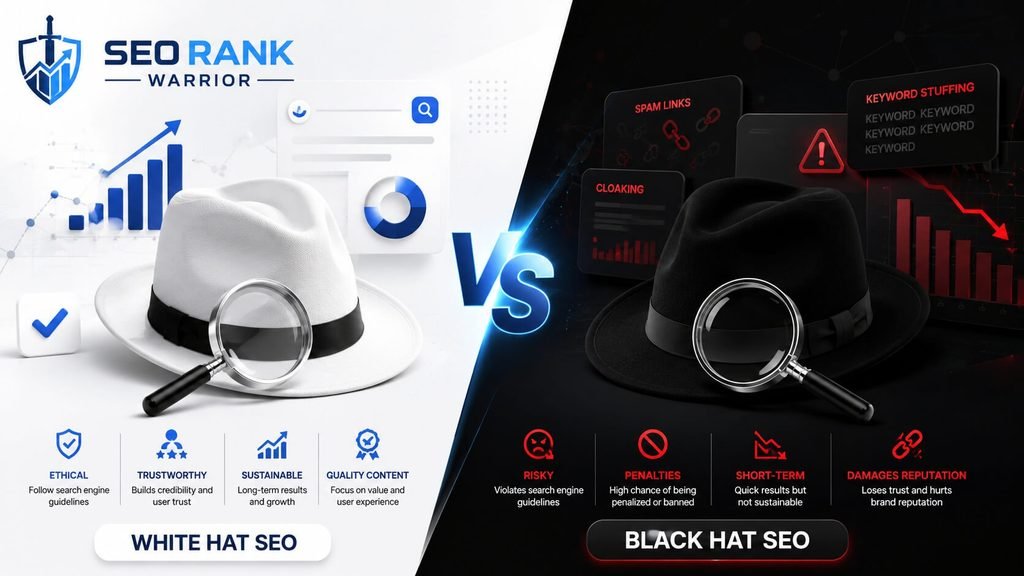
White hat SEO
Plays by the rules search engines actually recommend:
- Solid, original content
- Legitimate, earned backlinks
- Real attention to user experience
It’s slower, but it lasts.
Black hat SEO
Tries to game the system through shortcuts:
- Keyword stuffing
- Hidden text or cloaking
- Buying links in bulk
Sometimes it works for a while, then Google catches on, and the penalty can wipe out rankings overnight. Not worth the risk for a real business.
Mistakes That Quietly Kill SEO Efforts
A few things trip up even people who’ve been doing this for years:
- Keyword stuffing. An old habit that still shows up cramming a keyword into every other sentence until the writing sounds unnatural.
- Ignoring search intent. You can rank for a keyword and still fail if your content doesn’t match what the searcher actually wanted.
- Thin or duplicate content. Rarely ranks well, and copying content from elsewhere can hurt your site’s credibility.
- Neglecting mobile experience. Most searches now happen on phones a clunky mobile site will quietly bleed rankings.
- Skipping technical audits. Broken links or crawl errors can sit there unnoticed, blocking search engines from finding your best work.
Don’t Forget Local SEO
If your business has a physical location or serves a specific area, local SEO deserves its own attention optimizing your Google Business Profile, local citations, and location-based keywords so you show up in local search and map listings. For restaurants, clinics, law firms, or any service business relying on nearby customers, this can matter as much as anything else here.
SEO vs. SEM — Not the Same Thing
People mix these up constantly. SEO earns organic rankings through optimization no direct payment involved. SEM (Search Engine Marketing) usually refers to paid search, like Google Ads campaigns where you’re bidding for placement. Most solid digital marketing strategies use both SEM for quick visibility while SEO builds toward something more sustainable.
Getting Started With SEO: A Practical Starting Point
If you’re starting from zero, here’s roughly where to begin:
- Do your keyword research first. Tools like Google Keyword Planner, Ahrefs, or SEMrush can show you what your audience is actually searching for.
- Audit what you already have. Look for slow pages, broken links, missing meta tags the stuff quietly holding your site back.
- Write content that actually answers the question. Not just content that mentions the keyword content that’s genuinely more useful than what’s currently ranking.
- Clean up your on-page elements. Titles, headers, meta descriptions, internal links all built around what you’re trying to rank for.
- Start building authority. Outreach, guest content, digital PR anything that earns legitimate backlinks over time.
Where AI Search Fits Into All of This

Search is shifting. Beyond classic SEO, a few newer terms are worth knowing:
- AEO (Answer Engine Optimization) structuring content so it directly answers questions, which helps with featured snippets and voice search
- AIO (AI Optimization) making sure AI tools and chatbots can actually parse and summarize your content correctly
- GEO (Generative Engine Optimization) creating the kind of authoritative, well-organized content that generative search tools like Google AI Overviews or ChatGPT search pull from when generating answers
The thread connecting all four is basically the same thing SEO has always been about: clear, well-structured, genuinely useful content that actually answers what people are asking.
FAQs – What Is SEO in Digital Marketing?
What does SEO stand for in digital marketing?
SEO stands for Search Engine Optimization the practice of improving a website so it ranks higher in organic search results.
How long does SEO actually take to work?
Most sites start seeing measurable movement within 3 to 6 months, though competitive industries can take longer before rankings really shift.
Is SEO still worth it with AI search tools taking over?
Yes, if anything, more than before. AI search tools still pull from well-structured, credible content to generate their answers, which is why SEO principles now stretch into AEO and GEO too.
Can I learn SEO myself, or do I need to hire someone?
The basics keyword research, on-page optimization are very doable on your own with free tools. Technical SEO and serious link building tend to benefit from someone with more hands-on experience.
How is SEO different from content marketing?
Content marketing is about creating things worth reading. SEO makes sure those things actually get found. Neither works particularly well without the other.
Conclusion
What Is SEO in Digital Marketing? It isn’t a quick fix, and anyone promising overnight rankings is probably overselling something. But as a long-term strategy, SEO remains one of the most reliable ways to connect with people who are already looking for what you offer. Focus on genuinely useful content, a technically sound site, and real user value — the rankings tend to follow, even as search technology keeps evolving.