You checked your phone this morning, probably before you even got out of bed. Maybe you sent a WhatsApp message, glanced at the weather, or asked Siri something silly. All of that runs on information technology, whether you thought about it or not.
Ask ten people what “IT” actually means, though, and you’ll get ten different answers. Some will say “computers.” Others will say “that guy who fixes the office Wi-Fi.” Both are sort of right, but neither tells the whole story. Let’s actually unpack it.
So, What Is Information Technology?
At the most basic level, information technology is the use of computers, networks, and software to store, move, and process information. That’s the textbook version. In real life, it’s a lot messier and a lot more interesting than that.
Think about everything that has to happen for you to send a single email. There’s the device you typed it on. The software that composed it. The network that carried it across the world in under a second. The server that stored it. And somewhere, probably, a person whose entire job is making sure none of that breaks. That whole chain — hardware, software, networks, data, and the people managing it is IT.
The Information Technology Association of America puts it a bit more formally: IT is the study, design, development, implementation, support, and management of computer-based information systems. Which is accurate, if a little dry. What it really means is that IT is the invisible machinery running underneath almost everything a business does today.
A Quick Historical Note
IT hasn’t always looked the way it does now. Decades ago, it mostly meant mainframes the size of a room. The meaning kept stretching to cover whatever came next — PCs, the internet, mobile devices, and now cloud platforms and AI. The core idea never changed: use technology to manage information better than you could without it.
IT vs. Computer Science — People Mix These Up Constantly
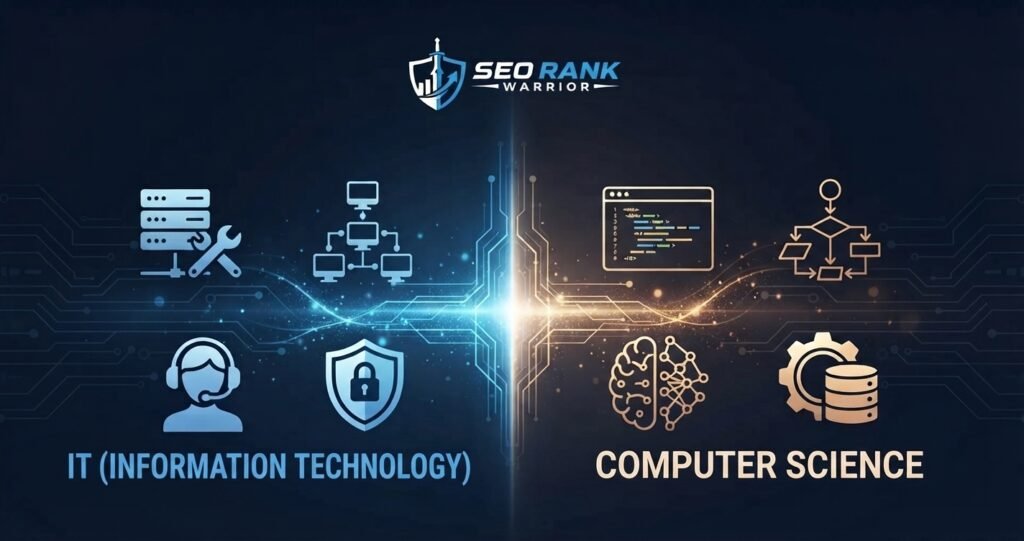
Here’s a distinction worth making early, because it trips people up all the time, especially students picking a degree.
Computer science is about building things writing the algorithms, designing the software, figuring out how a system should work from scratch. Information technology is about running things taking systems that already exist and making sure they work, stay secure, and actually serve the people using them.
A rough way to think about it: computer science builds the car. IT keeps the car running, fuels it, fixes it when it breaks down, and makes sure nobody steals it. Plenty of people end up doing a bit of both over their career, but if you’re choosing between an IT degree and a CS degree, this is usually the real question to ask yourself do you want to create technology, or manage and secure it?
Where the Two Overlap
They’re not entirely separate worlds. A developer often needs to understand networking and deployment, which is technically IT territory. An IT professional managing cloud infrastructure often ends up writing scripts, which edges into programming. The line blurs more every year, especially with roles like DevOps engineer sitting right in the middle.
What Actually Makes Up “IT”
IT isn’t one skill. It’s several, stacked on top of each other. Here’s a rough breakdown of the core pieces:
- Hardware the physical stuff: laptops, servers, routers, the box under someone’s desk humming away
- Software the instructions that tell hardware what to do, from operating systems to the app you’re using right now
- Networking the connections that tie it all together, from home Wi-Fi to the backbone linking data centers across continents
- Data management turning raw information into something organized and usable
- Cybersecurity protecting all of the above from people who want to steal or damage it
- IT support the unglamorous but essential job of fixing things when they break, which they always eventually do.
None of these operate in isolation. A cybersecurity analyst still needs to understand networking. A network administrator still needs to think about data. That overlap is part of why IT professionals, even specialists, tend to know a bit about everything around them.
Why Any of This Actually Matters

It’s easy to take IT for granted until it stops working and then, suddenly, everyone notices.
It Keeps Critical Systems Running
Hospitals run on IT to keep patient records accurate and accessible. Banks run on it to process transactions securely, often thousands per second. Retailers run on it to track inventory and keep online stores from crashing during a sale. Even a small local business depends on it more than owners usually realize payment systems, email, cloud storage, all of it.
It Enables Everything New
Beyond just keeping the lights on, IT is also what makes newer technology possible. Artificial intelligence, cloud computing, the Internet of Things none of these exist without a solid IT foundation underneath them. Take that foundation away, and the “innovation” everyone talks about simply has nowhere to run.
It Protects What Matters
Medical records, banking details, personal messages all of it sits inside systems that IT teams, particularly cybersecurity specialists, are responsible for defending. One weak point in that chain, and sensitive information ends up somewhere it shouldn’t.
The Main Branches of IT
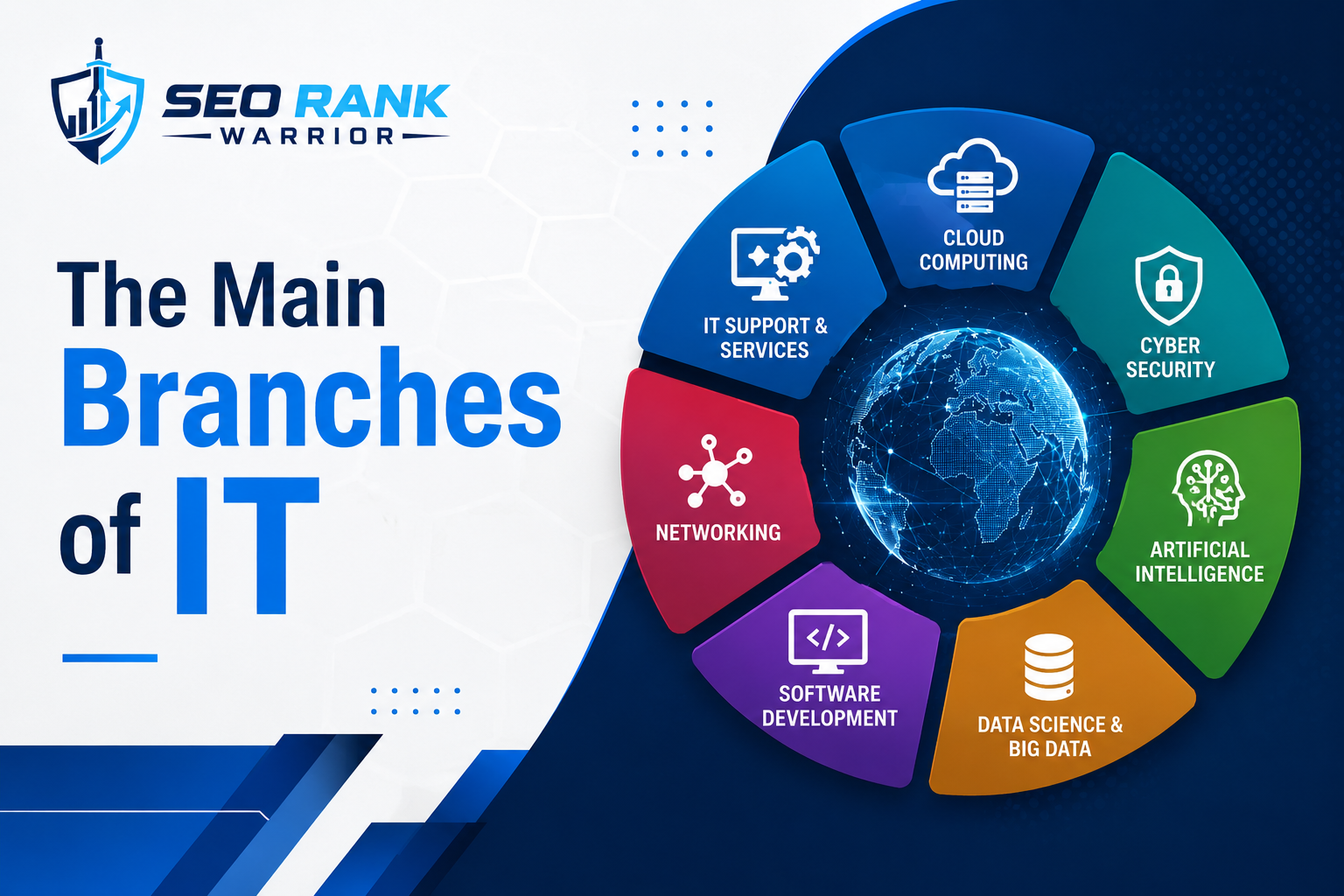
Because the field is so wide, most professionals eventually specialize. A few of the bigger branches:
Network Administration
This is about keeping devices connected and communicating reliably essentially, the “why is the internet down” job. Network admins design, monitor, and troubleshoot the infrastructure that lets data move where it needs to go.
Cybersecurity
Cybersecurity focuses on defense: finding weaknesses before attackers do, and responding fast when something goes wrong. It’s one of the fastest-growing branches of IT right now, largely because threats keep getting more creative.
Cloud Computing
Cloud computing has exploded over the last decade, shifting storage and computing power away from physical servers and onto remote infrastructure managed by providers like AWS, Azure, or Google Cloud. Fewer companies want to babysit their own server rooms anymore.
Data Management and Analytics
This branch is less about infrastructure and more about making sense of what’s stored inside it sorting, cleaning, and interpreting data so it actually informs decisions instead of just sitting there unused.
Health IT and Business IT
A couple of more specific branches worth knowing: health IT, which handles electronic medical records and telehealth systems, and business IT (sometimes called BIT), which applies computing tools directly to streamline how a company operates day to day.
Nobody expects to be an expert in all of these at once. Most careers form around one or two.
What Kind of Jobs Are We Talking About?
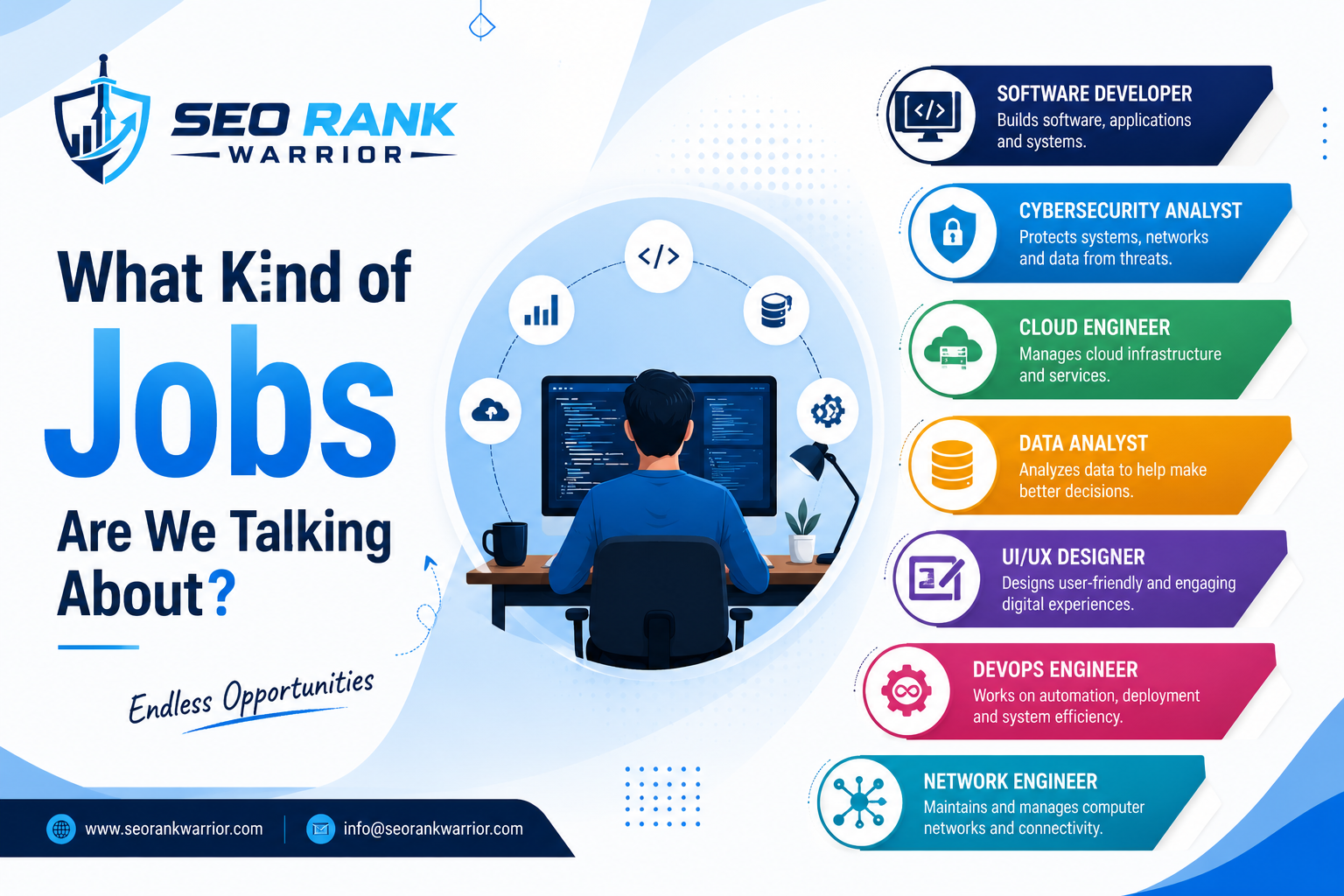
This is usually the part people actually care about. A few common entry points into the field:
- IT Support Specialist troubleshoots hardware and software issues for everyday users
- Network Administrator manages an organization’s network infrastructure
- Cybersecurity Analyst monitors systems and responds to threats
- Cloud Engineer builds and maintains cloud-based infrastructure
- Database Administrator organizes and secures an organization’s data
- IT Project Manager oversees technology projects from planning through delivery
What employers actually look for is a mix of technical basics operating systems, networking, security fundamentals and, honestly, decent communication skills. A lot of IT work involves explaining a technical problem to someone who has no idea what a server is, without sounding condescending about it.
Worth knowing: plenty of entry-level IT jobs don’t require a four-year degree. A solid certification plus some hands-on troubleshooting experience can get your foot in the door, particularly for help desk roles.
Breaking Into IT Without Starting From Zero
If you’re starting from scratch, here’s roughly how most people do it:
- Learn the fundamentals operating systems, basic networking, methodical troubleshooting.
- Get certified certifications carry real weight, even without a degree.
- Pick a direction cybersecurity, cloud, networking, data. It doesn’t have to be permanent, but a focus helps.
- Get hands-on experience an internship, a help desk job, even a home server setup counts.
- Keep learning this field doesn’t sit still. Cutting-edge five years ago is often outdated now.
A degree helps, especially for management roles later, but it’s not the only door in. Plenty of experienced IT professionals never took that path.
Where IT Is Headed
A few shifts are worth watching. Artificial intelligence is getting baked directly into IT operations automated threat detection, smarter data analysis, systems that flag problems before a human even notices them. Cloud infrastructure keeps growing as fewer companies want to manage physical servers themselves. And cybersecurity demand keeps climbing, simply because attackers keep getting more sophisticated.
None of this suggests IT is going away. If anything, it’s becoming more embedded in everything, not less.
FAQs – What Is Information Technology?
What is information technology in simple terms?
It’s the use of computers, software, and networks to store, process, and share information everything from basic tech support to running large-scale business systems.
Is IT the same thing as computer science?
Not quite. Computer science is mostly about building software and understanding algorithms. IT is about implementing, managing, and securing the technology systems that already exist.
What jobs can someone with an IT background get?
Common options include IT support specialist, network administrator, cybersecurity analyst, cloud engineer, and database administrator, among others.
Do you need a degree to work in IT?
Not necessarily. Many entry-level IT jobs accept relevant certifications and hands-on experience instead of a formal degree, though some senior or management roles do prefer one.
What are the main branches within information technology?
The major ones are networking, cybersecurity, cloud computing, and data management, along with more specific fields like health IT and business IT.
Conclusion
Information technology isn’t just “computers and the internet,” even though that’s the shorthand most people use. It’s the infrastructure quietly running underneath hospitals, banks, retailers, and pretty much every app on your phone. Whether you’re thinking about a career in it or just trying to understand what actually keeps the modern world running, the honest answer is this: it’s bigger, messier, and more essential than the textbook definition ever suggests.