
Living with a shedding dog or cat means one thing for certain: pet hair ends up everywhere, and carpet seems to hold onto it the most. Regular vacuuming barely scratches the surface once hair works its way deep into the fibres, which is why so many pet owners end up frustrated after running the vacuum for the third time in a week with little to show for it.
The good news is that once you understand why fur gets so stubbornly stuck, removing it becomes a lot more manageable. This guide covers exactly how to remove pet hair from carpet using tools and methods that actually work, plus what to do about hair on your couch and clothes too.
Why Pet Hair Sticks to Carpet Fibres
Before jumping into removal methods, it helps to understand what you’re actually up against. Pet hair carries a slight electrostatic charge, especially in drier conditions, which causes individual strands to cling to carpet fibres almost like tiny magnets. On top of that, carpet pile is woven in a way that traps loose fibres between the strands, so a standard vacuum brush often glides right over hair instead of pulling it free.
This combination of static and physical trapping is exactly why regular vacuuming alone doesn’t fully solve the problem. You need methods that either neutralize the static charge or physically agitate the fibres to loosen the hair first, which is the principle behind almost every effective technique below.
Prevent Pet Hair Build-Up Before It Starts
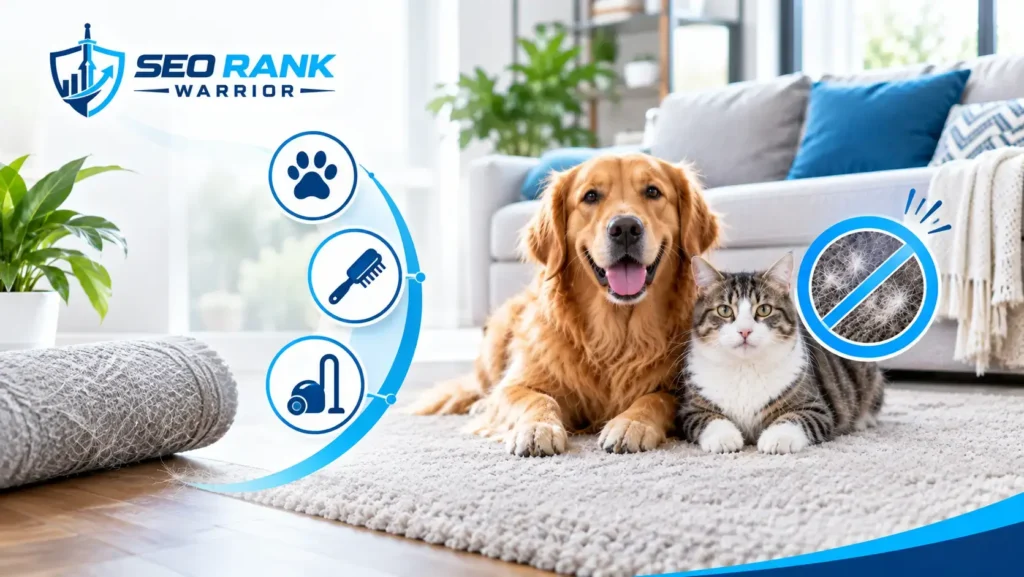
Prevention will always save you more time than cleanup, so it’s worth starting here. Brushing your dog or cat two to three times a week, more often during shedding season, removes loose fur before it ever reaches your carpet. This is especially useful for heavy shedders like Labradors, German Shepherds, and most double-coated breeds.
A furniture cover or blanket on your pet’s favourite napping spot also helps, since it’s much easier to toss a cover in the wash than to deep-clean an entire carpet. And don’t forget the pet bed itself; these cushions collect an enormous amount of loose hair that eventually spreads to nearby carpet and furniture if they aren’t washed regularly.
DIY Methods That Actually Work
If you’re dealing with hair that’s already embedded, a few low-cost household tricks can make a real difference before you even reach for a vacuum.
Rubber gloves. Dampen a pair of rubber or nitrile gloves slightly and run your hand across the carpet in short strokes, always in the same direction. The rubber’s texture grips loose hair and pulls it into small clumps that lift away easily, and you can vacuum or hand-collect what’s left behind.
A window squeegee. This might be the most underrated trick in this list. Run the rubber blade of a squeegee across the carpet in one direction, and you’ll be surprised how much fur it drags up in a single pass. It works because the rubber edge grips hair the same way it grips water on glass.
Static from a balloon. It sounds unusual, but rubbing an inflated balloon lightly across the carpet generates enough static electricity to pull hair up out of the fibres. It’s a genuinely effective trick for smaller areas or spot-cleaning.
Baking soda. Sprinkle a light layer over the affected area and let it sit for around five minutes. Baking soda helps loosen hair that’s bonded to the fibres through static, making it easier for your vacuum to lift on the next pass. This also helps freshen up any lingering pet odour at the same time.
Best Pet Hair Removal Tools

For carpets with heavier or more stubborn shedding, a dedicated tool tends to outperform household improvisation.
Reusable pet hair remover/lint roller. These have largely replaced the old sticky-paper lint roller for carpet use. A reusable pet hair remover lint roller works by rolling a textured surface over the carpet, which grips fur without needing replacement sheets, making it a more sustainable option for households with pets that shed year-round.
Pet hair removal gloves. A pet hair removal glove works similarly to the rubber glove trick above, but the textured, nub-covered surface is specifically designed to maximize grip. Electrostatic pet hair removal gloves take this a step further by generating a static charge that actively attracts loose fur as you run your hand over the carpet, rather than relying purely on physical friction.
Carpet rake. A rubber-bristled carpet rake is built to dig into carpet pile without damaging it. Running the rake in the direction of the pile pulls out even deeply embedded hair, though it’s not recommended for twist or loop-pile carpets, since the bristles can leave the fibres looking fluffy or uneven.
Pet hair vacuum cleaner. If shedding is a constant issue in your home, investing in a vacuum specifically designed for pet hair is worth considering. These typically feature motorized brush rolls and wider intake channels that are less likely to clog compared to standard vacuum heads.
How to Remove Pet Hair from a Couch or Sofa
Upholstery collects hair just as stubbornly as carpet, sometimes worse, since fabric weave often traps fur even more tightly than carpet pile. The same rubber glove and squeegee tricks used for carpet work equally well on sofas and cushions. For a deeper clean, run a lint roller over the entire surface in overlapping strokes, working section by section rather than trying to cover the whole couch at once.
A tumble dryer trick also works well for removable cushion covers or throws: toss them in on a cold, no-heat setting for about 10 minutes with a dryer sheet. The tumbling motion loosens fur, and the dryer sheet reduces static, so hair collects in the lint filter instead of sticking back to the fabric. Just remember to clean out the filter afterward, since it collects a surprising amount of fur in a short cycle.
How to Get Pet Hair Off Clothes
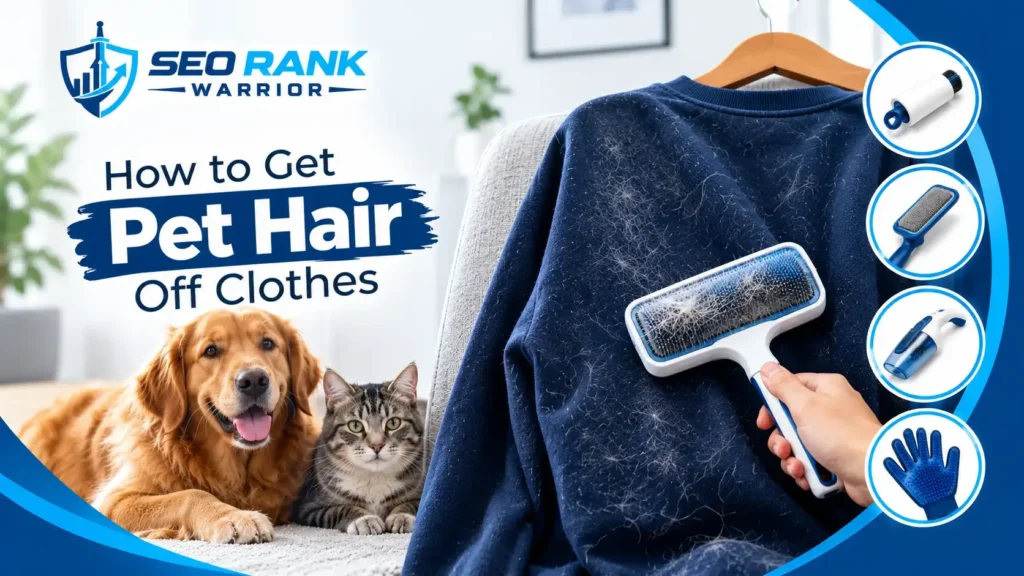
Pet hair on clothing is a slightly different challenge, since fabric weave and static behave differently than carpet fibres. A lint roller remains the fastest fix for a quick touch-up before heading out the door. For a more thorough clean, add a cup of white vinegar to your wash cycle, which helps loosen hair from fabric during the spin cycle rather than leaving it embedded.
Drying clothes on a low-heat setting with a dryer sheet is one of the most effective long-term methods, since the combination of tumbling and reduced static causes hair to detach and collect in the lint trap. Avoid washing heavily hair-covered items with a full load of other laundry beforehand, since loose fur tends to spread and stick to everything else in the machine.
Choosing the Right Vacuum for Pet Hair
Not every vacuum handles pet hair equally well. Look for models with a motorized brush bar rather than a purely suction-based head, since the rotating brush physically agitates carpet fibres to release trapped hair rather than just pulling air across the surface. A HEPA filter is also worth prioritizing if allergies are a concern, since it traps pet dander alongside the hair itself. For carpets, use the dedicated pet hair attachment if your vacuum includes one; for upholstery and stairs, switch to the narrow hose attachment, since the concentrated suction lifts clumped hair far more effectively than a wide floor head.
When to Call a Professional Carpet Cleaner
If pet hair has been building up for months, or if it’s mixed in with stains and odour that household methods haven’t resolved, a professional deep clean is usually worth the cost. Professional equipment uses stronger extraction and rotating brushes that reach deeper into the pile than any home tool can manage, and it’s a reasonable option for households with heavy shedders or multiple pets where hair accumulates faster than a weekly routine can keep up with.
Frequently Asked Questions
How do I remove pet hair from carpet without a vacuum?
A rubber glove, squeegee, or even an inflated balloon can lift hair through static and friction. Sprinkling baking soda first and letting it sit for a few minutes also loosens embedded fur, making manual removal easier.
What’s the best tool for removing pet hair from carpet?
For light shedding, a reusable pet hair remover or carpet rake works well. For heavier shedding, a dedicated pet hair vacuum with a motorized brush bar handles the job more efficiently and won’t clog as quickly as a standard vacuum.
How do you get dog hair out of a couch?
The same rubber glove and squeegee methods used on carpet work on upholstery. For removable covers or cushions, a cold tumble-dry cycle with a dryer sheet loosens fur effectively without any risk of shrinking the fabric.
How can I get cat hair off clothes quickly?
A lint roller is the fastest option for a quick fix. For a more thorough clean, add white vinegar to the wash cycle and dry on low heat with a dryer sheet to reduce static and help hair release from the fabric.
Why does pet hair keep coming back even after vacuuming?
Standard vacuums often glide over embedded hair rather than lifting it, especially if static is holding fur to the fibres. Loosening the hair first with a rubber glove, squeegee, or baking soda before vacuuming gives much more thorough results.
Conclusion
Pet hair on carpet is an ongoing part of life with a shedding dog or cat, but it doesn’t have to be a losing battle. A mix of regular grooming, the right tools, and a few simple tricks like a squeegee or damp rubber glove can keep your carpet, furniture, and clothes noticeably cleaner between deep cleans. Start with prevention, keep a couple of these tools on hand for touch-ups, and call in a professional when the build-up gets ahead of your routine.