
Pets don’t just live in our homes; they shape how we use every room in them. From the muddy paw prints by the back door to the cat who insists on claiming the sunniest windowsill, sharing a home with an animal changes the way you think about furniture, flooring, and daily routines. Learning how to create a pet-friendly home means understanding what your pet actually needs from your space, not just decorating around them.
The good news is that a pet-friendly home doesn’t have to mean giving up on style or sacrificing comfort. With the right materials, layout choices, and a bit of planning, you can build a space that works beautifully for both you and your animal companion, whether you’re renting a small apartment or renovating a house from the ground up.
How to Create a Pet-Friendly Home Where to Start
A truly pet-friendly home isn’t about buying a matching set of pet furniture or hiding every trace that an animal lives there. It’s about designing around three practical needs: safety, durability, and comfort.
Safety means removing hazards your pet could chew, swallow, or get injured by. Durability means choosing materials that can handle scratches, spills, and shedding without falling apart. Comfort means giving your pet a predictable space to eat, sleep, and rest that fits naturally into your home’s layout. When these three elements come together, the result is a home that feels calm and organized for everyone living in it, two legs or four.
Start With Pet-Friendly Flooring
One of the first steps in how to create a pet-friendly home is choosing flooring that can handle daily wear without constant repairs. Flooring takes more abuse from pets than almost anything else in the house, so it’s worth getting right from the start.
Best flooring options for pet owners:
- Luxury vinyl plank (LVP): Water-resistant, scratch-tolerant, and available in wood-look finishes that don’t sacrifice style.
- Sealed concrete or polished tile: Extremely durable and easy to wipe clean, especially useful in entryways and kitchens.
- Low-pile carpet with stain-resistant backing: A softer option for bedrooms, though it needs more frequent cleaning.
Avoid high-gloss hardwood and soft, unsealed wood, since both scratch easily and can become slippery for pets, a real concern for older dogs or breeds prone to hip issues. If you already have hardwood or tile, add rugs with non-slip backing in high-traffic areas. This improves your pet’s footing while also protecting the floor underneath from claws and accidents. Choose washable, indoor-outdoor rugs so shedding and muddy paws don’t turn into a permanent cleaning project.
Choose Furniture and Fabrics That Survive Real Life
You shouldn’t have to choose between a stylish living room and a shedding golden retriever. The difference comes down to fabric selection.
Performance fabrics such as Crypton or Sunbrella are treated to resist stains, moisture, and odor, making them a strong choice for sofas and chairs in a pet-heavy household. Top-grain leather is another practical option; it wipes clean easily and tends to age well with light scratches rather than showing permanent damage. Tightly woven fabrics like microfiber or corduroy-style textiles also hold up better against claws than loosely woven linen or delicate velvet, which can snag.
If you’re not ready to reupholster, washable slipcovers and throws are a simple fix. They let you protect existing furniture while still keeping it in regular use, and they can be tossed in the wash whenever shedding season hits. When choosing colors, mid-tone shades and subtle patterns tend to hide fur and dirt better than pure white or solid black.
Create a Dedicated Pet Zone
Every pet benefits from having their own space to retreat to somewhere they can rest without disruption. This doesn’t require a spare room. A cozy nook under the stairs, a corner near a window, or a low bench with a cushion can all work well.
The key is observing your pet’s natural habits before deciding on a location. If your dog already gravitates toward a spot beside the sofa, that’s where a durable, washable pet bed will get the most use. Cats often prefer elevated spots with a view, so a window perch or shelf near natural light tends to work better than a bed tucked away in a quiet room.
Giving pets a defined space isn’t just about tidiness; it also supports their sense of security. Pets that have a predictable place to retreat to tend to settle faster and show fewer signs of anxiety, particularly in busy or multi-person households.A calm, well-designed space is one of several things that help keep your pet happy long term.
Design a Practical Entryway or Mudroom
If you’re serious about how to create a pet-friendly home that stays clean year-round, the entryway is where that effort actually pays off. It’s your first line of defense against dirt, mud, and wet paws, so it deserves just as much thought as any other room.
A washable runner or mat right at the door catches debris before it spreads further into the house. Add hooks at a low height for leashes and towels, so your walk routine doesn’t end with gear scattered across the floor. If space allows, a small bench with storage underneath gives you somewhere to sit while wiping down paws, and a low basket keeps shoes safely out of chewing range.
Homes with the space for it often benefit from a dedicated pet-washing station; even a simple wall-mounted sprayer near a utility sink can save considerable time after muddy walks or park visits.
Smart Storage for Pet Supplies
Pet gear accumulates quickly: leashes, toys, grooming tools, food, medication, and seasonal items like raincoats all need somewhere to live. Without a system, they tend to end up scattered across counters and floors.
Lidded baskets in natural materials like woven rattan or canvas blend into most interiors while keeping toys contained. A dedicated drawer or cabinet works well for treats, grooming supplies, and medication. The FDA specifically recommends storing pet and human medications separately, and in secure locations pets can’t access. Labeled bins are useful for rotating seasonal items you don’t need daily.
Placement matters as much as the storage itself. Keep supplies near where they’re actually used: leashes by the door, feeding supplies near the kitchen, grooming tools near the bathroom, rather than centralizing everything in one closet across the house.
Pet-Proof Every Room for Safety
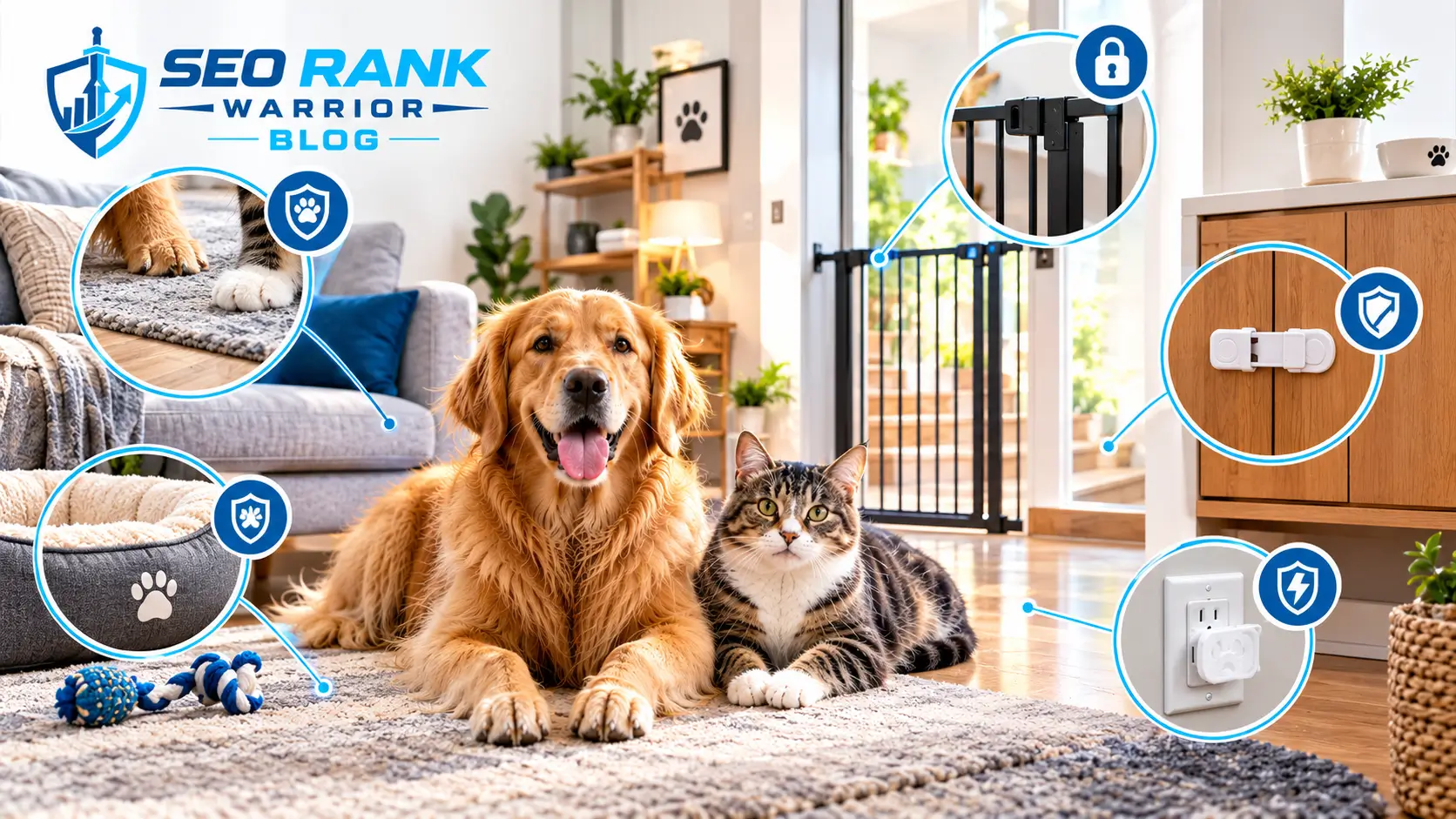
A beautiful home should also be a safe one. Pet-proofing typically involves a few consistent steps across every room:
- Secure loose cords and cables, since chewing on electrical wiring is a genuine safety hazard.
- Choose non-toxic houseplants; snake plants, spider plants, and ferns are generally safe alternatives to toxic varieties like lilies or philodendrons.
- Store cleaning products, medications, and small objects out of reach, ideally in latched cabinets.
- Check that window screens are secure, particularly for cats in multi-story homes.
- Block off small gaps behind appliances or furniture where curious pets could get stuck.
These small adjustments reduce daily risk without requiring major renovations, and they’re worth revisiting whenever you bring home a new pet or as an older animal’s mobility changes.
Set Up a Proper Feeding and Water Station
A consistent feeding station helps pets settle into a routine and reduces mess around mealtimes. Choose a quiet, low-traffic spot rather than the middle of a busy kitchen floor, and place a washable mat underneath to catch spills.
For larger dogs, elevated feeders can reduce strain on the neck and joints during eating. For multi-pet households, spacing bowls apart or feeding in separate rooms entirely helps prevent food-guarding behavior between animals. Keep water bowls topped up and easy to access throughout the day, since pets are more likely to stay hydrated when water is conveniently placed.
Don’t Forget the Backyard and Outdoor Space
If you have access to a yard, it deserves the same thoughtful planning as the interior of your home. Start with fencing: check that it’s secure and tall enough for your pet’s size and energy level, since even well-trained animals can be tempted by squirrels or neighboring pets.
Provide shade through trees, a pergola, or a pet-safe umbrella, especially during warmer months when pavement and direct sun can be uncomfortable or even dangerous for paws. If your dog likes to dig, consider setting aside a designated digging spot with sand or mulch rather than trying to stop the behavior entirely; redirecting it tends to work better than discouraging it outright. Double-check your landscaping for toxic plants as well, since outdoor greenery is just as important to audit as anything you bring indoors.
Let Pet Items Become Part of Your Decor
Not everything needs to be hidden away. A hand-thrown ceramic water bowl, a neutral-toned dog bed in boucle or canvas, or a simple framed sketch of your pet can all add character to a room rather than clutter. Treating your pet’s belongings as part of your overall design rather than an afterthought often results in a more cohesive, intentional-looking space.
Keep Your Home Smelling and Looking Fresh
Even a well-designed home needs a solid cleaning routine to stay comfortable for both you and your pet. Vacuum regularly, especially around pet beds and upholstered furniture, using a vacuum designed to handle fur and dander without clogging. Wash pet bedding and blankets weekly, and keep a stash of unscented, plant-based enzyme cleaners on hand for accidents.
Avoid strong air fresheners or heavily scented candles near pet areas; dogs and cats have far more sensitive noses than humans, and overpowering scents can cause them genuine discomfort. Natural ventilation, along with regular cleaning, usually does more for air quality than masking odors artificially.
Tips for Multi-Pet Households and Small Apartments
Homes with more than one pet or limited square footage need a slightly different approach. In multi-pet households, give each animal its own feeding area, bed, and toy storage to reduce competition and stress. Vertical space becomes especially valuable in apartments: wall-mounted cat shelves, tall scratching posts, and stackable storage help you add pet-friendly features without eating into limited floor space.
For renters, prioritize solutions that don’t require permanent changes: removable wallpaper for scratch-prone corners, freestanding gates instead of built-in ones, and washable rugs instead of wall-to-wall carpet replacements. These choices protect your space and your security deposit while still meeting your pet’s needs.
FAQs – how to create a pet-friendly home
How do I create a pet-friendly home on a budget?
The easiest way to start is with washable textiles, secure storage, and a dedicated resting spot for your pet; no renovation required. Small changes like non-slip rugs and lidded baskets go a long way before you invest in bigger upgrades.
What is the best flooring for a home with pets?
Luxury vinyl plank, sealed concrete, and polished tile are among the most durable options, offering scratch resistance and easy cleanup. Pair them with non-slip rugs in high-traffic areas for extra safety and comfort.
How can I stop my pet from ruining my furniture?
Choose performance fabrics like Crypton or Sunbrella, or opt for top-grain leather, both of which resist scratches and stains better than delicate materials. Washable slipcovers and throws add an extra layer of protection for existing furniture.
Do I need a separate room for my pet?
No. A dedicated pet zone can be as simple as a cozy nook, a window perch, or a low bench with a cushion. What matters most is placing it where your pet naturally prefers to rest.
What’s the most important safety step when pet-proofing a home?
Securing loose cords and storing medications, cleaning products, and small chewable items out of reach are typically the highest-priority steps, since these pose the most immediate risk to curious pets.
Conclusion
Knowing how to create a pet-friendly home isn’t a one-time project it’s an ongoing process of paying attention to how your pet actually uses your space and adjusting accordingly. The homes that work best aren’t the ones without any trace of pet life; they’re the ones designed with real routines in mind, where durable materials, smart storage, and safety measures work quietly in the background. With a few intentional choices, you can build a home that feels put-together and welcoming for every member of the family, regardless of how many legs they walk on.