
Tomatoes are a common ingredient in salads, sandwiches, sauces, and many everyday meals. Because dogs often show interest in whatever their owners are eating, it is natural to wonder: can dogs eat tomatoes or should this fruit stay off the menu?
The answer depends on which tomato and which part of the plant you are talking about. Fully ripe, red tomato flesh can generally be given to healthy dogs in small amounts, while green, unripe tomatoes and the leaves, stems, and other green parts of the plant can contain higher levels of compounds that may be harmful. How the tomato is prepared also matters, because sauces and soups can contain ingredients that are unsafe for dogs.
Can Dogs Eat Tomatoes?
Yes, dogs can generally eat ripe red tomatoes in moderation.
The soft flesh of a ripe tomato is considered safe for most healthy dogs when served as an occasional treat. Tomatoes also provide nutrients such as vitamins A and C, potassium, and antioxidants.
However, not every part of the tomato plant is equally safe.
Green, unripe tomatoes and the green parts of the plant including stems and leaves contain higher concentrations of naturally occurring compounds such as tomatine and solanine. Large amounts can cause illness in dogs, which is why these parts should be kept away from them.
So if you are asking, can dogs have tomatoes, the safest answer is: yes, if the tomato is fully ripe, prepared properly, and given in a small amount.
Are Tomatoes Safe for Dogs?
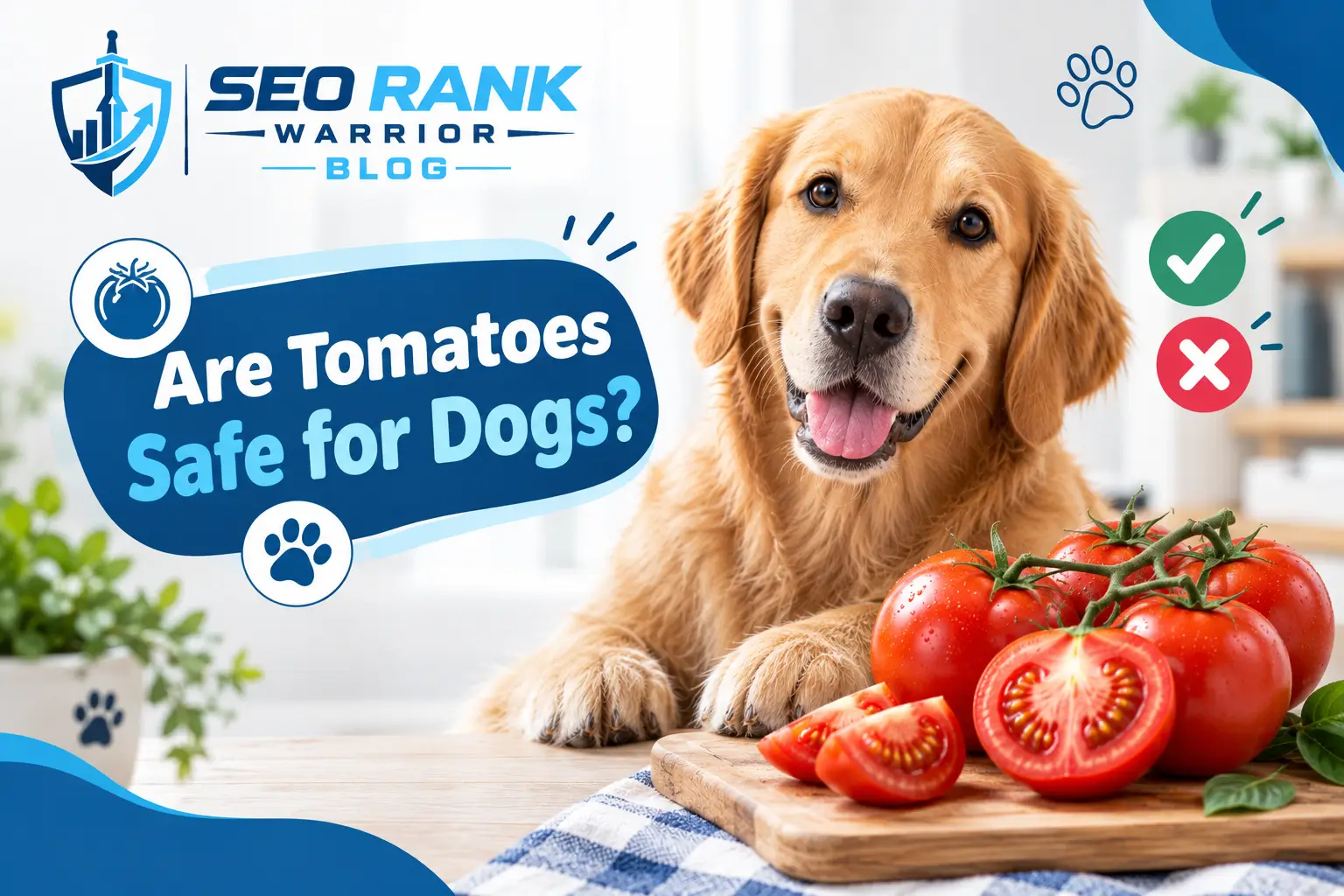
Ripe tomatoes can be a safe occasional treat for many healthy dogs. The important distinction is between the ripe fruit and the rest of the plant.
As tomatoes mature and turn red, the amount of tomatine in the fruit decreases substantially. This is why ripe tomato flesh is generally considered much lower risk than green tomatoes or the plant’s green parts.
Before giving tomato to your dog:
- Choose a fully ripe red tomato.
- Remove the stem and any attached green material.
- Wash the tomato thoroughly.
- Cut it into appropriately sized pieces.
- Give only a small amount initially.
- Avoid sauces, soups, and heavily seasoned tomato products.
Dogs with existing digestive problems or certain medical conditions may not tolerate tomatoes well. If your dog follows a prescription diet, check with your veterinarian before adding new foods.
Why Are Green Tomatoes a Concern for Dogs?
The main safety issue with tomatoes is not the ripe red flesh it is the green, unripe fruit and green parts of the plant.
Tomato plants naturally contain compounds including tomatine and solanine. These compounds are found at higher concentrations in the plant’s green portions.
This means dogs should not be allowed to chew on:
- Green tomatoes
- Tomato leaves
- Tomato stems
- Tomato vines
- Other green parts of the tomato plant
The risk is particularly important for dogs that have access to a vegetable garden. A curious dog may eat fallen green tomatoes or chew on the plant without the owner realizing it.
If you grow tomatoes at home, consider using fencing or another barrier to prevent your dog from accessing the plants.
Can Dogs Eat Ripe Red Tomatoes?
Yes. Ripe red tomato flesh can generally be fed to dogs in small amounts.
A ripe tomato can be offered as an occasional treat after it has been washed and separated from its stem and other green parts.
There is no need to add salt, seasoning, oil, or sauce. Plain tomato is the simplest option.
Some dogs may enjoy the juicy texture, while others may simply spit it out. Dogs have individual food preferences, so there is no reason to force a food they do not like.
The important point is that ripe tomato should complement your dog’s normal diet rather than become a significant source of calories.
Are Tomatoes Good for Dogs?
Tomatoes can provide some nutritional value, but they are not an essential food for dogs.
Fresh ripe tomatoes contain several nutrients and naturally occurring antioxidants.
Tomatoes Provide Vitamins
Tomatoes contain vitamins including vitamin A and vitamin C. These nutrients have roles in normal body function.
However, If you want to offer your dog occasional fruit treats, options such as apples can also be considered when properly prepared. Feeding more tomatoes does not necessarily provide additional health benefits.
Tomatoes Contain Potassium
Tomatoes also provide potassium, a mineral involved in normal muscle and nerve function.
Again, your dog’s regular balanced diet should be the primary source of essential nutrients.
Tomatoes Contain Antioxidants
Tomatoes are particularly known for containing lycopene, a naturally occurring antioxidant responsible for much of the fruit’s red color.
Lycopene is one reason tomatoes are nutritionally interesting, but it should not be interpreted as a reason to give dogs large quantities of tomato.
A few pieces can be a treat; tomatoes should not replace nutritionally complete dog food.
How Many Tomatoes Can a Dog Eat?
There is no universal serving size that works for every dog.
The appropriate amount depends on factors such as your dog’s size, age, activity level, health, normal diet, and tolerance of new foods.
A sensible approach is to start with a small amount and observe how your dog responds.
For example:
- Very small dogs: Start with one or two tiny pieces.
- Small dogs: A few small pieces may be enough.
- Medium dogs: Several small pieces can be an occasional treat.
- Large dogs: They may tolerate a somewhat larger portion, but moderation is still important.
These are general starting points, not exact veterinary prescriptions.
Treats—including tomatoes—should remain a limited part of your dog’s daily calorie intake. A commonly used guideline is to keep treats at around 10% or less of daily calories, with the remainder coming from complete and balanced food.
If your dog has obesity, diabetes, gastrointestinal disease, or another health condition, ask your veterinarian about suitable treats and portion sizes.
Can Dogs Eat Cherry Tomatoes?
Dogs can generally eat ripe cherry tomatoes in small amounts, but they need to be prepared carefully.
Cherry tomatoes are smaller than standard tomatoes, but their size does not eliminate the need for portion control. For small dogs especially, whole cherry tomatoes may also be difficult to swallow safely.
The safer approach is to:
- Choose a ripe red cherry tomato.
- Remove any stem or green material.
- Wash it thoroughly.
- Cut it into smaller pieces when appropriate.
- Give a limited amount.
Never assume that a tomato is safe simply because it is small. Ripeness and preparation still matter.
Can Puppies Eat Tomatoes?

Yes, puppies that are already eating solid food can generally have a small amount of ripe tomato.
However, puppies have specific nutritional needs because they are growing rapidly. Their primary food should be a complete diet formulated for puppies rather than a collection of human foods.
If you want to introduce tomato:
- Use only ripe red tomato flesh.
- Remove the stem and green portions.
- Cut it into very small pieces.
- Start with a tiny amount.
- Introduce only one new food at a time.
Do not give puppies green tomatoes, tomato leaves, stems, or other parts of the plant.
If your puppy develops vomiting, diarrhea, unusual weakness, or another concerning reaction after eating a new food, contact your veterinarian.
Can Dogs Eat Tomato Skin and Seeds?
The ripe tomato flesh, including its skin and seeds, is not generally the main concern with tomatoes. However, some dogs may have difficulty digesting tomato skin, particularly if they have sensitive stomachs.
For simplicity, you can remove the stem and wash the tomato thoroughly before serving. There is generally no need to turn tomato preparation into a complicated process.
The much more important safety issue is making sure your dog does not consume the green stem, leaves, vines, or significant quantities of unripe green tomato.
If your dog has a sensitive digestive system, removing the skin and seeds may also make the tomato easier for them to tolerate.
Can Dogs Eat Tomato Sauce?
Most commercial tomato sauces are not a good choice for dogs.
The problem is usually not the tomato itself. It is the collection of additional ingredients commonly found in sauces.
Depending on the recipe, tomato sauce can contain:
- Onion
- Garlic
- Excess salt
- Added sugar
- Spices
- Preservatives
- Large amounts of fat
Onions and garlic are particularly important concerns because they can be toxic to dogs.
Therefore, do not assume that a tomato-based pasta sauce is equivalent to a fresh ripe tomato.
If you want to give your dog tomato, plain fresh tomato is a much simpler option than sauce.
Can Dogs Eat Canned or Tinned Tomatoes?
Canned or tinned tomatoes are not the ideal choice for dogs.
Some canned products contain added salt, preservatives, seasonings, or other ingredients. Certain products may also contain onion or garlic.
Even when the tomato itself is not dangerous, the complete product may not be appropriate for your dog.
If you are looking for a tomato treat, fresh ripe tomato is easier to control because you know exactly what your dog is receiving.
Always check the ingredient list before giving your dog any processed human food.
Can Tomatoes Make Dogs Sick?
Even ripe tomatoes can cause problems if a dog eats too much.
Some dogs may experience digestive upset after eating tomatoes, particularly if they have sensitive stomachs or are given a large amount at once.
Possible signs include:
- Diarrhea
- Vomiting
- Gas
- Stomach discomfort
- Reduced appetite
Tomatoes are also naturally acidic, which may be irritating for some dogs with digestive sensitivities.
If your dog has a history of gastrointestinal problems, introduce tomatoes cautiously—or ask your veterinarian whether they should be avoided altogether.
What Happens If a Dog Eats a Green Tomato?
Eating a small accidental piece of green tomato does not automatically mean your dog will become seriously ill. The level of risk depends on factors such as how much was eaten, the dog’s size, and which part of the plant was consumed.
However, larger amounts of unripe tomatoes or ingestion of leaves and stems can expose a dog to higher levels of tomatine and related compounds.
Signs associated with significant exposure can include:
- Vomiting or diarrhea
- Weakness
- Loss of coordination
- Tremors
- Reduced appetite
- Abnormal heart rate
- Other unusual neurological or gastrointestinal signs
AKC and Purina both advise veterinary attention if a dog develops symptoms after consuming potentially harmful green parts of the tomato plant.
If your dog has eaten a substantial amount of green tomato, leaves, stems, or vines, contact your veterinarian promptly for guidance rather than waiting for symptoms to appear.
What Should You Do If Your Dog Eats a Tomato Plant?
If your dog has chewed on a tomato plant, first determine what was eaten and approximately how much.
A small piece of ripe tomato flesh is very different from consuming leaves, stems, vines, or a large quantity of green tomatoes.
Keep your dog away from the plant and monitor them closely. If you know that your dog consumed a significant amount of the green plant or develops symptoms such as vomiting, weakness, tremors, loss of coordination, or abnormal behavior, contact a veterinarian promptly.
Do not attempt to make your dog vomit unless a veterinary professional specifically instructs you to do so.
Keeping tomato plants inaccessible is the easiest way to prevent accidental exposure.
How to Safely Feed Tomatoes to Your Dog
If you decide to give your dog ripe tomato, a few simple preparation steps can make the treat safer.
Choose a Fully Ripe Tomato
Look for a tomato that is fully red and ripe rather than green or partially green.
Remove the Green Parts
Cut away the stem and any attached leaves or vine material.
Wash It
Wash the tomato before serving to remove dirt and surface residue.
Cut It Into Suitable Pieces
Large pieces may be difficult for smaller dogs to manage. Cut the tomato according to your dog’s size and eating habits.
Start Small
If your dog has never eaten tomato, offer a small amount first.
Keep It Plain
Do not add salt, spices, sauces, garlic, onions, or other seasonings.
This preparation keeps the treat simple and makes it easier to identify any reaction your dog may have to the fruit itself.
Can Dogs Eat Cooked Tomatoes?
Plain cooked ripe tomato can be different from a prepared tomato dish.
Cooking the fruit itself does not automatically make it dangerous, but recipes often introduce ingredients that dogs should not eat.
For example, a cooked tomato dish containing onion, garlic, excessive salt, butter, or spicy seasoning is not the same thing as plain cooked tomato.
If you want to share tomato with your dog, plain ripe tomato is generally the easiest option because there are fewer ingredients to worry about.
Can Dogs Eat Tomatoes Every Day?
There is generally no need to feed tomatoes every day.
Ripe tomato can be an occasional treat, but your dog should receive most of their nutrition from a complete and balanced diet.
Feeding the same human food frequently can also make it easier to accidentally exceed your dog’s daily treat allowance.
If your dog particularly enjoys tomatoes, small portions can occasionally be included as a treat as long as they tolerate them and there are no veterinary dietary restrictions.
For dogs with chronic digestive problems, diabetes, obesity, or other medical conditions, discuss regular treats with your veterinarian.
Vegetables such as broccoli may also be used as occasional dog treats when appropriately prepared and portioned.
FAQs – Can Dogs Eat Tomatoes?
Can dogs eat tomatoes safely?
Yes. Most healthy dogs can eat small amounts of fully ripe red tomato. Remove the stem and green parts, wash the fruit, and serve it plain and in moderation.
Can dogs have tomatoes every day?
Tomatoes do not need to be part of a dog’s daily diet. Small amounts may be tolerated by some dogs, but they are best treated as an occasional snack rather than a dietary staple.
Can dogs eat green tomatoes?
It is best to avoid green, unripe tomatoes. They contain higher levels of naturally occurring compounds such as tomatine and can be harmful to dogs, particularly when consumed in larger quantities.
Can dogs eat tomato sauce?
Most commercial tomato sauces should be avoided because they can contain onion, garlic, excessive salt, sugar, spices, or other ingredients that are unsuitable or potentially toxic to dogs.
Can puppies eat tomatoes?
Puppies that are eating solid food can generally have a small amount of ripe tomato. It should be plain, properly prepared, and given occasionally. Green tomatoes and the green parts of the tomato plant should always be avoided.
Conclusion
So, can dogs eat tomatoes? Yes, most healthy dogs can enjoy small amounts of fully ripe red tomato as an occasional treat.
The most important rule is to distinguish the ripe fruit from the green parts of the plant. Ripe tomato flesh is generally considered safe in moderation, while green tomatoes, leaves, stems, and vines can contain higher concentrations of compounds that may be harmful to dogs.
Keep tomatoes plain, wash them before serving, remove the green parts, cut them into suitable pieces, and start with a small portion. Avoid tomato sauces, soups, and processed products that contain ingredients such as onion, garlic, excess salt, or added seasonings.