
Mushrooms can be a confusing food for dog owners because some varieties sold in grocery stores are generally safe, while certain wild mushrooms can be highly toxic. So, can dogs eat mushrooms? The answer depends largely on the type of mushroom and how it has been prepared.
Plain, store-bought mushrooms may be offered to some dogs in small amounts, but wild mushrooms should never be considered safe. Because toxic varieties can be difficult to identify, accidental mushroom consumption outdoors should be taken seriously and discussed with a veterinarian promptly.
Are Mushrooms Safe for Dogs?
Some mushrooms are safe for dogs, but that does not mean every mushroom is suitable for them.
Mushrooms purchased from a grocery store for human consumption are generally considered non-toxic to dogs. Common edible varieties include white button mushrooms, cremini, portobello, baby bella, shiitake, porcini, and maitake. However, mushrooms are not an essential part of a dog’s diet, so there is no need to add them regularly.
The bigger concern is mushrooms growing outdoors. A dog may find a mushroom in a backyard, park, garden, or wooded area and eat it before an owner notices. Since toxic and non-toxic wild mushrooms can be difficult to distinguish, veterinary sources recommend treating wild mushroom ingestion as potentially toxic rather than trying to make a guess based on appearance.
Can Dogs Have Mushrooms From the Grocery Store?

Yes, dogs can have small amounts of plain, grocery-store mushrooms that are intended for human consumption.
If you decide to give your dog mushrooms, choose fresh mushrooms from a reputable grocery store, wash them thoroughly, and serve them plain. Cutting them into small pieces can also make them easier to eat and reduce the risk of choking.
However, there is an important distinction between a plain mushroom and a mushroom dish. A mushroom cooked for humans may contain butter, oil, salt, garlic, onions, sauces, or other seasonings that are not appropriate for dogs.
For example, garlic and onions are toxic to dogs, so a mushroom cooked with either ingredient should not be shared with your pet.
Why Wild Mushrooms Are Different
Wild mushrooms are the main reason the question can dogs eat mushrooms requires caution.
There are thousands of mushroom species, and some contain toxins that can affect the digestive system, nervous system, liver, or kidneys. Unfortunately, identifying a mushroom simply by its color, shape, smell, or location is not reliable enough to determine whether it is safe.
Some dangerous species include mushrooms from groups such as Amanita, Galerina, and Lepiota. Certain Amanita mushrooms, for example, can cause severe gastrointestinal illness followed by serious liver or kidney damage.
Dogs also cannot reliably identify poisonous mushrooms for themselves. Their natural curiosity can lead them to investigate and eat mushrooms growing in grass, soil, compost, or wooded areas.
For this reason, the safest rule is simple: do not allow your dog to eat mushrooms growing outdoors.
What Happens If a Dog Eats a Wild Mushroom?
The effects depend on the species, amount eaten, and toxins involved. Some mushrooms mainly cause stomach upset, while others can cause neurological problems or organ damage.
Possible signs include:
- Vomiting
- Diarrhea
- Abdominal pain
- Excessive drooling
- Weakness or lethargy
- Loss of coordination
- Stumbling
- Tremors
- Seizures
- Changes in thirst or urination
- Yellowing of the gums, eyes, or skin
- Difficulty breathing
- Collapse or coma
Some mushroom toxins can produce symptoms within minutes, while others may take many hours to become obvious. Certain serious toxins can cause liver or kidney damage that becomes apparent later.
That delayed timing is one reason you should not wait for symptoms before contacting a veterinarian after a suspected wild mushroom ingestion.
Mushroom Poisoning in Dogs
Mushroom poisoning can range from mild digestive upset to a life-threatening emergency.
Different mushroom toxins affect dogs in different ways. Some primarily stimulate the nervous system and can cause drooling, diarrhea, tremors, or seizures. Others can cause severe gastrointestinal signs followed by liver or kidney injury.
Some of the most dangerous mushrooms contain toxins that may initially cause vomiting and diarrhea, followed by a period when the dog appears to improve. Serious organ damage can develop later, which means an apparently normal dog may still require urgent veterinary assessment.
This is why identifying the mushroom can be useful, but waiting for a perfect identification should not delay veterinary care.
What Should You Do If Your Dog Eats a Wild Mushroom?
If you see your dog eat a mushroom outdoors, contact your veterinarian or an emergency veterinary service as soon as possible.
Do not assume the mushroom is harmless because your dog looks normal.
If it is safe to do so, collect a sample of the mushroom or any remaining pieces. You can also take clear photographs of the mushroom from different angles. These details may help a veterinarian or poison specialist determine what your dog encountered.
Do not attempt to make your dog vomit unless a veterinarian specifically instructs you to do so. At-home vomiting attempts can create additional risks, including aspiration.
The sooner potentially toxic mushroom exposure is addressed, the more useful early treatment can be.
Can Dogs Eat Cooked Mushrooms?
Dogs can eat some plain, cooked grocery-store mushrooms in small amounts, but the cooking method matters.
A plain mushroom that has been cooked without harmful ingredients is very different from a mushroom dish prepared for people.
Avoid sharing mushrooms cooked with:
- Garlic
- Onions
- Heavy sauces
- Excessive salt
- Large amounts of butter
- Rich oils
- Spicy seasonings
- Alcohol-containing sauces
Even when the mushroom itself is safe, the other ingredients may create a separate health risk.
If you want to offer a mushroom as an occasional treat, keeping the preparation simple is the safest approach.
Can Dogs Eat Raw Mushrooms?
Plain, grocery-store mushrooms are generally considered non-toxic, but there is little reason to make raw mushrooms a regular part of a dog’s diet.
Raw mushrooms can also be harder for some dogs to digest. If you choose to offer a store-bought mushroom, washing it properly and preparing it plainly may be preferable to giving your dog a large piece straight from the package.
Most importantly, raw wild mushrooms are completely different from commercially grown edible mushrooms. Never use the fact that a supermarket mushroom is considered safe as a reason to let your dog eat mushrooms found outside.
Can Dogs Eat Button Mushrooms?
Yes, plain white button mushrooms purchased from a grocery store are generally considered safe for dogs in small amounts.
Button mushrooms are one of the most common edible mushrooms available in supermarkets. If offered to a dog, they should be clean, plain, and cut into an appropriate size.
There is no nutritional requirement for dogs to eat button mushrooms, though. A complete and balanced dog food should remain the foundation of the diet, while treats and extras should remain limited.
Can Dogs Eat Portobello Mushrooms?
Plain grocery-store portobello mushrooms are also generally considered non-toxic to dogs.
Because portobello mushrooms can be quite large, cut them into small pieces before offering them. Avoid giving your dog portobello mushrooms prepared with garlic, onions, rich sauces, excessive salt, or other ingredients that may be harmful.
As with other edible supermarket mushrooms, portobello mushrooms should be viewed as an optional treat rather than a necessary source of nutrition.
What About Shiitake and Other Edible Mushrooms?
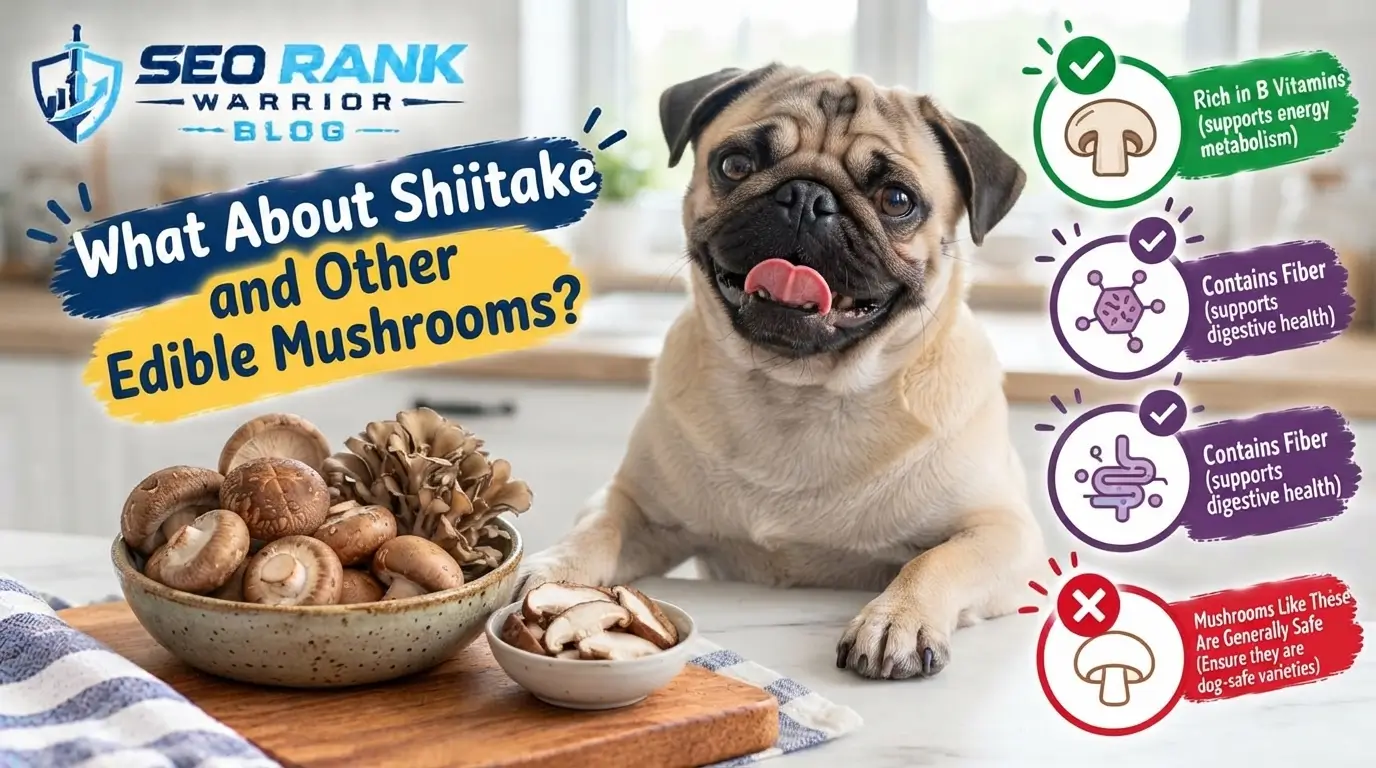
Several cultivated mushrooms commonly sold for human consumption are generally considered safe for dogs when served plain and in moderation.
Examples include:
| Mushroom | General guidance for dogs |
| White button | Generally non-toxic when plain |
| Cremini | Generally non-toxic when plain |
| Portobello | Generally non-toxic when plain |
| Baby bella | Generally non-toxic when plain |
| Shiitake | Generally non-toxic when plain |
| Porcini | Generally non-toxic when plain |
| Maitake | Generally non-toxic when plain |
This does not mean every mushroom product containing these ingredients is suitable for dogs. Seasonings, sauces, oils, and other ingredients can change the safety of the finished dish.
Are Mushrooms Bad for Dogs?
Mushrooms themselves are not automatically bad for dogs. The issue is that the word “mushroom” covers many different species with very different safety profiles.
For commercially grown edible mushrooms, the main concerns are usually preparation, portion size, and whether the individual dog tolerates them.
For wild mushrooms, the concern is toxicity.
So rather than asking whether all mushrooms are good or bad, it is more useful to ask:
- Where did the mushroom come from?
- Is it a commercially grown edible variety?
- Was it prepared without harmful ingredients?
- How much did the dog eat?
- Is the dog showing any unusual symptoms?
This approach makes the distinction between safe grocery-store food and potentially dangerous outdoor mushrooms much clearer.
Can Puppies Eat Mushrooms?
Puppies should not be allowed to eat wild mushrooms under any circumstances.
For store-bought mushrooms, there is generally no nutritional reason to introduce them into a puppy’s diet. Puppies have specific nutritional requirements while growing, so their main diet should be a complete food formulated for their life stage.
If you are considering giving your puppy a new human food, speak with your veterinarian first, particularly if your puppy has a sensitive stomach or a medical condition.
And regardless of age, a puppy that eats an unidentified mushroom outdoors should be treated as needing prompt veterinary advice.
Are Mushrooms Nutritious for Dogs?
Edible mushrooms contain nutrients such as fiber, protein, minerals, and various vitamins. However, the nutritional value mushrooms provide to humans does not mean dogs need them as part of their regular diet.
PetMD notes that while store-bought mushrooms contain nutrients including fiber, protein, iron, magnesium, and vitamins, there are other foods that can provide useful nutrition to dogs.
For most dogs, the priority should be a complete and balanced diet appropriate for their age, size, and health needs. Treats and additional foods should complement that diet rather than replace it.
If your goal is simply to give your dog a healthy vegetable treat, options such as carrots or green beans may be easier choices than mushrooms.
Can Dogs Eat Mushroom Soup?
Mushroom soup is generally not a good food to share with dogs.
The mushroom itself may be a safe cultivated variety, but soups often contain ingredients such as onions, garlic, high levels of salt, butter, cream, or other seasonings.
Because onions, garlic, leeks, and chives are toxic to dogs, a soup containing these ingredients should not be given to your pet.
The same principle applies to creamy mushroom sauces, restaurant mushroom dishes, casseroles, and leftovers. Always consider the entire recipe rather than only the mushroom.
Can Dogs Eat Mushrooms Every Day?
There is generally no reason to feed mushrooms to a dog every day.
Mushrooms are not a required component of a canine diet, and treats or additional foods should not displace a complete and balanced diet.
If you occasionally offer plain, store-bought mushrooms, keep the portion small and watch how your dog responds. If your dog develops vomiting, diarrhea, or other unusual symptoms after eating them, stop offering the food and contact your veterinarian if the symptoms are concerning or persistent.
For dogs with specific health conditions or dietary restrictions, ask your veterinarian before adding new foods.
How to Safely Give a Dog Store-Bought Mushrooms
If your veterinarian is comfortable with your dog having mushrooms, follow a few simple precautions:
Choose grocery-store mushrooms.
Use commercially grown mushrooms intended for human consumption rather than anything collected outdoors.
Wash them properly.
Clean the mushrooms before serving.
Keep them plain.
Avoid garlic, onions, excessive salt, butter, sauces, and heavy seasonings.
Cut them into small pieces.
This can make them easier for your dog to eat.
Start with a small amount.
Any new food can cause digestive upset in some dogs.
Keep treats limited.
Mushrooms should not replace your dog’s normal complete diet.
How to Prevent Mushroom Poisoning at Home
If your dog likes to explore the yard with their nose, prevention is especially important.
Check your yard regularly for mushrooms, particularly after periods of suitable weather for fungal growth. Remove mushrooms safely before allowing your dog into areas where they are growing.
You should also supervise dogs that like to forage during walks, hikes, and outdoor play.
Do not assume that a mushroom is safe simply because birds, insects, or other animals are nearby. The safest approach is to prevent your dog from eating unknown mushrooms altogether.
When Should You Call a Veterinarian?
Contact a veterinarian promptly if your dog has eaten an unidentified or wild mushroom.
Seek urgent veterinary care if your dog develops symptoms such as:
- Repeated vomiting
- Severe diarrhea
- Excessive drooling
- Weakness
- Staggering or loss of coordination
- Tremors
- Seizures
- Difficulty breathing
- Severe abdominal pain
- Yellow gums or eyes
- Collapse
Do not wait for symptoms if you know your dog consumed a wild mushroom. Some toxins can have delayed effects, and early veterinary treatment may be important.
FAQs – Can Dogs Eat Mushrooms?
Can dogs eat mushrooms?
Dogs can generally eat small amounts of plain, commercially grown mushrooms intended for human consumption. Wild mushrooms are different and should be considered potentially toxic because some species can cause severe poisoning.
Can dogs have mushrooms cooked with garlic?
No. Even if the mushroom itself is safe, garlic is toxic to dogs. Avoid giving dogs mushroom dishes containing garlic, onions, leeks, or chives.
Can dogs eat wild mushrooms?
No. Dogs should not eat wild mushrooms. Because it can be difficult to distinguish poisonous species from safe ones, suspected wild mushroom ingestion should be discussed with a veterinarian immediately.
Can puppies eat mushrooms?
Puppies should never be allowed to eat wild mushrooms. There is also no nutritional need to add mushrooms to a puppy’s diet, so discuss any new human foods with your veterinarian before introducing them.
What happens if a dog eats a poisonous mushroom?
Depending on the mushroom, a dog may develop vomiting, diarrhea, abdominal pain, drooling, weakness, stumbling, tremors, seizures, liver or kidney damage, or other serious symptoms. Some effects can be delayed, so immediate veterinary advice is important after suspected wild mushroom ingestion.
Conclusion
So, can dogs eat mushrooms? Plain, commercially grown mushrooms can generally be given to dogs in small amounts, but they are not necessary for a healthy canine diet. The much bigger concern is wild mushrooms, which can contain toxins capable of causing serious illness or even death.
If your dog eats a mushroom growing outdoors, do not rely on appearance or wait for symptoms. Contact your veterinarian promptly and, if possible, preserve a sample or photograph of the mushroom to help with identification.