
Anyone who shares their home with a dog or cat knows that accidents happen. One minute your carpet looks fine, the next you’re staring at a fresh stain wondering if it’s ever coming out. The good news is that you don’t need harsh chemicals to deal with it. If you know how to remove pet stains naturally, you can get rid of the mark and the smell using simple ingredients you probably already have in your kitchen.
This guide walks you through exactly what causes pet stains to stick around, which natural ingredients actually work, and how to treat them on every surface in your home, from carpet and sofas to hardwood floors and mattresses. By the end, you’ll also know how to stop the odor from coming back and when it’s time to call in a professional.
Why Pet Stains and Odors Are So Stubborn
Before jumping into remedies, it helps to understand why a simple puddle turns into a lingering problem. Pet urine contains uric acid, a compound that crystallizes as it dries. These crystals bond tightly to carpet fibers, sofa padding, and even the wood underneath your flooring. Regular soap and water can lift the surface moisture, but they don’t dissolve the uric acid crystals hiding deeper in the material.
That’s exactly why the smell seems to disappear after cleaning, only to return on a humid day or after it rains. Moisture reactivates the crystals, releasing the odor all over again. This is also why so many people search for how to remove pet odor without lasting success: they’re treating the surface but not the source. Vomit and feces present a slightly different challenge since they carry pigments and bacteria that stain fabric dyes, but the same natural-cleaning principles apply across the board.
Natural Ingredients That Actually Break Down Pet Stains
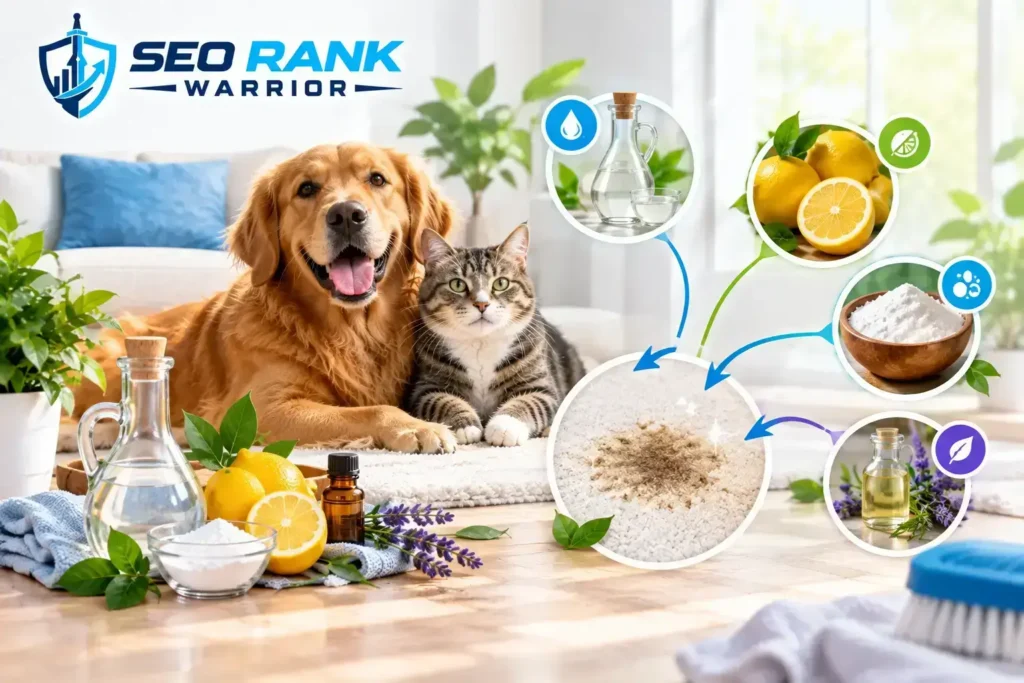
You don’t need a cabinet full of specialty products. Four ingredients cover almost every situation, and each one targets a different part of the stain.
White vinegar is mildly acidic and neutralizes the ammonia smell in fresh urine while killing odor-causing bacteria on contact. It’s often the first line of defense and one of the most searched pet carpet cleaner alternatives to store-bought sprays.
Baking soda absorbs leftover moisture and odor after the vinegar has done its job. It also provides light abrasion, which helps lift stain particles out of fibers without scrubbing too hard.
Hydrogen peroxide (3%) works well on old, yellowed stains because it oxidizes the pigment left behind. Always spot-test it first, since it can lighten dyed fabrics if left too long.
Enzyme-based cleaners are the real game-changer for anyone dealing with set-in accidents. Unlike vinegar or baking soda, an enzyme cleaner for urine stains contains proteins that actually digest the uric acid crystals rather than just masking them. If you’re wondering how to handle old cat urine odor removal home remedy situations that keep coming back, this is usually the missing step.
A simple homemade spray for everyday accidents: mix one cup of white vinegar, one cup of warm water, and a few drops of mild dish soap in a spray bottle. This works well as a first response before moving to enzyme treatment for anything that’s already dried.
How to Get Pee Smell Out of Carpet (Fresh Stains)
Fresh accidents are the easiest to deal with because the uric acid hasn’t crystallized yet. Speed matters here.
- Blot immediately. Press a stack of paper towels firmly over the spot to soak up as much liquid as possible. Never rub, since that pushes the stain deeper into the padding underneath.
- Spray the vinegar solution. Dampen the area evenly and let it sit for about 5 to 10 minutes so the acid can start breaking down the ammonia.
- Sprinkle baking soda generously. Cover the damp spot and leave it overnight to absorb odor and moisture.
- Vacuum thoroughly the next morning.
- Check for lingering smell. If it’s still there, that’s your cue to bring in an enzyme cleaner, since some uric acid has likely already started setting.
This same sequence answers most searches for how to get pet odor out of carpet, because it treats both the visible stain and the invisible bacteria causing the smell.
Dealing With Old or Set-In Stains
Here’s where a lot of people get stuck. Vinegar and baking soda are great for fresh messes, but they only partially work on stains that have had time to dry and crystallize. If you’re trying to figure out how to remove urine smell from carpet after the fact, an enzymatic treatment is almost always necessary.
Rehydrate the dried area first with a little warm water so the enzyme solution can actually reach the crystallized uric acid. Saturate the spot generously with an enzymatic cleaner for dog urine or cat urine, then cover it with a damp cloth to slow evaporation and keep the enzymes active. Let it sit for 12 to 24 hours if the label allows, then follow up with baking soda overnight and a final vacuum.
A simple way to test whether a stain still has active uric acid: clean it once, let it dry completely, then check again after a day or two in humid conditions. If the smell resurfaces, the crystals weren’t fully broken down and a second enzyme treatment is needed.
Removing Pet Stains From Sofas and Upholstery
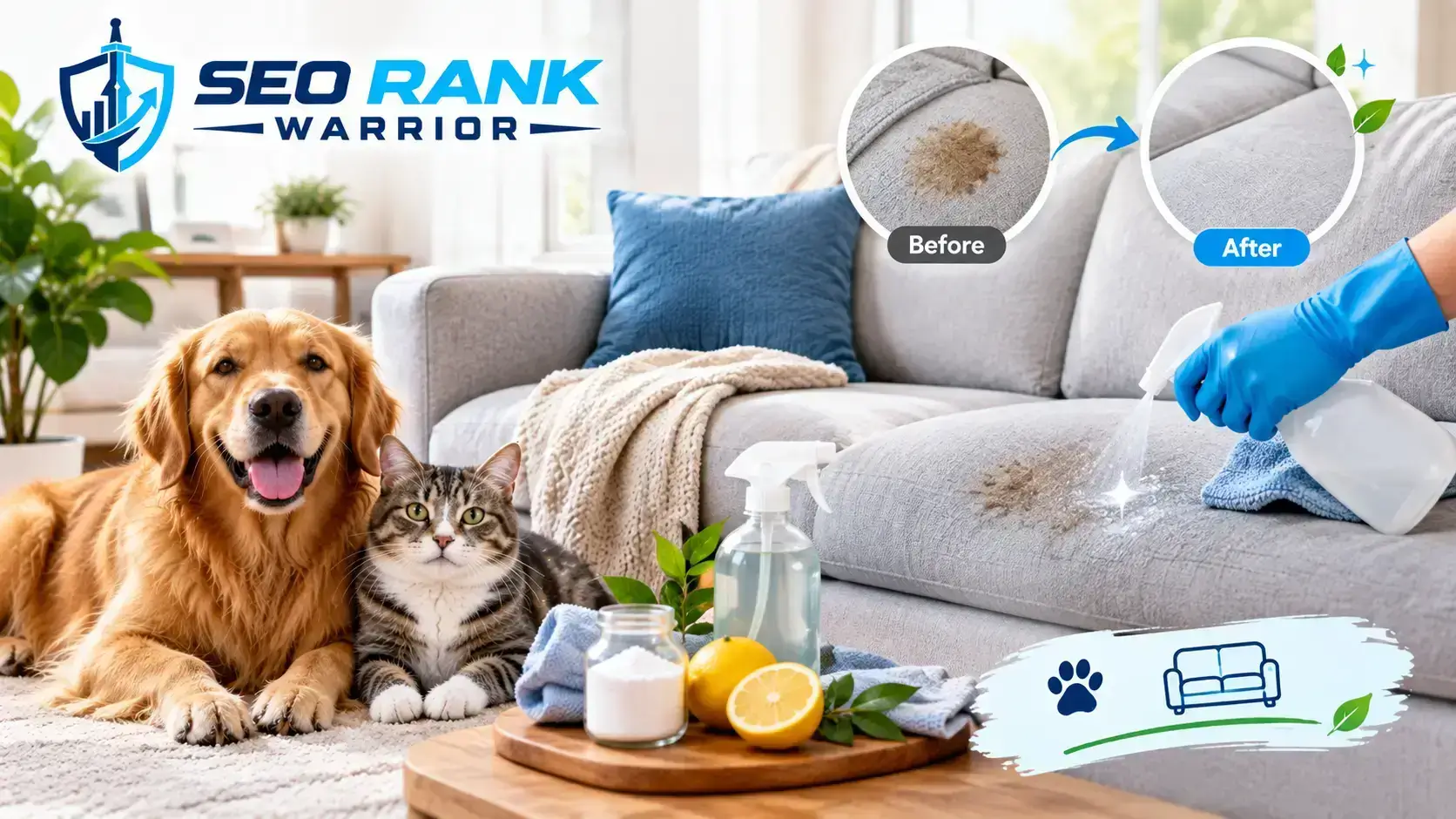
Upholstery holds onto stains longer because the padding underneath acts like a sponge. Dampen the area with warm water first to loosen dried residue, then apply an enzyme cleaner directly to the stain, making sure it soaks through to the foam layer rather than sitting on the fabric surface. Cover it with a damp towel for a few hours to keep the solution from drying out too fast, then finish with baking soda and a light vacuum once everything’s dry.
One detail people often miss: fabric type changes what you can safely use. Microfiber and cotton blends tolerate vinegar and enzyme cleaners well, but leather needs a completely different approach. Stick to a damp cloth and a pH-neutral leather cleaner, then condition the surface afterward. Acidic ingredients like vinegar or hydrogen peroxide will dry out and crack leather over time, so it’s best to avoid them entirely on that material.
Hard Floors: Tile, Hardwood, and Stone
Non-porous surfaces are generally more forgiving since urine doesn’t soak in as deeply, but the right method still depends on the material.
Tile and vinyl handle vinegar well. Wipe up the mess, spray diluted vinegar, let it sit for a few minutes, then rinse and dry. If it’s seeped into grout lines, a soft brush and a little hydrogen peroxide will lift out most residue.
Hardwood and laminate are trickier because vinegar’s acidity can dull the finish over time. A damp cloth with a pH-neutral wood cleaner is the safer choice, followed by a light enzyme application if odor lingers.
Natural stone, like marble or granite, should never be treated with vinegar or peroxide, both of which etch the surface permanently. A baking soda paste left to sit for a day works as a gentle alternative that draws the stain out without damaging the stone.
Bonus: Mattresses and Car Seats
Two spots that often get overlooked are mattresses and car upholstery, and honestly, the process isn’t that different from sofas. Strip off any bedding or covers first, blot the area dry, then treat it the same way you would upholstery: enzyme cleaner, damp cloth cover, dwell time, then baking soda. For car seats, keep windows cracked while the enzyme cleaner works so the interior doesn’t trap moisture and start smelling musty.
Natural vs. Chemical Cleaners: Which Should You Use?
| Factor | Natural Cleaners | Chemical Cleaners |
| Effectiveness on fresh stains | Very good | Very good |
| Effectiveness on old/set stains | Good, especially with enzymes | Strong, but can be harsh |
| Safety around pets and kids | High | Varies; some contain toxic compounds |
| Cost | Low, pantry-friendly | Moderate to high |
| Smell masking vs. actually removing | Removes the source | Sometimes just covers odor |
For most households, a natural approach handles the majority of accidents without exposing pets or children to chemical residue. Chemical cleaners still have their place for extreme cases, like a stain that’s soaked through carpet padding into the subfloor, but they’re rarely the first thing you should reach for.
Common Mistakes That Make Pet Stains Worse
A few habits actually make stains harder to remove rather than easier:
- Rubbing instead of blotting, which pushes urine deeper into fibers and padding.
- Using steam cleaners on fresh stains, since heat can permanently set protein-based stains and make them impossible to fully remove.
- Skipping the enzyme step on old stains, assuming vinegar alone will finish the job.
- Mixing vinegar with bleach or ammonia-based products, which creates dangerous fumes.
- Not testing a hidden spot first, especially with hydrogen peroxide, which can lighten colored fabric permanently.
How to Prevent Future Accidents and Odors

Once you’ve dealt with a stain, a few habits go a long way toward keeping it from happening again. Cleaning up thoroughly the first time matters more than anything else, since leftover uric acid essentially invites your pet to return to the same spot. A washable, waterproof mattress or furniture protector under vulnerable areas can save a lot of future cleanup. For dogs and cats prone to accidents, keeping a consistent bathroom schedule and watching for signs of anxiety or medical issues can address the root cause rather than just the mess it leaves behind.
When to Call a Professional Cleaner
Natural methods handle the vast majority of pet stains, but there are moments when it’s worth bringing in a professional. If you can smell urine but can’t find where it’s coming from, it’s likely soaked into the carpet pad or subfloor, which needs extraction equipment to reach. Stains on delicate materials like silk upholstery or natural stone are also better left to someone with the right tools, since a wrong move can cause permanent damage. And if the same spot keeps attracting repeat accidents even after multiple treatments, a deeper clean than a spray bottle can offer is probably in order.
Frequently Asked Questions
How do I get the urine smell out of carpet for good?
Blot the area right away, treat it with a vinegar-water solution, then follow up with baking soda overnight. If the stain is already dry or the smell keeps returning, an enzyme cleaner is what actually breaks down the uric acid crystals causing the odor, rather than just masking it.
How do you get the pee smell out of a couch or sofa?
Dampen the spot with warm water first to loosen dried residue, then apply an enzyme cleaner so it soaks through to the padding, not just the fabric surface. Cover with a damp cloth for a few hours, then finish with baking soda and a light vacuum once dry.
How to get rid of cat pee smell specifically, since it’s stronger than dog urine?
Cat urine tends to have a higher concentration of certain compounds, which is why it smells sharper. The same enzyme-based approach works, but it often needs a longer dwell time and, in stubborn cases, a second treatment to fully neutralize the odor.
Why does the smell keep coming back even after I’ve cleaned the area?
This almost always means uric acid crystals are still sitting beneath the surface. Regular cleaning dissolves the water-soluble parts of urine but leaves the crystals intact, and they release odor again whenever moisture or humidity reactivates them. An enzyme treatment is the most reliable long-term fix.
How can I eliminate urine smell without using harsh chemicals?
A vinegar-and-water spray followed by baking soda handles most fresh accidents naturally. For older or set-in odor, swap in a natural enzyme cleaner instead of a chemical spray. It’s just as effective on uric acid and doesn’t expose pets or kids to synthetic fragrances or VOCs.
Conclusion
Dealing with pet messes is just part of sharing your home with an animal, but it doesn’t have to mean living with stains or lingering odors. With the right combination of vinegar, baking soda, hydrogen peroxide, and enzyme cleaners, you can treat almost any surface safely and effectively, without reaching for harsh chemicals. Match the method to the material, be patient with older stains, and know when it’s worth calling in professional help. Once you have this system down, pet accidents become a quick fix instead of a lasting headache and if shedding is your next challenge, tackling pet hair is just as manageable with the right approach.