
Most business owners assume “cybersecure” is just a fancier way of saying “we have antivirus software and a firewall.” It isn’t. Being genuinely cybersecure means your people, your data, your vendors, and your recovery systems can all withstand pressure at the same time not just your network perimeter.
That distinction matters because attackers no longer need to break through a firewall when they can trick an employee, exploit an unpatched vendor tool, or wait for a backup that was never actually tested. This guide breaks down what it really means to be cybersecure in 2026, the pillars every organization needs to cover, and a practical framework you can start applying this week.
What Does “Cybersecure” Actually Mean?
“Cybersecure” describes an organization that has closed the gap between the technology it uses and the controls needed to use that technology safely. It’s not a product you buy or a checkbox you tick once a year. It’s an ongoing state one where security decisions are built into how the business operates, rather than bolted on after something goes wrong.
A cybersecure business typically has clarity across six connected areas: who can access what, how data is protected, how third-party vendors are vetted, how incidents get detected and contained, how well-prepared employees are, and how quickly the business can recover if prevention fails. Miss even one of these, and the rest stop mattering a hardened network is still vulnerable if an employee reuses a leaked password, or if backups exist but were never tested for a real restore.
Why Being Cybersecure Matters More Than Ever
The size of a business no longer determines whether it’s a target. Smaller organizations are frequently targeted precisely because attackers assume often correctly that they’ve adopted new tools faster than they’ve adopted the policies to govern them. This is especially true with the recent wave of AI tool adoption: employees are pasting sensitive data into public AI assistants, connecting AI plugins to internal systems, and using “shadow AI” tools that IT departments don’t even know exist.
At the same time, regulatory pressure is rising. Frameworks like the EU’s NIS2 directive have widened the scope of who counts as a critical service provider, tightened incident-reporting timelines, and pushed compliance obligations further down the supply chain meaning even smaller vendors serving regulated industries can no longer treat cybersecurity as optional. Add in the rise of ransomware-as-a-service, increasingly convincing phishing driven by generative AI, and supply-chain attacks that route through trusted software vendors, and it becomes clear why “we haven’t been breached yet” is not the same thing as “we’re secure.”
The Core Pillars of a Cybersecure Organization
Security researchers and compliance frameworks tend to converge on the same core categories, whether you’re reading an SMB security assessment or a national cybersecurity strategy. Here’s what actually holds a cybersecure organization together.
Governance and Ownership
Someone in the organization needs to own security decisions even if that’s an outsourced advisor rather than a full-time CISO. Without clear ownership, security becomes everyone’s job on paper and no one’s job in practice. Governance also means having written policies: acceptable use, data handling, incident response, and increasingly AI usage policies that define what employees can and can’t do with generative AI tools.
Access Control and Zero Trust
The old model of “trust anyone inside the network” is dead. A zero trust approach assumes no user or device should be automatically trusted, even if it’s already inside your systems. In practice, this means multi-factor authentication everywhere, role-based access (giving people only the access they need, not everything by default), and separating credentials between production systems and backup or recovery systems. That last point matters more than most businesses realize if the same credentials that access your live systems also access your backups, a single compromised login can wipe out both your data and your safety net at once.
Data Privacy and Protection
This covers how data is classified, encrypted, stored, and shared both with employees and with third parties. Businesses handling healthcare, financial, or personal data face additional obligations, but even a small services business holding customer contact details has a responsibility to protect it and be transparent about how it’s used.
Vendor and Third-Party Risk
Modern businesses run on a stack of SaaS tools, cloud providers, and outsourced services, and each one is a potential entry point. A cybersecure organization vets vendors before onboarding them, understands exactly what data each vendor can access, and reviews that access periodically rather than granting it once and forgetting about it.
Backup, Recovery, and Business Continuity
This is the pillar most businesses underinvest in, largely because it only becomes visible during a crisis. A real backup strategy isn’t just “we have a copy somewhere” it’s immutable storage that ransomware can’t encrypt or delete, credential separation from production systems, and critically verified, tested restores. A backup you’ve never tried to restore from is a guess, not a safety net. This applies across cloud infrastructure, SaaS platforms like Microsoft 365 and Google Workspace (which are often wrongly assumed to be backed up by the provider itself), and on-premises servers.
Incident Response and Employee Awareness
Even well-defended organizations get breached. What separates a contained incident from a business-ending one is how fast it’s detected and how prepared the team is to respond. This means having a written incident response plan, running periodic tabletop exercises, and training employees to recognize phishing and social engineering still the entry point for the overwhelming majority of breaches, regardless of how advanced the perimeter defenses are.
How to Know Whether You’re Actually Cybersecure
Most leadership teams gauge security by gut feeling “we haven’t had an incident, so we must be fine.” That’s a lagging indicator, not a real measurement. A more reliable approach is to score yourself against the six pillars above and ask, for each one, whether you have evidence rather than an assumption.
For access control, the evidence is an access log showing who can reach what, reviewed in the last quarter not a belief that “only the right people have access.” For backup and recovery, the evidence is a completed restore test with a timestamp not a dashboard showing that backups “ran successfully.” For employee awareness, the evidence is a completed training record or a phishing simulation result not a policy document sitting unread in a shared drive.
This distinction between believing you’re secure and being able to demonstrate it is also what separates businesses that sail through a cyber insurance renewal or a client security questionnaire from those that scramble to produce evidence at the last minute. Increasingly, being cybersecure isn’t just about avoiding an attack it’s a competitive requirement. Enterprise clients, insurers, and regulators are all asking smaller vendors and partners to prove their security posture before doing business with them.
Building a Cybersecure Strategy: A Practical Framework
Turning these six pillars into an actual plan doesn’t require an enterprise-sized budget. Here’s a sequence that works for most small and mid-size organizations.
Start with an honest assessment. You can’t fix what you haven’t measured. A structured assessment across governance, access control, data privacy, vendor risk, incident response, and awareness will usually surface two or three critical gaps immediately often ones leadership didn’t know existed.
Prioritize by impact, not by cost. The cheapest fixes enforcing MFA, separating backup credentials, writing an AI usage policy often close the biggest gaps. Save the larger infrastructure investments for after the low-cost, high-impact items are handled.
Document as you go. Policies that exist only as verbal agreements or tribal knowledge don’t hold up during an audit, an insurance claim, or an actual incident. Written, versioned policies even simple ones are worth more than an unwritten “we’re careful about that.”
Test your recovery, not just your defenses. Schedule a real restore test at least twice a year. If your team can’t recover a file, a server, or a full tenant on demand, you don’t actually know whether your backup strategy works.
Revisit the plan quarterly. Threats, tools, and your own business change faster than an annual review can keep up with. New SaaS tools, new employees, and new AI adoption all shift your risk profile.
Common Mistakes That Undermine Security Efforts
Several patterns show up repeatedly in businesses that consider themselves secure but aren’t:
- Assuming cloud providers back up your data for you. Microsoft and Google guarantee platform uptime, not protection against accidental deletion, insider error, or ransomware — that responsibility sits with you.
- Treating AI tools as low-risk because they’re “just for productivity.” Employees pasting client data, contracts, or source code into public AI tools creates data exposure that most existing security policies were never written to cover.
- Letting policy and practice drift apart. A security policy that hasn’t been reviewed since it was written is a compliance document, not an active control.
- Over-indexing on prevention and under-investing in recovery. Prevention will eventually fail against a determined or lucky attacker. Recovery capability determines whether that failure is a bad day or a business-ending event.
- Granting broad access “to save time.” Every unnecessary permission is a door that doesn’t need to exist.
A Simple Cybersecure Checklist to Start With
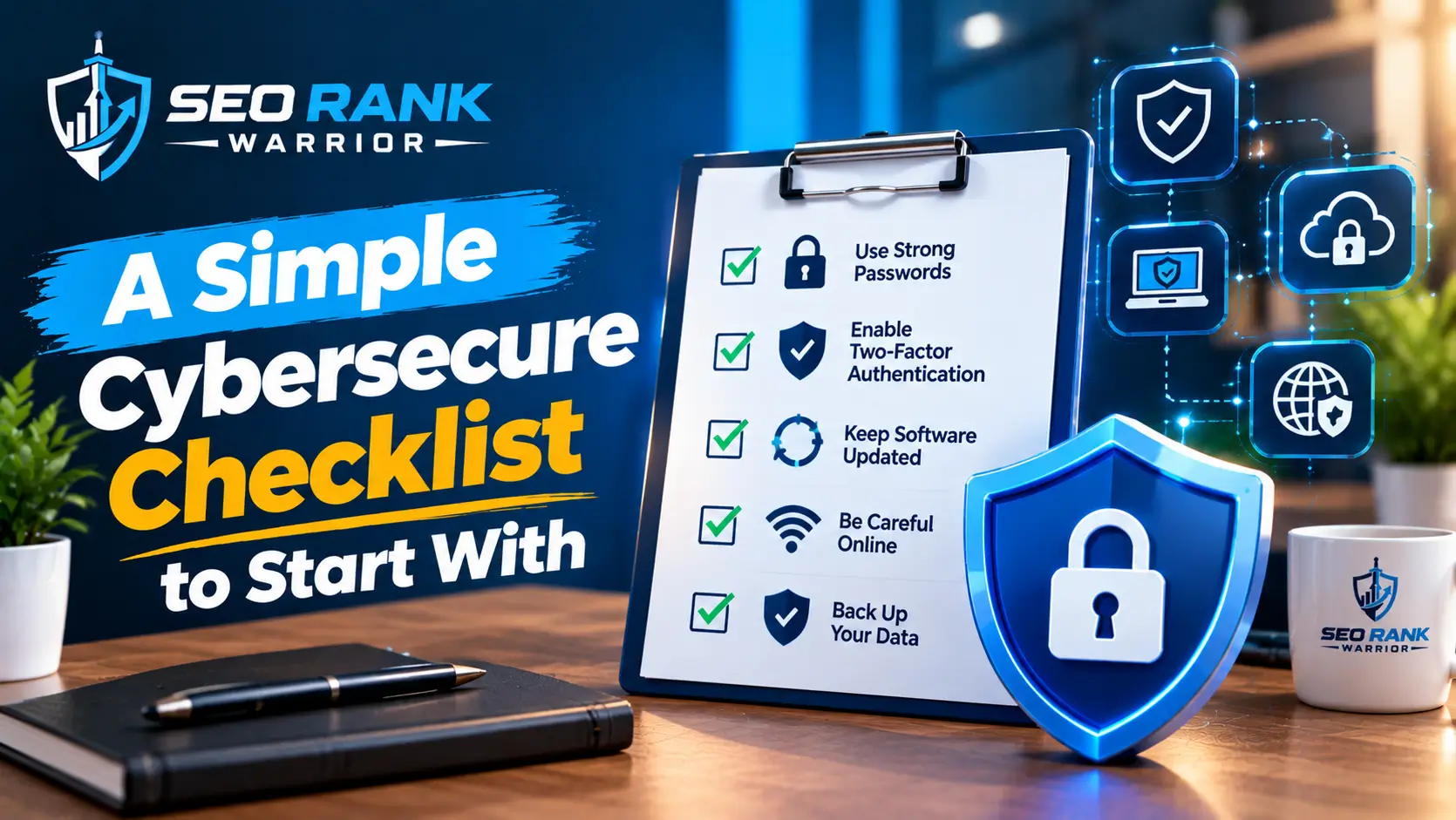
If you’re building or auditing a security program, these are reasonable first milestones:
- Multi-factor authentication enabled on all critical accounts
- A written, current incident response plan
- Backup credentials separated from production system credentials
- At least one tested, verified restore in the past six months
- A written AI usage policy covering what data can and can’t be shared with AI tools
- A documented list of vendors with access to sensitive systems or data
- Basic phishing awareness training completed by all employees in the past year
- Alignment with a recognized framework relevant to your industry (ISO 27001, NIS2, PCI-DSS, or similar)
FAQs – Cybersecure
What’s the difference between “cybersecure” and “cybersecurity”?
Cybersecurity is the broader field the tools, practices, and industry dedicated to protecting systems and data. Being cybersecure is the outcome: an organization that has actually closed its gaps across governance, access, data protection, vendor risk, backup, and awareness. You can invest heavily in cybersecurity products and still not be cybersecure if those investments aren’t aligned with your real risks.
Is a small business really a target for cyberattacks?
Yes, and often more so than larger enterprises. Attackers frequently target smaller businesses precisely because they assume — correctly, in many cases that fewer controls are in place, while the business may still hold valuable customer or payment data, or serve as a stepping stone into a larger partner’s systems through the supply chain.
How often should a business review its cybersecurity policies?
At minimum, once a year, but a quarterly review is more realistic given how quickly new tools, vendors, and threats emerge. Any major change — a new SaaS platform, a new AI tool, a change in staff with system access — should trigger an ad hoc review rather than waiting for the scheduled one.
Does having cloud backups mean my data is automatically safe?
Not necessarily. Cloud platforms like Microsoft 365 and Google Workspace protect against infrastructure failure on their end, but under the shared responsibility model, protecting against accidental deletion, insider threats, and ransomware within your own tenant is still your responsibility. A separate, immutable, independently tested backup is the only way to be certain that data is recoverable.
What’s the fastest way to improve cybersecurity without a big budget?
Enforce multi-factor authentication across all accounts, separate the credentials used for backups from those used for daily operations, and write a short AI usage policy defining what data employees can share with AI tools. These three steps are low-cost, fast to implement, and close some of the highest-impact gaps that attackers rely on.
Conclusion
Being cybersecure isn’t about reaching a finish line it’s about building a level of resilience that holds up whether the threat is a phishing email, a misconfigured AI tool, or a full ransomware attack on your backups. The organizations that handle incidents well aren’t the ones that never get targeted; they’re the ones that closed the basic gaps ahead of time and could actually recover when it counted. Start with an honest assessment, fix the highest-impact gaps first, and make recovery testing a habit rather than an afterthought that combination covers more risk than any single tool ever will.