
Most people who say they’re “training” an AI model with prompts aren’t actually training it at all not in the technical sense. They’re steering it. You’re not changing what the model knows deep down; you’re guiding how it uses what it already knows, the same way a good manager gets great work out of a talented new hire without rewriting their skill set. There’s a real difference between the two, and understanding it is where good prompting actually starts.
That distinction matters more than it might seem. Businesses spend real money on AI tools, and understanding what practices are beneficial for training AI models with prompts can help ensure that investment delivers better results instead of being wasted on vague instructions and inconsistent outputs. The good news is that the practices that separate a mediocre prompt from a genuinely effective one are learnable, repeatable, and don’t require any technical background in machine learning to apply.
This guide breaks down what’s really happening when you shape an AI model’s behavior through prompts, which practices consistently produce better results across different tools and use cases, and where the line sits between everyday prompt engineering and actual model training so you know exactly which one you need and when.
Prompting Isn’t Training Here’s the Actual Distinction
Think of an AI model as a highly capable employee on their first day at a new job. They already know a lot in general, but they don’t know your specific preferences, your brand voice, or exactly how you want a task done. Understanding what practices are beneficial for training AI models with prompts helps you close that gap through clear, structured instructions without ever touching the model’s actual training.
Fine-tuning is like sending that employee through a formal training program you’re changing what they know at a fundamental level. It works, but it’s expensive, slow, and requires large amounts of labeled data.
Prompt engineering is more like giving that same employee clear job instructions, a few examples of good work, and some constraints on what to avoid. No retraining required. It works immediately, costs nothing beyond the usual API calls, and if something doesn’t land right, you just adjust the instructions and try again.
Most people don’t need fine-tuning. They need better prompts. So that’s where the real practices come in.

Core Practices That Actually Move the Needle
Give the model examples, not just instructions.
Zero-shot prompting just instructing with no examples works fine for simple tasks. But the moment a task gets even slightly nuanced, examples do more work than explanation ever will.
- Few-shot prompting means showing the model 2 to 5 examples of what a good response looks like before asking for the real one. It’s one of the most widely used techniques out there, largely because it works across almost any type of task.
- Examples anchor the model’s understanding of tone, format, and level of detail in a way that written instructions alone often can’t.
Ask the model to think step-by-step.
Chain-of-thought prompting means explicitly asking the model to reason through a problem in stages rather than jumping straight to an answer. For anything involving multi-step logic, math, or complex decision-making, this alone can dramatically improve accuracy sometimes rivaling models that were fine-tuned on thousands of examples for the same task.
Combining this with few-shot examples (few-shot chain-of-thought) tends to produce the strongest results for complex, accuracy-critical tasks.
Ground the model in real information.
Even a well-prompted model can confidently state something false this is what people mean by hallucination. The most reliable fix isn’t a clever phrase in your prompt; it’s giving the model something real to work from.
Retrieval-augmented generation (RAG) feeds trusted source documents into the prompt’s context before the model answers. You can even instruct it directly: answer only using the provided documents, and say “I don’t know” if the answer isn’t in them. That single instruction creates a real guardrail against the model just making things up.
Be specific about output format and constraints.
Vague prompts force the model to guess, and guessing is exactly where inconsistent results come from. Telling the model not just what you want, but how you want it structured length, tone, format, what to avoid removes a lot of that guesswork.
- Specify the output format directly (bullet list, JSON, a certain word count)
- State constraints clearly (“don’t include disclaimers,” “keep it under 100 words”)
- Define the tone or persona you want the response to match
Build prompts you can reuse, not one-off requests
A single great prompt is nice. A prompt that reliably works the same way every time you or your team uses it is far more valuable. That’s the actual goal of prompt engineering not one good output, but a repeatable system that produces good outputs consistently.
Teams that maintain a shared library of tested, refined prompts tend to get far more consistent output across people and projects than teams reinventing prompts from scratch every time.
Two More Practices Worth Building Into Your Workflow
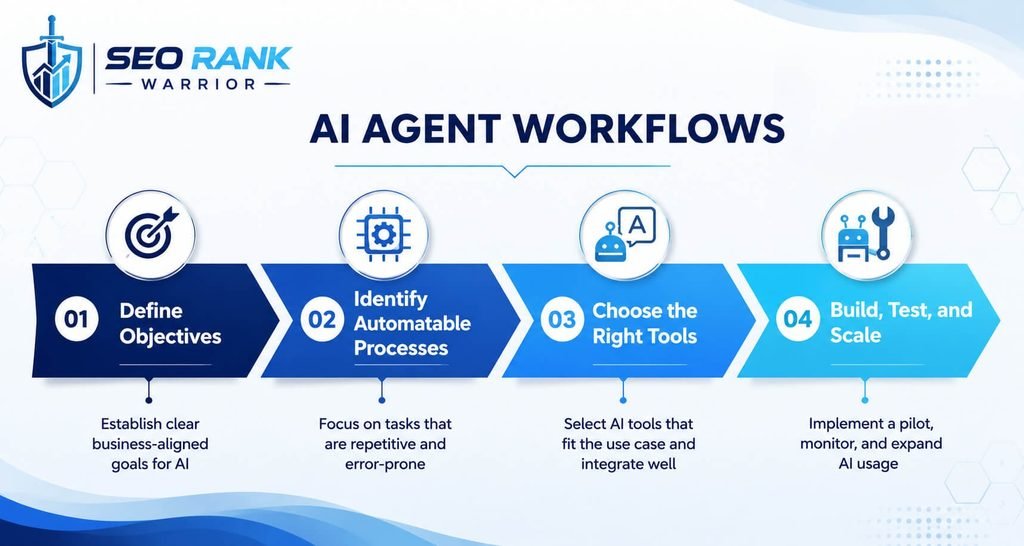
Iterate instead of expecting perfection on the first try.
Even experienced prompt engineers rarely nail a prompt on the first attempt. Treat prompting as a loop, not a one-shot event: run the prompt, look closely at where the output falls short, adjust one variable at a time, and test again. Changing multiple things at once — tone, format, and examples all in the same edit makes it hard to know which change actually helped.
- Keep a record of prompt versions so you can see what worked and what didn’t
- Test prompts against a handful of varied inputs, not just one, before considering them “done”
- Small wording changes can shift output more than expected, so isolate variables when troubleshooting.
Match the technique to the task.k
Not every task needs the same level of prompting complexity. Simple, well-defined tasks summarizing a short paragraph, formatting data often work fine with a plain zero-shot instruction. Save few-shot examples and chain-of-thought reasoning for tasks where the extra structure actually earns its keep: multi-step analysis, nuanced tone matching, or anything where a wrong answer is costly. Over-engineering a simple prompt wastes time; under-engineering a complex one produces shaky results.
| Factor | Prompt Engineering | Fine-Tuning |
| Cost | Near-zero, just API usage | High — data prep, compute, time |
| Speed | Immediate | Weeks, sometimes longer |
| Data required | None | 1,000+ labeled examples, often more |
| Reversibility | Fully reversible, just change the prompt | Requires retraining to undo |
| Best for | Most day-to-day tasks | Highly specialized, high-volume domains |
The general rule worth following: start with prompt engineering. If it proves the task is viable and you need more consistency at scale than prompting alone can deliver, that’s when fine-tuning starts to make sense not before.
Don’t Skip the Security and Ethics Side

Good prompting practices aren’t just about getting better outputs — they’re also about protecting your business and your users.
Watch for prompt injection.
A prompt injection attack happens when hidden text buried in a document, webpage, or file tries to override your actual instructions to the model. If you’re feeding outside content into an AI tool, it’s worth reviewing what comes back before trusting it blindly, especially in workflows where the model reads content from sources you don’t fully control.
Keep human oversight in the loop.
Reasoning traces, prompt logging, and decision summaries all help teams understand why a model produced a particular output which matters a lot when something goes wrong, and you need to trace back through the process.
Handle AI-generated content responsibly.
Label AI-generated content when it’s appropriate to do so, fact-check anything that matters, and respect copyright when models are drawing from external sources. This isn’t just an ethics checkbox content that’s accurate and clearly sourced also tends to perform better with both readers and search engines.
Multimodal Prompting Is Becoming the Norm

Prompting isn’t just a text-based skill anymore. As models handle images, video, and audio alongside text, the same core principles apply, just with more variables to define.
For something like AI video generation, for example, vague prompts leave the model guessing at scene details, camera movement, and pacing leading to inconsistent results. The fixes look familiar:
- Define the subject, environment, and action clearly rather than leaving them implied
- Use style references (cinematic, documentary-style, realistic) to anchor visual tone
- Specify camera behavior and pacing when it matters to the outcome
- Describe emotional tone the same way you’d describe voice or style in a text prompt
The underlying logic doesn’t change across formats: clarity in, consistency out.
FAQs – What Practices Are Beneficial for Training AI Models With Prompts?
What’s the most effective prompting technique for improving accuracy?
For most tasks, combining few-shot prompting with chain-of-thought reasoning delivers the strongest accuracy gains, especially on tasks involving multiple reasoning steps.
How do I reduce hallucinations when prompting an AI model?
Retrieval-augmented generation (RAG) is the most reliable fix feeding the model verified source documents and instructing it to answer only from those sources.
Is prompt engineering the same as training an AI model?
Not technically. Training (or fine-tuning) changes the model’s internal weights using labeled data. Prompt engineering shapes behavior through instructions and examples without touching the model itself.
When should a business consider fine-tuning instead of just prompting?
Once prompt engineering proves a task is viable, but you need more consistency at scale typically in narrow, high-volume, specialized domains fine-tuning becomes worth the added cost and effort.
What is a prompt injection attack, and why does it matter?
It’s when hidden instructions embedded in external content try to override your actual prompt. It matters because it can cause an AI tool to produce misleading or harmful output without an obvious warning sign.
Conclusion
Training an AI model with prompts really comes down to clarity, structure, and repeatability give the model solid examples, ground it in real information when accuracy matters, and build prompts that work consistently rather than chasing one good answer at a time. Pair that with basic security awareness around prompt injection and responsible use of AI-generated content, and you’ve got a system that actually holds up as these tools keep evolving.