
If you have ever wondered, can dogs eat onions, the answer is no. Onions are toxic to dogs and can damage their red blood cells, potentially causing a serious type of anemia. This applies to raw, cooked, fried, dried, and powdered onions.
The risk is not limited to pieces of onion served on their own. Onion powder and onion-containing ingredients can also appear in soups, sauces, seasonings, processed foods, and leftovers. Knowing the signs of onion poisoning and what to do after accidental ingestion can help you respond quickly.
Why Are Onions Toxic to Dogs?
Onions belong to the Allium family of plants, which also includes garlic, leeks, shallots, and chives. They contain compounds that can cause oxidative damage to a dog’s red blood cells.
When red blood cells become damaged, they can break down prematurely. This process is known as hemolysis and can lead to hemolytic anemia. In serious cases, reduced oxygen delivery to the body’s tissues can cause severe illness, organ damage, or death.
This is why onions should not be intentionally included in a dog’s diet, even when they are cooked as part of another meal.
Can Dogs Have Onions in Any Form?
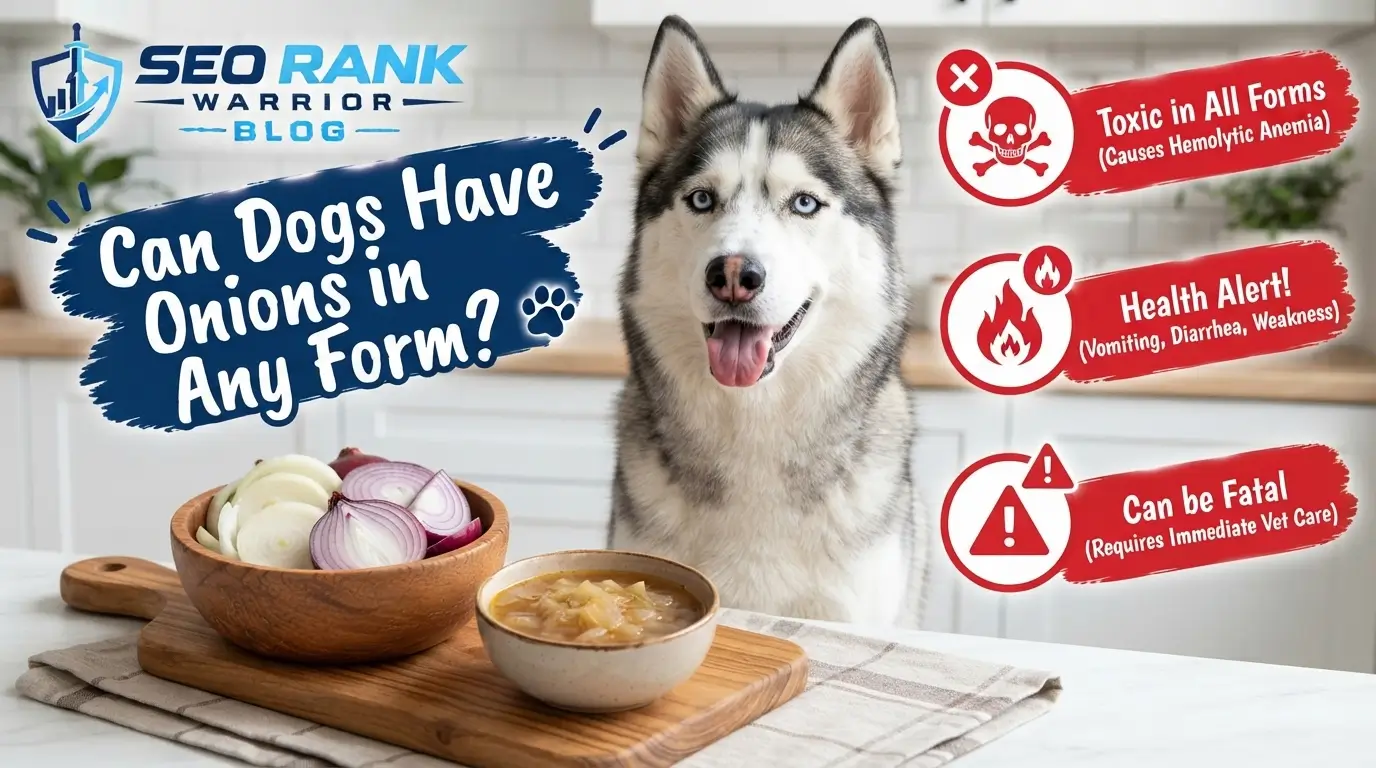
No. Dogs should not be given onions in any form.
The toxic risk applies to:
- Raw onions
- Cooked onions
- Fried onions
- Dried onions
- Dehydrated onions
- Onion flakes
- Onion powder
- Onion juice
- Onion-containing foods
Cooking does not remove the concern. Processed forms such as onion powder can also be particularly problematic because a concentrated amount can be present in a relatively small quantity of food.
So if you are asking can dogs have onions as an occasional treat, the safest answer is no.
Can Dogs Eat Raw Onions?
No. Raw onions are toxic to dogs and should never be intentionally fed to them.
Raw onion may be found in salads, sandwiches, burgers, wraps, homemade meals, or food scraps. A dog that grabs a piece from the kitchen floor may not show immediate symptoms, but that does not mean the onion is harmless.
Onion toxicity can involve delayed signs because red blood cell damage may continue after the initial ingestion. For that reason, suspected ingestion should be discussed with a veterinarian rather than waiting to see whether symptoms develop.
Can Dogs Eat Cooked Onions?
No. Cooked onions are still toxic to dogs.
Whether onions are boiled, sautéed, baked, roasted, grilled, or fried, cooking does not make them a safe ingredient for dogs. The same concern applies when onions are cooked into a larger dish.
This is especially important with leftovers. A dog may not eat a bowl of onions directly but could consume onion-containing gravy, stew, soup, casserole, or meat.
If a food contains onions, it is better not to share it with your dog.
What About Onion Powder?
Onion powder deserves particular attention because it can be easy to overlook.
It may appear in:
- Seasoning blends
- Soup mixes
- Gravy
- Sauces
- Crackers
- Processed meats
- Ready-made meals
- Baby food
- Snack foods
- Bouillon and stock products
Because onion powder is concentrated, a small amount of a powdered ingredient can represent more onion exposure than its appearance suggests. Veterinary sources specifically advise avoiding foods containing onion powder.
Always check ingredient labels before giving human food to your dog.
Can Dogs Eat Green Onions?
No. Green onions, also called scallions, are part of the Allium family and are also toxic to dogs.
The same precaution applies to other related plants, including:
- Chives
- Leeks
- Shallots
- Garlic
These foods contain compounds that can damage red blood cells and should not be used as dog treats or meal ingredients.
Are All Types of Onions Dangerous?
Yes. Dogs should avoid common onion varieties rather than trying to identify one type as safe.
This includes:
- White onions
- Yellow onions
- Red onions
- Sweet onions
- Green onions
- Spring onions
- Dried onions
- Onion flakes
- Onion powder
The preparation can change the concentration and amount consumed, but it does not turn onion into a dog-safe food.
How Much Onion Is Toxic to Dogs?
The toxic amount depends on factors such as the dog’s body weight, the form of onion consumed, the quantity, and the individual dog’s susceptibility.
PetMD reports that onion poisoning has been consistently noted in pets consuming more than approximately 0.5% of their body weight in onions, while individual risk can vary. Certain dogs may also be more susceptible, including some Japanese breeds and dogs with underlying conditions.
Because calculating a potentially dangerous amount at home can be difficult, it is not a good idea to assume that a small-looking portion is automatically safe.
If your dog has eaten onion, tell your veterinarian:
- Your dog’s approximate weight
- What type of onion was eaten
- Whether it was raw, cooked, or powdered
- Approximately how much was consumed
- When the ingestion happened
- Whether your dog has any symptoms
This information can help the veterinarian determine the appropriate response.
Signs of Onion Poisoning in Dogs
One of the most important things to understand about onion toxicity is that symptoms may not appear immediately.
Possible signs include:
- Vomiting
- Diarrhea
- Loss of appetite
- Abdominal discomfort
- Lethargy
- Weakness
- Pale gums
- Reduced tolerance for exercise
- Fast breathing
- Increased heart rate
- Stumbling or loss of balance
- Red or brown urine
- Collapse
These signs can occur as red blood cells become damaged and the dog’s body struggles to deliver enough oxygen to tissues.
A dog does not need to show every symptom to require veterinary attention.
Why Can Onion Poisoning Cause Anemia?
Red blood cells are responsible for transporting oxygen around the body. Certain compounds in onions can damage these cells, causing them to rupture prematurely.
When enough red blood cells are lost, the dog can develop hemolytic anemia.
A dog with significant anemia may become weak, tired, pale-gummed, or unable to exercise normally. The heart and breathing rate may also increase as the body tries to compensate for reduced oxygen delivery.
Severe cases can become life-threatening, which is why onion ingestion should not be treated as an ordinary dietary mistake.
What Happens If a Dog Eats Onions?
The outcome depends on the amount consumed and the individual dog.
A dog that eats a small accidental amount may not develop obvious illness, but that does not mean the exposure should automatically be ignored. Larger exposures can result in gastrointestinal symptoms followed by signs related to red blood cell damage.
If you know or suspect that your dog has eaten onions, contact your veterinarian promptly. Do not wait for your dog to become visibly sick before asking for professional advice.
What Should You Do If Your Dog Eats Onion?
First, stay calm and gather as much information as possible.
If you know what your dog ate, keep the food packaging or ingredient list available. Estimate the amount consumed and note approximately when it happened.
Then contact your veterinarian or an appropriate veterinary emergency service for advice.
Do not make your dog vomit at home unless a veterinarian specifically tells you to do so. Veterinary professionals can determine whether decontamination is appropriate based on the timing, amount, and condition of the dog.
If your dog is already showing weakness, pale gums, difficulty breathing, collapse, seizures, or other serious symptoms, seek emergency veterinary care.
Can Dogs Eat Food Cooked With Onions?
No. Food cooked with onions should not be considered safe simply because the onion pieces have been removed.
The onion compounds may have been incorporated into the surrounding food during cooking. Onion powder may also be present in seasonings or sauces without being visible.
Examples of foods that may contain onions include:
- Onion gravy
- Soups
- Stews
- Pasta sauces
- Meat sauces
- Burgers
- Meatballs
- Casseroles
- Fried foods
- Seasoned rice
- Restaurant leftovers
The safest approach is to give your dog food specifically prepared without onion and other toxic ingredients.
Can Dogs Eat Onion Rings?
No. Onion rings are unsafe for dogs because they contain onions.
The coating also introduces additional concerns such as excess fat, salt, and seasonings. Fried foods are generally poor choices for dogs even when the primary ingredient is not toxic.
If your dog steals an onion ring, contact your veterinarian to discuss the amount consumed, especially if your dog is small or ate several pieces.
Can Puppies Eat Onions?
No. Puppies should not eat onions.
A puppy’s smaller body size means that the amount of a toxic food relative to body weight can become important more quickly. Puppies are also still developing, so their diet should be based on complete and balanced nutrition designed for growth.
Keep onions, onion-containing leftovers, seasonings, and kitchen scraps away from puppies.
If a puppy accidentally eats onion, contact a veterinarian rather than waiting for symptoms.
Are Onions Bad for Small Dogs?
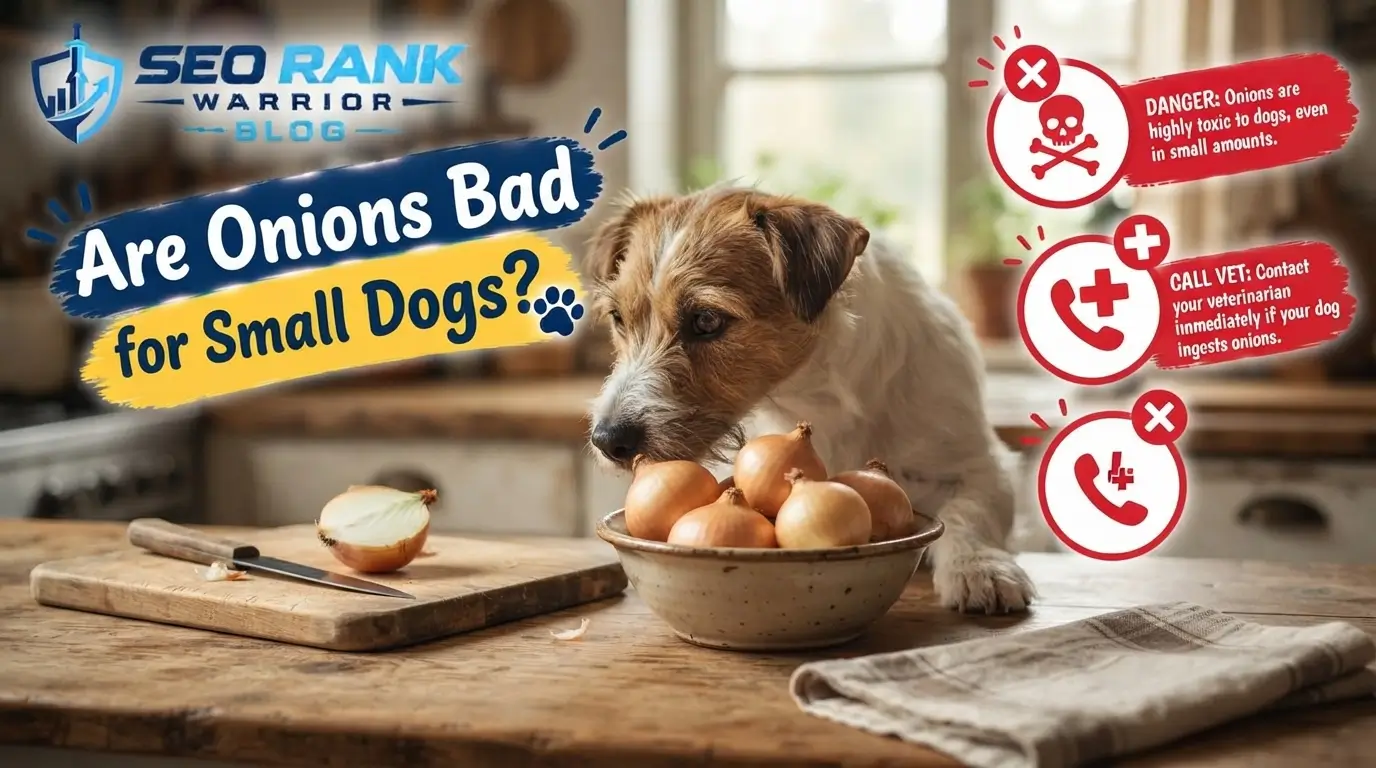
Yes. Onions can be dangerous for dogs of any size, but body weight is an important factor when considering toxin exposure.
A quantity that represents a small amount of food in a large dog may represent a much greater dose relative to the body weight of a small dog.
Small breeds should therefore not be given onions simply because the amount appears tiny.
If you are unsure whether the amount your dog consumed could be harmful, provide your veterinarian with your dog’s weight and the estimated amount eaten.
Are Onions Dangerous for Dogs With Health Conditions?
Certain dogs may be more vulnerable to the effects of onion exposure.
PetMD notes that dogs with conditions such as anemia, liver disease, or diabetes, as well as dogs taking certain medications, may have additional risk factors. Some Japanese breeds, including Akitas and Shiba Inus, are also reported to be more susceptible.
If your dog has an existing health condition or takes medication, do not rely on general internet guidelines to determine whether an exposure is safe. Contact your veterinarian for individualized advice.
How Is Onion Poisoning Treated?
Treatment depends on when the onion was eaten, how much was consumed, and whether the dog is showing signs of toxicity.
A veterinarian may use decontamination methods such as inducing vomiting when appropriate. Activated charcoal may also be considered in certain situations.
If a dog develops significant anemia or becomes seriously ill, hospitalization and supportive treatment may be necessary. Severe cases can require treatments such as intravenous fluids, oxygen support, or a blood transfusion.
The earlier a potentially significant exposure is assessed, the more options a veterinarian may have for managing it.
How to Prevent Onion Poisoning
Prevention is easier than treating accidental poisoning.
Keep fresh onions in a secure location where your dog cannot reach them. Store onion powder and seasoning mixes in closed cabinets, and avoid leaving prepared foods unattended on counters or tables.
It is also worth checking ingredient labels on foods you occasionally share with your dog.
Common kitchen items that deserve extra attention include:
- Leftover soups
- Sauces
- Gravy
- Seasoned meat
- Baby food
- Processed foods
- Spice blends
- Restaurant leftovers
Secure your garbage as well, because discarded onion-containing food can be just as tempting to a curious dog.
Safer Vegetable Alternatives
Although onions are unsafe, several vegetables can be appropriate dog treats when prepared correctly and offered in moderation.
Common options include:
These foods should complement, rather than replace, your dog’s complete and balanced diet. Always introduce a new food gradually and consider your dog’s individual dietary needs.
FAQs – Can Dogs Eat Onions?
Can dogs eat onions?
No. Onions are toxic to dogs and can damage red blood cells, potentially causing hemolytic anemia. Raw, cooked, dried, and powdered onions should all be avoided.
Can dogs have onions in small amounts?
Dogs should not intentionally be given onions, even in small amounts. The risk depends on factors including the dog’s size and the amount consumed. If your dog accidentally eats onion, contact your veterinarian for advice.
Can dogs eat cooked onions?
No. Cooking does not make onions safe for dogs. Onions remain toxic whether they are cooked, fried, baked, or otherwise prepared.
Can dogs eat onion powder?
No. Onion powder should also be avoided. It can be present in concentrated amounts in seasonings, sauces, soups, and processed foods.
What are the symptoms of onion poisoning in dogs?
Possible symptoms include vomiting, diarrhea, loss of appetite, weakness, lethargy, pale gums, increased heart or breathing rate, reduced exercise tolerance, and red or brown urine. Symptoms may be delayed, so veterinary advice is important after suspected ingestion.
Conclusion
So, can dogs eat onions? No. Onions are toxic to dogs in raw, cooked, dried, and powdered forms and can damage red blood cells, leading to potentially serious anemia.
Keep onions and onion-containing foods away from your dog, and check ingredient labels for hidden onion powder in human foods. If your dog accidentally eats onions, contact a veterinarian promptly rather than waiting for symptoms to appear.