
Ask ten people to define technology, and you’ll probably get ten different answers smartphones, rockets, the internet, maybe even AI. And they wouldn’t be wrong exactly, but they’d all be describing examples rather than the thing itself. Technology is bigger and older than any single gadget, and pinning down what it actually means is a lot more interesting than most people expect.
The word gets used so often that it’s easy to assume everyone means the same thing by it. They usually don’t. A software engineer, a historian, and a philosopher could all use the word “technology” in the same sentence and be talking about three fairly different concepts underneath it.
This piece breaks down where the word actually comes from, the different ways researchers and thinkers define it, the core categories technology falls into, and why the definition matters more than it might seem especially as new tools like AI keep pushing the boundaries of what is technology in the first place.
Where the Word Actually Comes From
Technology traces back to the Greek word “techne” (τέχνη), meaning skill or craft. Add the suffix “-ology,” meaning the study of, and you get something close to “the study of skill” or “the practical application of knowledge.” That root explains a lot about how broad the concept has always been it was never really about machines specifically. It was about applying know-how to get something done.
The Simple Definition (And Why It’s Too Simple)
If you ask a search engine, you’ll get something like: technology is the application of scientific knowledge for practical purposes. That’s a fine starting point, but it leaves out a lot. It suggests technology always follows science, when historically it’s often the other way around humans built tools and figured out fire long before anyone had a scientific theory to explain why they worked. Ancient blacksmiths didn’t understand metallurgy at a molecular level, yet they developed remarkably sophisticated techniques through trial, error, and passed-down experience.
This is worth sitting with for a second, because it flips a common assumption. Most people picture technology as something that trickles down from scientific research into practical tools. In reality, plenty of technology emerged first, purely through experimentation and refinement, with the scientific explanation arriving centuries later, if ever.
A more complete way to think about it
Researchers at IIASA, an international systems analysis institute, break technology into three overlapping layers rather than treating it as a single thing:
- Hardware the physical tools, machines, and manufactured objects themselves
- Software the knowledge and know-how required to design, build, and use that hardware
- Orgware the institutional rules, norms, and structures that govern how technology gets created and used
That three-part framework matters because it explains why technology isn’t just stuff it’s also the knowledge behind the stuff, and the systems that decide how it gets deployed.
The Wider Definition: Beyond Gadgets and Gizmos
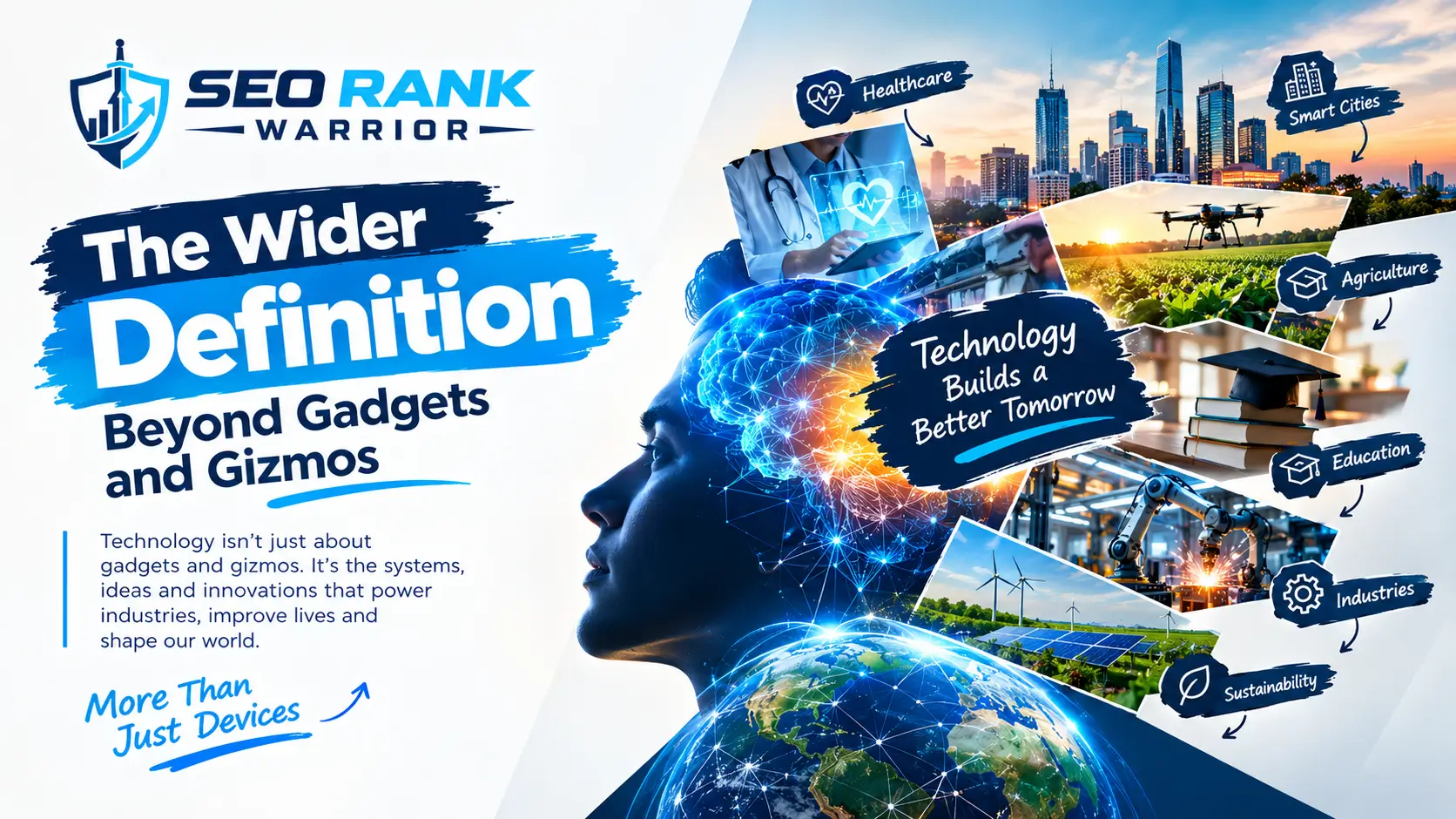
Here’s where things get genuinely interesting. Some thinkers argue that if you define technology strictly as physical tools, you’re missing most of what actually counts. Under a wider definition, technology includes anything humans have invented and refined to achieve a specific end which opens the door to some surprising inclusions.
Things you might not usually think of as technology
- Laws and legal systems invented, refined, and applied to achieve organized social cohesion
- Language a system built and refined over generations to transmit information
- Processes and methods from assembly lines to management frameworks
- Institutions things like modern education systems or even marriage, which function as systems with a purpose, built and adapted over time
This wider lens treats technology less as “things you can hold” and more as any system humans have deliberately shaped to serve a purpose. It’s a controversial way to look at it, but it holds up surprisingly well once you start applying it the modern education system, for instance, is just as engineered, refined, and purpose-built as any piece of machinery, even though nobody would call a classroom “technology” at first glance.
Technology vs. Science vs. Engineering

These three words get tangled together constantly, so it’s worth untangling them.
| Term | Core Focus |
| Science | Understanding how the natural world works |
| Engineering | Designing solutions to specific technical problems |
| Technology | The resulting tools, systems, and knowledge that come from applying both |
Why they’re not interchangeable
- Science asks “how does this work?” it’s about discovery and explanation
- Engineering asks “how do we build this?” it’s about applying principles to solve a defined problem
- Technology is the output the tools, systems, and accumulated knowledge that result from that process over time
Engineering is closely tied to technology but isn’t identical to it engineering is more about the process of solving problems, while technology is often the output of that process, or the accumulated body of tools and knowledge that results from it over time.
The Defining Characteristic: Constant Change
If there’s one thing nearly every serious definition of technology agrees on, it’s this: technology never sits still. It’s always evolving, and it tends to build on what came before rather than appearing out of nowhere.
The Ford Model T effect
A good historical example is the Ford Model T. It wasn’t the first car, but it was the first mass-produced, standardized, affordable one, and that combination triggered a chain reaction:
- Standardization combined with new manufacturing methods drove costs down
- Lower costs meant higher production volumes
- Higher volumes meant factory wages could rise
- Rising wages meant the very workers building the cars could eventually afford to buy them
One technological shift reshaped an entire economic pattern around it. This pattern technology building on itself, then reshaping the systems around it shows up again and again throughout history, right up through the internet, mobile computing, and now AI.
Categories of Technology

Technology tends to get grouped into a few broad categories, though the lines blur more than people expect a smartphone, for instance, is simultaneously information technology, communication technology, and arguably a piece of manufacturing technology given how it’s produced.
- Information technology computers, software, networks, and the systems that store and move data
- Industrial and manufacturing technology machines and processes used to produce goods at scale
- Communication technology from written language and the printing press to telephones and the internet
- Biotechnology and medical technology tools and techniques applied to biological systems and healthcare
- Energy technology everything from fire and the steam engine to solar panels and nuclear power
Each category has its own pace of change too. Energy technology, for example, tends to shift over decades because it requires massive infrastructure. Information technology, by contrast, can transform in a matter of months a gap that partly explains why some industries feel like they’re evolving faster than others.
Why the Definition of Technology Actually Matters
This might sound like a purely academic debate, but how you define technology shapes real decisions.
Who actually relies on this definition
- Policymakers need a working definition to decide how to regulate AI, biotech, and emerging tools.
- Businesses depend on it to determine what counts as R&D investment or innovation spend.
- Educators use it to design curricula that prepare students for a changing technical landscape.
It also shapes how people think about progress. If technology is only “gadgets,” then something like a well-designed legal system or an effective educational method doesn’t register as innovation even though both were deliberately engineered to solve real human problems, the same way a smartphone was.
Where AI Fits Into the Definition

Artificial intelligence has arguably pushed the definition of technology further than anything before it and its physical footprint, including the water and energy it draws from data centers, is part of that story too.
How AI is different from earlier technologies
- Earlier technologies mostly extended physical or communicative ability a hammer extends the hand, a telephone extends the voice.
- AI extends aspects of reasoning and decision-making itself, not just physical capability.
- This raises genuinely new questions about where the line between “tool” and “independent actor” actually sits.
That question how far artificial general intelligence could theoretically go is still actively debated among researchers, and it’s a good example of how the definition of technology keeps having to stretch to keep up with what humans actually build.
FAQs – What Is Technology?
What is the simplest definition of technology?
Technology is the practical application of knowledge and skill to create tools, systems, or methods that solve problems or achieve specific goals.
Is technology the same thing as science?
No. Science is about understanding how the natural world works, while technology is about applying that understanding or accumulated practical knowledge to build something useful.
Can something non-physical, like a law or a language, be considered technology?
Under the wider definition used by some researchers and philosophers, yes anything deliberately invented and refined by humans to achieve a specific end can qualify as technology, not just physical objects.
What are the main types of technology?
Common categories include information technology, industrial/manufacturing technology, communication technology, biotechnology, and energy technology, though many modern innovations span more than one category.
Why does technology keep changing so quickly?
Technological change tends to build on previous knowledge and experience the more that’s learned and applied, the faster new combinations and improvements emerge, which is why technological progress tends to accelerate rather than stay linear.
Conclusion
Technology is a lot bigger than the devices in our pockets. At its core, it’s the application of human knowledge and skill toward practical ends whether that shows up as a smartphone, a legal system, or a centuries-old farming method. Understanding that broader definition doesn’t just satisfy curiosity; it changes how we think about innovation, regulation, and where tools like AI actually fit into humanity’s long, ongoing relationship with the things we build to solve our problems.