
Think about the last time you needed a plumber, a dentist, or a good place to eat nearby. Chances are, you didn’t flip through a phone book; you searched Google, glanced at the map results, and picked one of the top three. That split-second decision is exactly what local SEO is fighting to influence.
If your business serves customers in a specific city or neighborhood, showing up in that moment isn’t optional anymore. It’s the difference between a customer walking through your door and walking into a competitor’s instead, often without you ever knowing you lost them.
This guide breaks down what local SEO actually means, how Google decides which businesses to show, and the practical steps you can take to start ranking higher in your area, including how local search is evolving in the age of AI.
What Is Local SEO?
Local SEO, short for local search engine optimization, is the practice of optimizing your online presence so your business shows up when people nearby search for what you offer. Rather than competing for national attention, it focuses on winning visibility in one specific city, neighborhood, or service area your area.
When someone searches “dentist near me” or “best coffee shop in Lahore,” Google doesn’t simply hand over any relevant website. It runs those queries through a local algorithm that decides which businesses earn a spot in the map results and the organic listings underneath. Local SEO is everything you do on your Google Business Profile, your website, and across the wider web to convince that algorithm your business belongs in the answer.
Traditional SEO chases broad, high-volume keywords aimed at a national or global audience. Local SEO plays a different game entirely: a smaller, sharper battlefield made up of customers who are close enough, and ready enough, to actually walk in or pick up the phone.
How Does Google Decide Local Rankings?
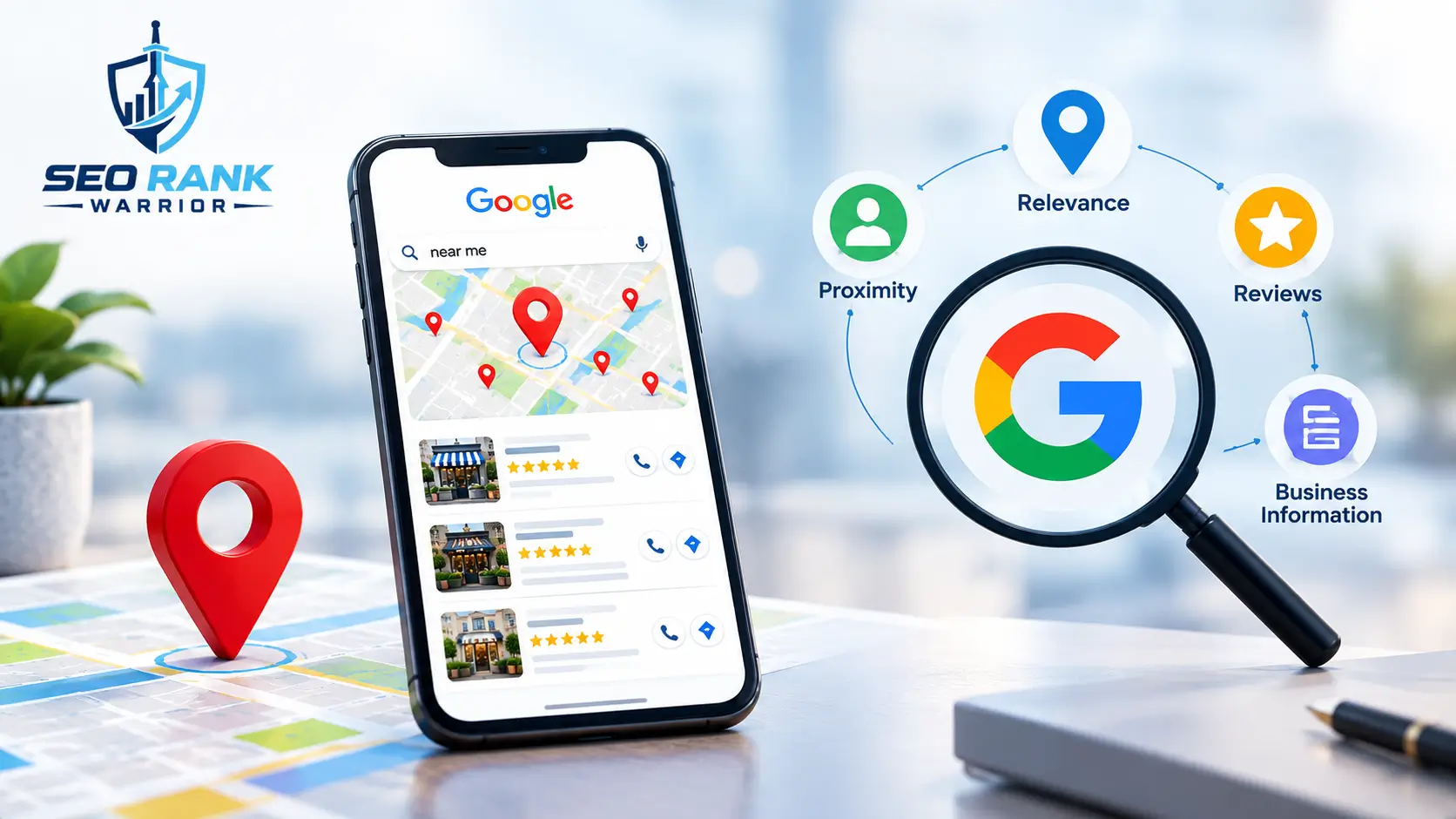
Google weighs every local business against three core pillars. Get a handle on these, and the rest of local SEO starts to make a lot more sense.
Relevance asks a simple question: does your business actually match what the searcher wants? Google looks at your Google Business Profile category, your business description, your website content, and how clearly you explain what you do.
Distance is about how close your business sits to the searcher, or to the location named in their query. It’s the one pillar you can’t write your way around, but you can make sure your address and service areas are represented accurately everywhere they appear.
Prominence measures how well-known and trusted your business is. Think online reviews, backlinks from credible sites, press mentions, and general brand authority. A business with hundreds of solid reviews and consistent citations will usually beat out a newer competitor, even when both are equally relevant and close by.
None of these pillars work alone. A business that’s relevant and nearby but has no reviews and a half-finished profile will still struggle to rank.
Local SEO vs Traditional SEO: What’s the Difference?
Both disciplines aim to improve visibility in search engines, but they play by different rules:
- Target audience: Traditional SEO targets a broad, often national or global audience. Local SEO targets people within a defined geographic radius.
- Search intent: Local searches carry immediate, transactional intent, “plumber near me,” while traditional searches skew informational, like “how to fix a leaking pipe.”
- Ranking signals: Traditional SEO leans heavily on domain authority, backlinks, and content depth. Local SEO adds Google Business Profile optimization, NAP (name, address, phone) consistency, local citations, and proximity into the mix.
- Where you show up: Traditional SEO aims for standard organic rankings. Local SEO targets the map pack, Google Maps, and localized organic results.
In practice, the two overlap constantly. A strong local SEO strategy still needs solid technical SEO and quality content; it just applies them with a local lens.
Why Local SEO Matters for Your Business
Local search isn’t a niche channel anymore; it’s how most people decide where to spend their money nearby. Nearly half of all Google searches carry local intent, and most of them happen on a phone, often minutes before someone walks into a store or picks up the phone to call.
Skip local SEO, and a competitor a few streets over captures that customer instead, usually without you ever realizing you lost the sale. Beyond visibility, a solid local SEO presence tends to deliver:
- More foot traffic and phone calls from nearby, ready-to-buy customers
- Higher trust, since a complete profile with strong reviews signals legitimacy
- Better conversion rates, because local searchers are often further along in their buying decision
- A cost-effective alternative (or complement) to paid local advertising
For small and mid-sized businesses competing against bigger national brands, local SEO levels the playing field. You don’t need to be the best business in the country, just the best one in your service area, something we’ve seen play out in the results of local clients we’ve worked with.
How to Do Local SEO: Key Strategies
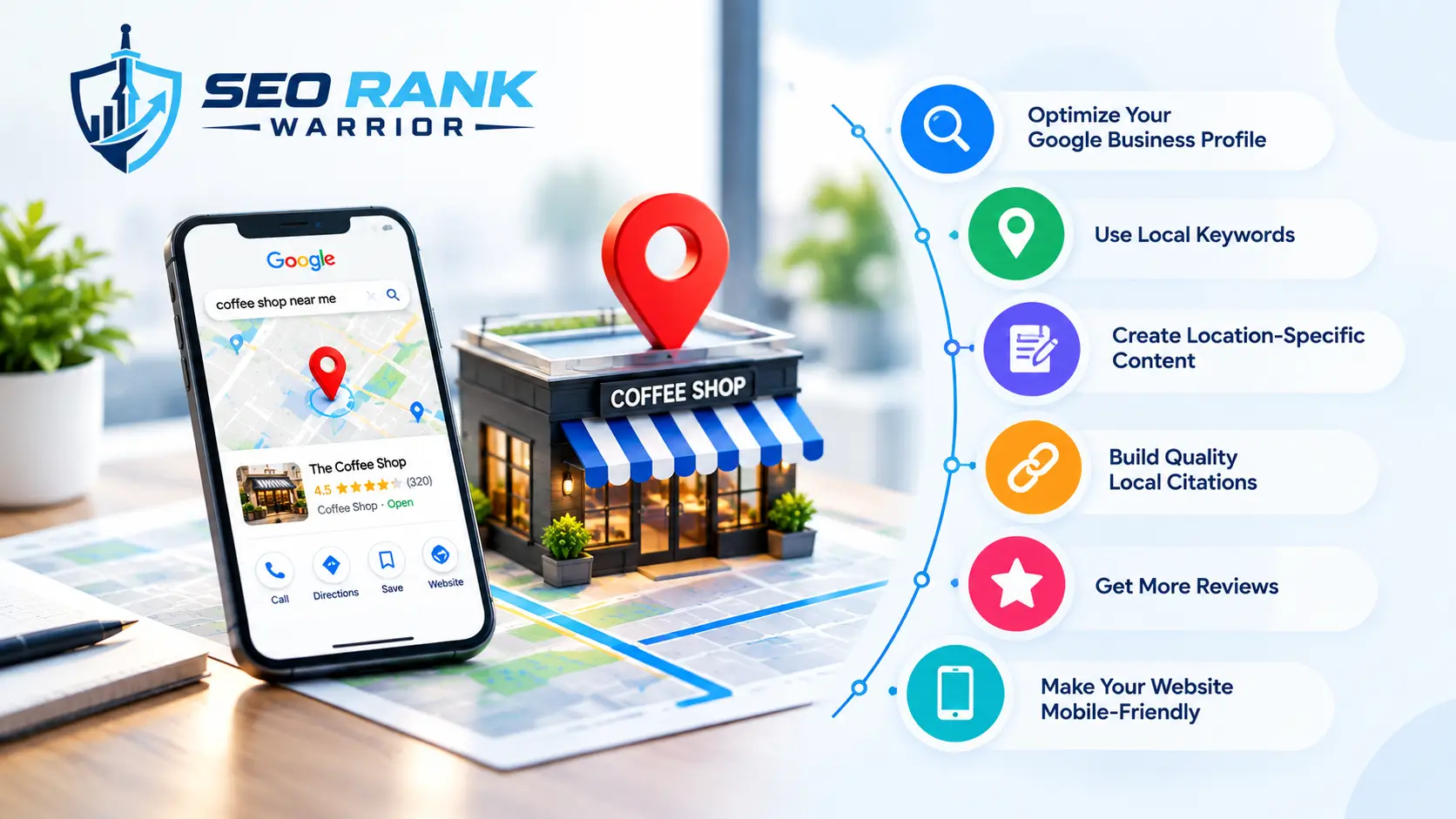
1. Claim and optimize your Google Business Profile.
This is non-negotiable. Verify your profile, choose the most accurate categories, keep your hours updated, add fresh photos, and write a clear, keyword-relevant business description.
2. Do local keyword research.
Identify the terms your customers actually search for- think “emergency electrician in [city]” rather than just “electrician.” Use Google’s autocomplete, related searches, and your Business Profile’s search-term insights to refine your list.
3. Build consistent local citations.
Make sure your business name, address, and phone number are identical across every directory, listing site, and social profile. Inconsistencies confuse both search engines and customers.
4. Optimize your website for local intent.
Add location-specific landing pages if you serve multiple areas, embed a Google Map, include local schema markup, and naturally weave in your target keywords across titles, headers, and body content work that usually comes down to how your website is built and maintained.
5. Earn and manage reviews.
Reviews influence both rankings and buyer trust. Ask satisfied customers for feedback, respond to every review, good or bad, professionally, and never buy or fake reviews, which can get your listing suspended.
6. Build local links.
Partnerships with local organizations, sponsorships, and mentions in local press or community sites all strengthen your prominence signal.
7. Track your performance.
Use Google Business Profile insights, Google Search Console, and Google Analytics to monitor which local keywords are driving traffic, calls, and direction requests then double down on what’s working.
Local SEO in the Age of AI Search
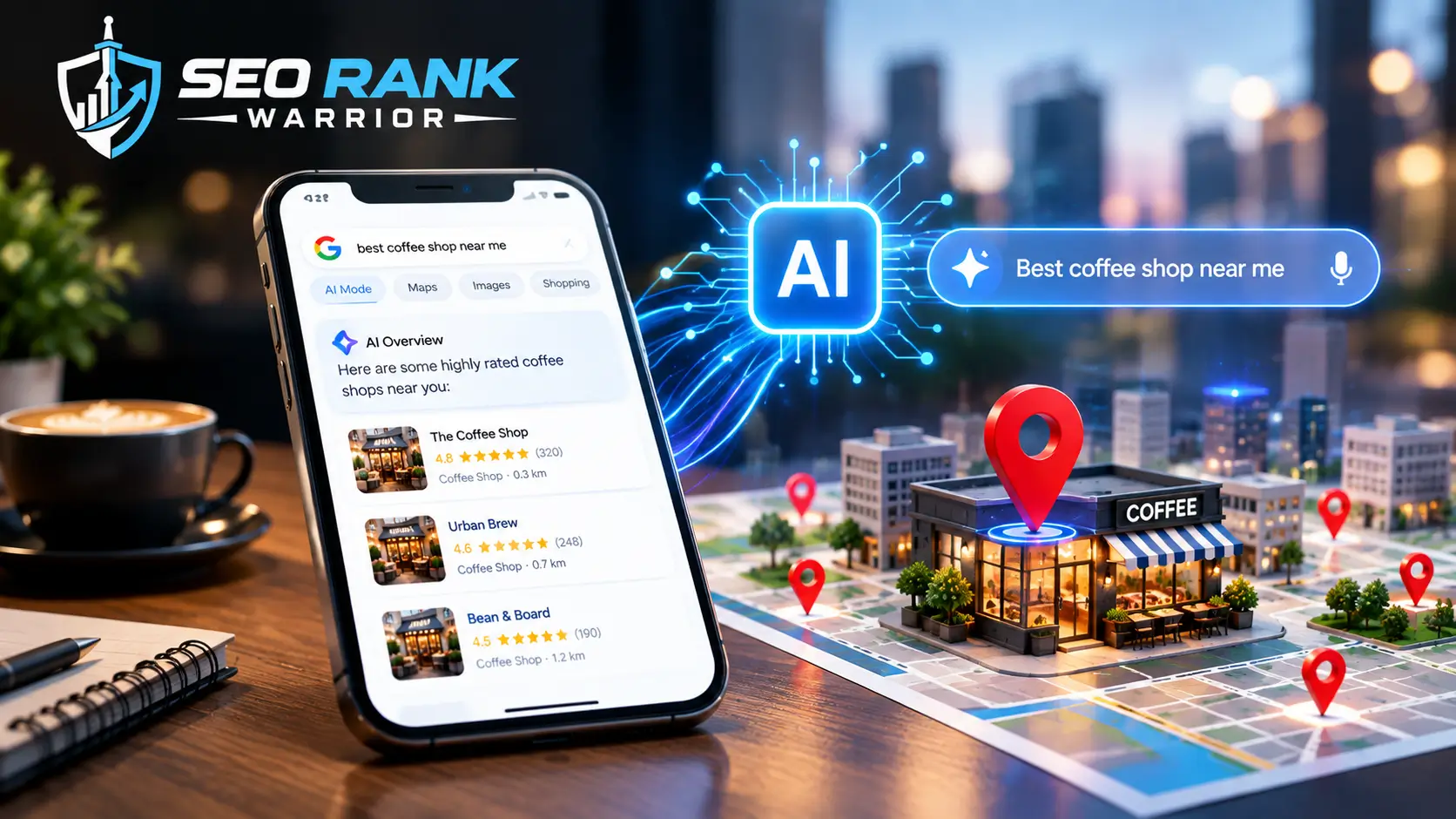
Search is changing faster than it has in years. Google’s AI Overviews and AI Mode now summarize answers right on the results page, and tools like ChatGPT and Perplexity are becoming real discovery channels for local businesses. That shift means local SEO now overlaps with answer engine optimization (AEO) and generative engine optimization (GEO), making sure your business information is structured clearly enough for AI systems to understand, trust, and recommend.
Here’s the reassuring part: the fundamentals haven’t moved. AI tools lean on the same signals Google’s local algorithm has always rewarded: a complete, verified Business Profile, consistent citations, and a steady stream of recent, credible reviews. The businesses AI search trusts most are simply the ones that got the basics right and kept doing them well. No shortcut replaces that.
Common Local SEO Mistakes to Avoid
Even businesses that genuinely invest in local SEO often trip over the same avoidable issues:
- Leaving your Google Business Profile incomplete or unverified
- Using inconsistent NAP details across directories
- Duplicating the same content across multiple location pages
- Ignoring negative reviews instead of responding professionally
- Targeting only broad keywords while skipping local, long-tail variations
- Treating local SEO as a one-time task instead of an ongoing process
Avoiding these missteps often creates faster visibility gains than any single advanced tactic.
FAQs – What Is Local SEO?
How long does local SEO take to show results?
Most businesses start seeing movement in local rankings within three to six months, though this varies based on how competitive your industry and area are. Established businesses in less competitive markets often see faster results.
Can a business without a physical storefront use local SEO?
Yes. Service-area businesses like plumbers, cleaners, or mobile technicians can set a service area on their Google Business Profile instead of a public address, and still rank for the areas they serve.
Do I need a website to rank in local search?
Not strictly; a business can technically appear in local results with just a verified Google Business Profile. But a website significantly strengthens relevance and trust, and it’s where most local content and keyword optimization happens.
Does local SEO cost money?
Many core tasks, claiming your profile, requesting reviews, and basic citation building are free and can be done in-house. Larger efforts like technical SEO, content creation, and link building may require paid tools or professional help.
How is local SEO different from running Google Ads?
Local SEO builds organic, long-term visibility without a per-click cost, while Google Ads buys immediate placement at the top of results for as long as you’re paying. Many businesses use both together ads for quick wins, SEO for sustainable growth.
Conclusion
At its core, local SEO is about being findable by the customers who are already looking for you, right in your own backyard. It ties your Google Business Profile, website, citations, reviews, and local content into one connected effort, and it rewards patience and consistency far more than it rewards shortcuts.
Start with the basics: a verified profile, accurate business details everywhere they appear, and a steady flow of genuine reviews. Then build on that with local keyword research and location-focused content, and keep an eye on what’s actually driving calls and visits. Stay consistent, and you won’t just show up in traditional local search; you’ll be visible in the AI-powered results that are increasingly shaping how customers find businesses like yours.