
Dog shedding is a normal part of maintaining a healthy coat, but constant fur on your furniture, clothes, floors, and bedding can become frustrating. The amount a dog sheds depends on factors such as breed, coat type, season, age, and overall health. Some dogs naturally shed much more than others, especially those with dense double coats.
You cannot completely stop a healthy dog from shedding, but you can usually manage and reduce the amount of loose hair around your home. A consistent grooming routine, suitable bathing, balanced nutrition, good parasite control, and attention to skin health can make a noticeable difference.
Why Do Dogs Shed So Much?
Before learning how to stop dog shedding, it helps to understand why it happens.
Dogs naturally shed old or damaged hair so new hair can grow. Seasonal changes in daylight and temperature can also influence the shedding cycle. Dogs with thick double coats may have particularly heavy shedding periods during spring and fall, while some short-haired dogs shed smaller amounts throughout the year.
Breed and coat type are also important. A Golden Retriever, German Shepherd, Husky, or similar double-coated breed will generally produce more loose hair than a dog whose coat grows continuously and sheds very little.
Indoor living can also make shedding seem more consistent throughout the year because indoor dogs experience relatively stable temperatures and artificial lighting.
The goal, therefore, is not to eliminate a natural biological process. The practical goal is to remove loose hair before it ends up throughout your home and to address anything that may be causing abnormal hair loss.
Can You Completely Stop a Dog From Shedding?
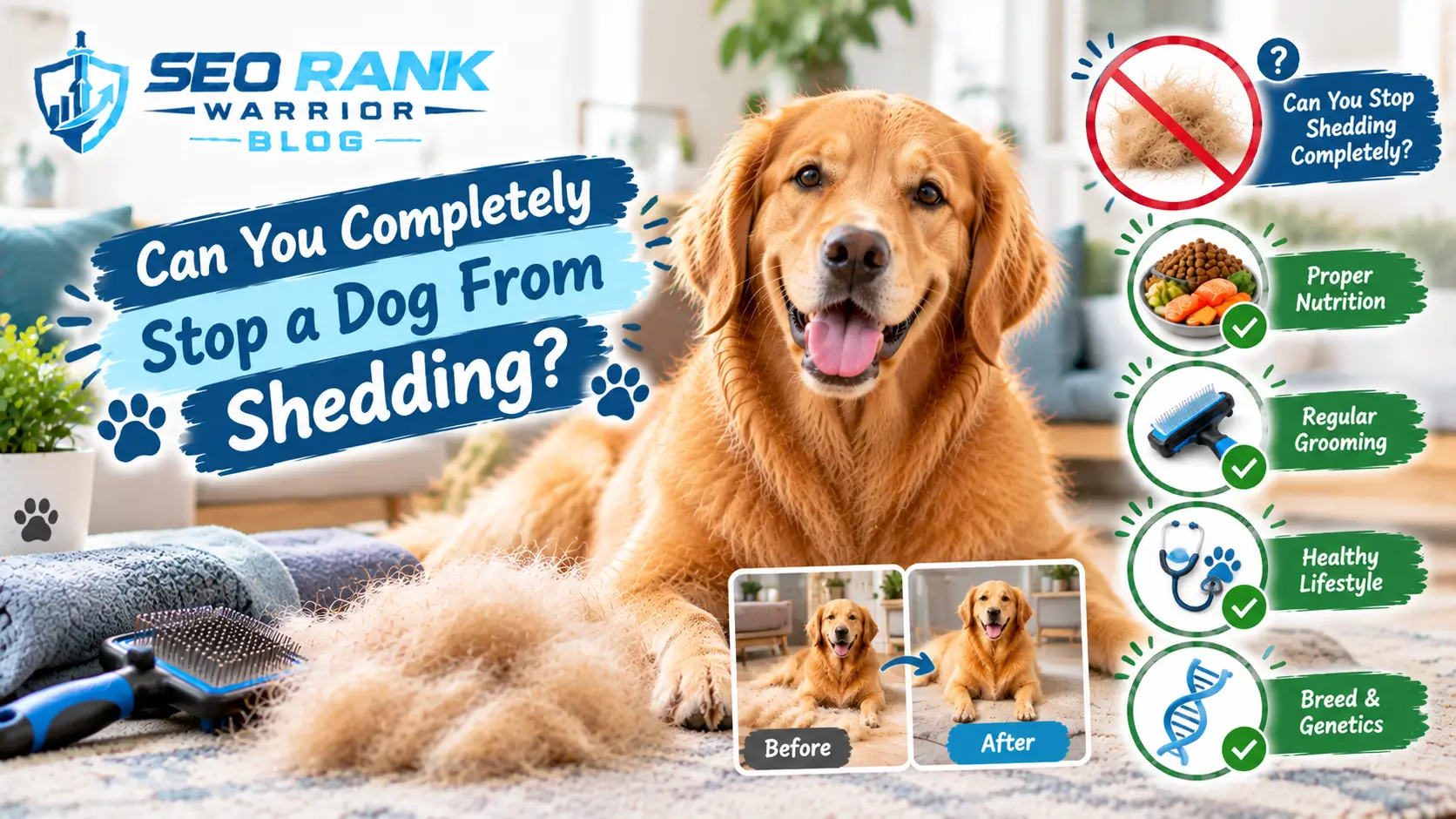
No. There is no safe method that can completely stop normal shedding.
Hair growth naturally involves periods in which old hairs are released from the coat. Trying to prevent this process completely is neither realistic nor necessary. Instead, regular grooming helps capture loose hair before it falls onto carpets, furniture, and clothing.
If your dog suddenly starts losing much more hair than usual, however, the situation may be different. Excessive shedding accompanied by bald patches, irritated skin, itching, scaling, or other coat changes can indicate an underlying health problem.
Build a Grooming Routine Around Your Dog’s Coat
One of the most effective ways to reduce dog shedding is regular brushing.
The right schedule depends on your dog’s coat. Some dogs may benefit from brushing several times a week, while heavy shedders may need daily grooming during peak shedding periods. Long or dense coats generally require more attention than short coats.
Brushing helps remove loose and dead hair while it is still attached to the coat. It can also help distribute natural oils through the hair, keeping the coat in better condition.
A simple routine might look like this:
- Short coat: regular brushing several times a week
- Long coat: frequent brushing to prevent tangles and remove loose hair
- Double coat: more intensive grooming during heavy shedding seasons
- Curly or continuously growing coat: consistent grooming to prevent mats
Your dog’s individual needs matter more than following a fixed schedule.
Choose the Right Brush for Your Dog
Using the wrong grooming tool can make brushing less effective and may irritate your dog’s skin.
For short-haired dogs, bristle brushes, rubber curry brushes, or grooming gloves can help collect loose hair. For long-haired or double-coated dogs, slicker brushes, undercoat rakes, and appropriate de-shedding tools may be more useful.
The brush should match the type of coat your dog actually has without scraping or damaging the skin.
When brushing:
- Start gently and allow your dog to become comfortable.
- Work through tangles carefully instead of pulling them.
- Use gentle pressure.
- Pay attention to areas where loose hair collects.
- Stop if your dog shows signs of pain or significant discomfort.
For heavily matted coats, professional grooming may be safer than attempting to remove severe mats yourself.
Does Bathing Reduce Dog Shedding?
Bathing can help remove loose hair, dead skin cells, dirt, and dander from the coat. It can therefore be useful as part of a broader shedding-management routine.
However, more bathing is not automatically better.
Overbathing or using inappropriate products can irritate the skin, potentially making coat problems worse. Use a shampoo formulated for dogs rather than human shampoo, and choose the bathing frequency based on your dog’s coat, skin condition, lifestyle, and veterinary advice.
Some dogs with particular skin conditions may require more frequent medicated bathing, but that should be guided by a veterinarian.
Feed Your Dog a Complete and Balanced Diet
Nutrition has an important connection with skin and coat health.
A dog’s hair is largely made of protein, while the skin and coat also require appropriate fats, essential fatty acids, vitamins, and minerals. Nutritional deficiencies can contribute to a dry, dull coat and hair loss. A complete and balanced diet helps provide the nutrients needed for normal skin and hair maintenance.
If you are wondering how to stop dog shedding through diet, avoid assuming that adding random supplements is the answer.
Instead:
- Feed a complete and balanced dog food appropriate for your dog’s life stage.
- Avoid unnecessary diet changes.
- Discuss homemade diets with a veterinary nutrition professional.
- Ask your veterinarian before adding supplements.
- Look at the overall condition of your dog’s skin and coat rather than focusing only on shedding.
Omega-3 fatty acids such as EPA and DHA can support skin health and may help with inflammation in dogs with certain skin conditions, but supplementation should be appropriate for the individual dog.
Keep Your Dog Hydrated
Adequate hydration supports overall health, including healthy skin.
Make sure your dog has access to fresh, clean water throughout the day. If you are concerned that your dog is not drinking enough, speak with your veterinarian rather than trying to solve the issue with supplements or home remedies.
Hydration alone will not stop normal shedding, but it is one part of maintaining healthy skin and coat condition.
Control Fleas, Ticks, and Other Parasites
Parasites can contribute to skin irritation and hair loss.
Fleas, mites, and other external parasites may cause itching, scratching, inflammation, and damaged hair. Some dogs can develop significant skin reactions even from relatively small exposures.
If your dog is scratching frequently or losing hair in specific areas, inspect the skin and contact your veterinarian. Hair loss caused by parasites will not be solved simply by brushing more often. The underlying problem needs to be identified and treated.
Keeping your dog’s parasite-prevention program current is therefore an important part of maintaining a healthy coat.
Could Allergies Be Causing Excessive Shedding?
Allergies can affect the skin and coat and may lead to itching, scratching, inflammation, and hair loss.
Dogs may react to environmental allergens or, less commonly, certain food ingredients. When allergies are involved, you may notice more than loose hair. Signs can include persistent itching, licking, redness, recurrent ear problems, or changes in the skin.
If your dog’s shedding is accompanied by these symptoms, treating the shedding alone will not address the underlying issue.
A veterinarian can help determine whether allergies, parasites, infection, nutrition, or another condition may be contributing to the problem.
Manage Seasonal Shedding Before It Gets Out of Control
Many dogs experience heavier shedding during seasonal coat changes.
Spring and fall can be particularly noticeable for dogs with thick coats. During these periods, increasing the frequency of brushing can help remove loose undercoat before it spreads around your home.
Instead of waiting until your furniture is covered in fur, prepare for heavier shedding by:
- Brushing more frequently.
- Scheduling grooming when appropriate.
- Washing bedding regularly.
- Vacuuming high-traffic areas more often.
- Keeping grooming tools accessible.
- Checking the skin regularly for irritation or parasites.
This approach manages the hair at its source rather than trying to clean it all after it has fallen.
How to Reduce Dog Hair Around Your Home
Even with excellent grooming, some loose hair will still end up around the house.
You can make cleanup easier by creating a routine around the areas where your dog spends the most time.
Wash dog bedding regularly and use washable covers on favorite furniture. Vacuum floors, rugs, and upholstery consistently, especially during heavy shedding periods. Lint rollers and pet-hair removal tools can also be useful for clothing and fabric surfaces.
The key is consistency. Removing a small amount of hair regularly is usually easier than allowing several days of accumulated fur to build up.
Should You Shave a Dog to Stop Shedding?
Shaving is not a universal solution for shedding.
For many double-coated breeds, the coat has important functions related to insulation and protection. Removing the coat does not necessarily solve the biological reason the dog sheds.
Some dogs may require clipping for specific grooming or medical reasons, but coat removal should be based on the individual dog’s needs and handled appropriately. Ask your veterinarian or a qualified groomer before making major changes to your dog’s coat.
If your dog has a thick double coat, avoid assuming that shaving is the easiest way to control fur.
When Is Dog Shedding a Health Concern?
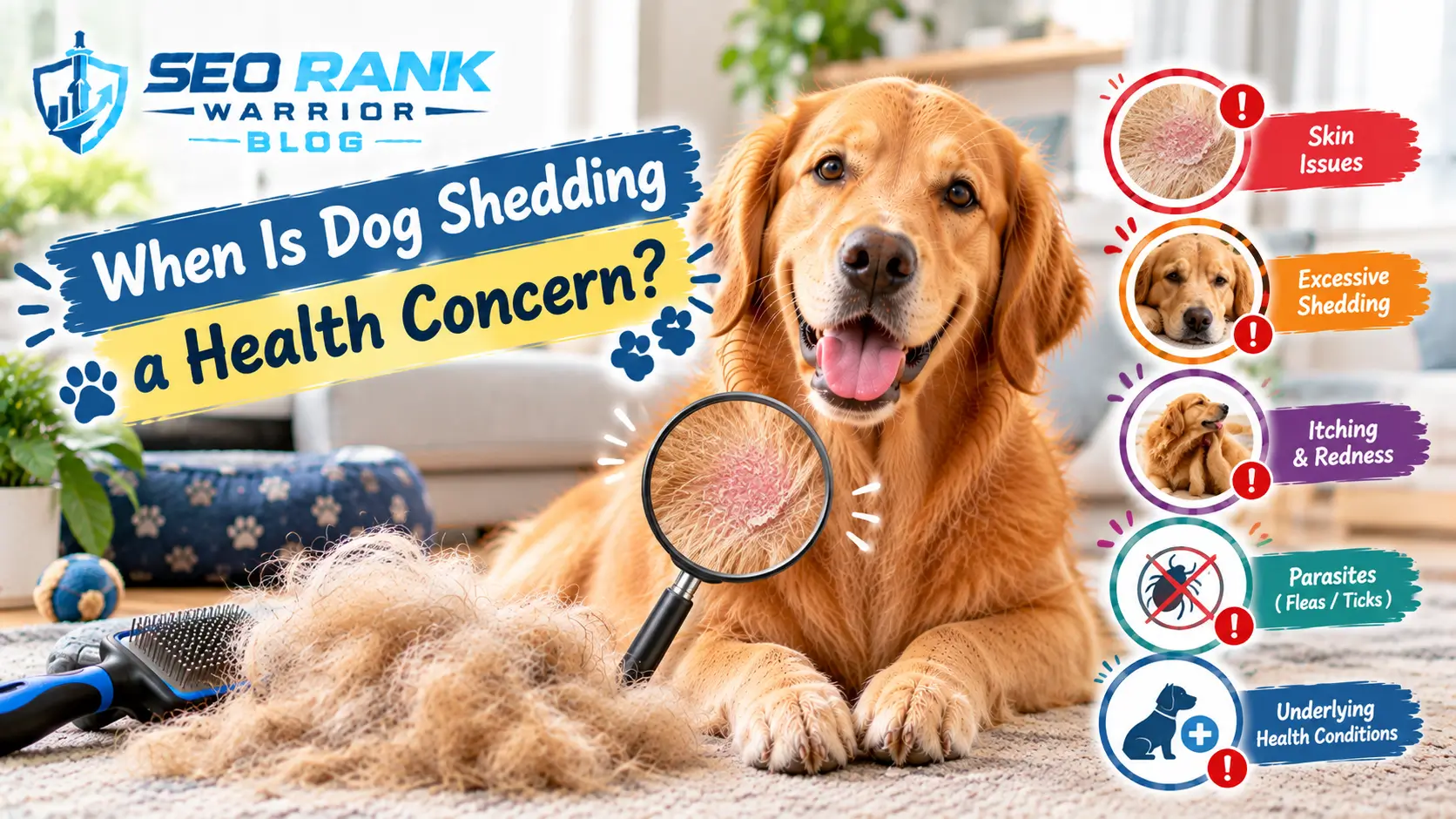
Normal shedding usually does not create bald areas or obvious skin disease.
You should speak with a veterinarian if shedding is accompanied by:
- Bald patches
- Sudden or dramatic hair loss
- Red or inflamed skin
- Persistent itching
- Excessive licking or scratching
- Dandruff or heavy scaling
- Greasy or unusually dry skin
- Skin odor
- Sores or crusts
- Changes in coat texture
- Hair loss concentrated in particular areas
Medical conditions including allergies, parasites, infections, hormonal disorders, and other skin problems can affect the hair coat. Merck Veterinary Manual notes that abnormal shedding becomes more concerning when it is associated with obvious coat loss or bald spots.
A veterinarian may need to examine the skin, coat, and overall health to determine the cause.
How to Stop Dog Shedding Naturally and Safely
There is no single home remedy that works for every dog.
The safest approach is to support normal skin and coat health instead of trying to suppress shedding itself. That means regular grooming, proper nutrition, adequate hydration, parasite prevention, appropriate bathing, and prompt attention to unusual skin changes.
Be cautious with internet remedies that recommend adding oils, supplements, or unusual ingredients to your dog’s diet without professional guidance. A product that is safe for one dog may not be appropriate for another, particularly if the dog has an existing health condition.
If shedding is excessive or has changed suddenly, finding the cause is more important than simply trying to collect more hair.
A Simple Dog Shedding Routine
For most owners, a practical routine can be easier to maintain than an elaborate grooming plan.
Daily:
Check your dog’s coat and skin for obvious changes, particularly if your dog is experiencing heavy shedding or itching.
Several times a week:
Brush according to your dog’s coat type and remove loose hair before it reaches your furniture and floors.
As needed:
Bathe your dog with an appropriate canine shampoo according to their grooming and skin-care needs.
Year-round:
Provide a complete and balanced diet, fresh water, parasite prevention, and routine veterinary care.
During heavy shedding seasons:
Increase brushing and home cleaning temporarily if your dog’s coat requires it.
This routine can significantly improve hair management without trying to interfere with the natural shedding cycle.
FAQs – How to Stop Dog Shedding
How can I stop my dog from shedding so much?
You cannot completely stop normal shedding, but you can reduce loose hair with regular brushing, appropriate bathing, good nutrition, parasite control, and proper coat care. The exact routine should match your dog’s breed and coat type.
What is the best way to reduce dog hair in the house?
Regular brushing is one of the most useful ways to remove loose hair before it reaches your home. Vacuuming frequently, washing bedding, and using hair-removal tools on furniture can further reduce visible dog hair.
Does bathing a dog help with shedding?
Yes, appropriate bathing can help loosen and remove dead hair, skin cells, dirt, and dander. However, excessive bathing or inappropriate shampoo can irritate the skin, so bathing should be based on your dog’s individual needs.
Do supplements stop dogs from shedding?
Supplements do not automatically stop normal shedding. Nutrients such as omega-3 fatty acids can support skin health in appropriate situations, but your veterinarian should determine whether supplementation is necessary and suitable for your dog.
When should I worry about my dog’s shedding?
Contact your veterinarian if shedding suddenly becomes much heavier or occurs with bald patches, itching, redness, sores, scaling, or other changes in the skin and coat. These signs can indicate an underlying medical problem rather than normal shedding.
Conclusion
Learning how to stop dog shedding starts with understanding that normal shedding cannot and should not be eliminated. The goal is to manage loose hair while keeping your dog’s skin and coat healthy.
Regular brushing, appropriate bathing, balanced nutrition, hydration, parasite prevention, and consistent home cleaning can make shedding much easier to manage. If the amount of hair loss changes suddenly or comes with skin problems, itching, or bald patches, focus on finding the underlying cause with your veterinarian rather than simply looking for another shedding product.