
Cybersecurity has become an important career field as businesses, governments, and individuals depend on digital systems for everyday operations. From protecting customer information to detecting cyberattacks and securing cloud environments, cybersecurity professionals help organizations reduce risks and respond to threats.
If you are wondering how to get into cybersecurity, you do not necessarily need to begin with an advanced technical background. A practical combination of IT fundamentals, cybersecurity knowledge, hands-on projects, relevant certifications, and experience can help you build a path into the industry.
What Does It Mean to Get Into Cyber Security?
Getting into cybersecurity means developing the knowledge and skills needed to protect computers, networks, applications, cloud environments, identities, and data from security threats.
Cybersecurity is not one single job. It includes many different work roles, from security operations and vulnerability analysis to incident response, governance, cloud security, and security engineering.
The NIST NICE Framework provides a useful way to understand this variety. It describes cybersecurity work through tasks, knowledge, skills, work roles, and competency areas, helping learners and job seekers understand what different cybersecurity careers actually require.
That means your first goal should not be to learn every cybersecurity topic. Instead, identify a career direction and build the skills that support it.
Is Cybersecurity a Good Career?

Yes, cybersecurity can be a strong career choice for people who enjoy technology, problem-solving, investigation, and continuous learning.
One reason is the wide range of career paths available. You could work in a security operations center, cloud security, penetration testing, vulnerability management, incident response, governance, risk, and compliance, or security engineering.
Cybersecurity can also provide opportunities to move between technical and managerial positions as your experience grows.
However, it is important to have realistic expectations. Cybersecurity is not simply a career where earning one certification automatically leads to a high-paying job. Employers often look for practical ability, communication skills, problem-solving, and an understanding of the systems that security professionals are expected to protect.
NIST also emphasizes that there are many different pathways into and through cybersecurity rather than one universal career route.
Is Cybersecurity Hard for Beginners?
Is cybersecurity hard? It can be challenging, but the difficulty depends heavily on your starting point and the role you choose.
A beginner may initially need to learn networking, operating systems, authentication, security controls, vulnerabilities, logs, and basic scripting. That can feel overwhelming when everything is new.
The good news is that you do not need to master everything at once.
Start with a small foundation:
- Learn how computer networks work.
- Understand Windows and Linux basics.
- Learn common cybersecurity threats.
- Understand authentication and access control.
- Study basic security concepts.
- Practice reading logs.
- Learn how common security tools work.
- Build small practical projects.
Your knowledge will become easier to organize once you choose a specific cybersecurity career.
Learn the Cybersecurity Fundamentals
Before specializing, build a foundation in information technology and security.
Networking
Understand concepts such as:
- IP addresses
- TCP and UDP
- DNS
- HTTP and HTTPS
- Ports and protocols
- Firewalls
- VPNs
- Routing
- Network segmentation
Networking knowledge is particularly valuable for security monitoring and incident investigation because many attacks leave evidence in network traffic.
Operating Systems
Learn how Windows and Linux work. You should understand users, permissions, processes, files, services, system logs, and basic command-line operations.
Linux is especially useful because many security tools and server environments rely on it.
Security Fundamentals
Learn about:
- Malware
- Phishing
- Ransomware
- Vulnerabilities
- Authentication
- Authorization
- Encryption
- Access control
- Security monitoring
- Incident response
- Risk management
These fundamentals provide the foundation for more specialized cybersecurity skills.
Choose a Cybersecurity Career Path
There are many cybersecurity careers, so choosing a direction early can make your learning more focused.
Cybersecurity Analyst
A cybersecurity analyst monitors systems, investigates suspicious activity, analyzes security alerts, and helps organizations respond to threats.
This can be a practical starting point for people interested in security operations.
SOC Analyst
Security Operations Center analysts focus heavily on monitoring alerts, investigating events, analyzing logs, and escalating incidents.
Cybersecurity Engineer
Cybersecurity engineers typically work on designing, implementing, and improving security controls and technologies.
Penetration Tester
Penetration testers assess systems and applications for weaknesses using authorized security testing techniques.
Security Consultant
A cybersecurity consultant may help organizations assess risks, improve security programs, implement controls, or address specific security challenges.
GRC Professional
Governance, risk, and compliance roles focus more heavily on policies, risk management, regulations, audits, controls, and security governance.
Cloud Security Professional
Cloud security specialists focus on protecting cloud infrastructure, identities, applications, data, and configurations.
The important point is that cybersecurity careers are diverse. You can choose a technical, analytical, governance-focused, or hybrid path depending on your interests.
Build Practical Cybersecurity Skills
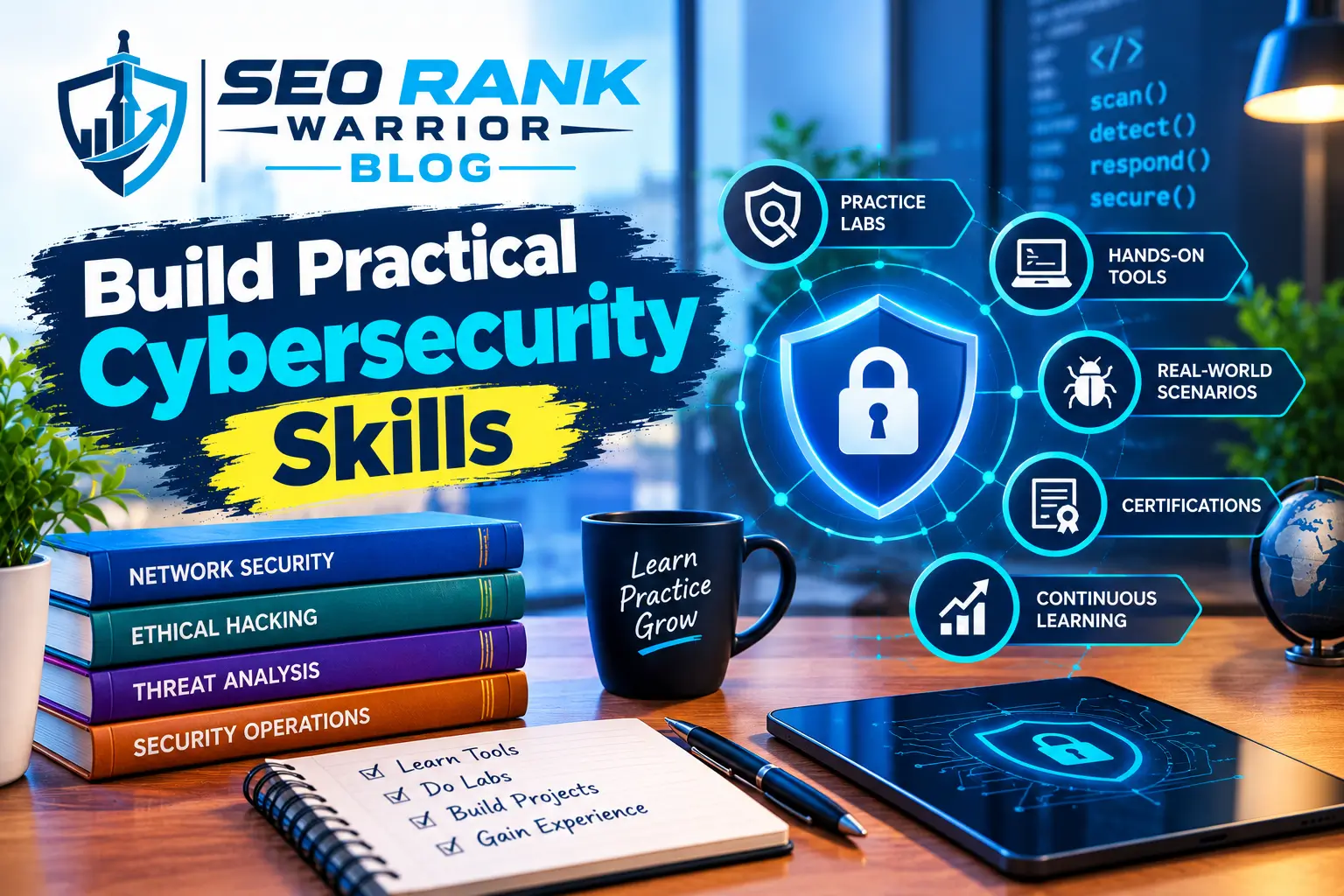
One of the best ways to become more employable is to move beyond theory.
Create a small home lab using virtual machines and practice activities such as:
- Configuring a Linux system
- Reviewing authentication logs
- Setting up basic network monitoring
- Investigating simulated security alerts
- Performing vulnerability scans in an authorized lab
- Analyzing suspicious files in a safe environment
- Practicing incident-response scenarios
- Creating simple security documentation
Hands-on practice gives you something concrete to discuss during interviews.
You can also use structured cyber-career resources to explore work roles and related skill requirements. CISA’s Cyber Career Pathways tools, for example, connect different cybersecurity work roles and show related skill sets and career movement.
Get Cybersecurity Certifications
Certifications can help demonstrate structured knowledge, especially when you have limited professional experience.
For beginners, the right certification depends on your career target. General cybersecurity certifications can provide foundational knowledge, while specialized credentials may make more sense after you understand your chosen field.
Cloud security is one example. The Cloud Security Alliance’s CCSK is designed around cloud-security knowledge and currently covers areas including cloud architecture, governance, risk, compliance, Zero Trust, DevSecOps, security analytics, and AI-related security topics.
Other learning paths may focus on:
- General cybersecurity fundamentals
- Networking
- Cloud security
- Penetration testing
- Security operations
- Governance and compliance
Do not collect certifications simply to make your CV longer. Choose credentials that support the role you want and combine them with practical experience.
Can You Get Into Cybersecurity Without Experience?
Yes, but you need to compensate for the lack of professional experience by demonstrating relevant knowledge and practical ability.
One common approach is to start in an adjacent IT position. Roles such as IT support, systems administration, networking, or technical support can help you understand the systems that cybersecurity teams protect.
You can then move toward security-focused responsibilities.
Another route is to create a portfolio that demonstrates what you can actually do. Your portfolio might include:
- Home-lab projects
- Security reports
- Vulnerability assessments
- Network-analysis exercises
- Detection rules
- Incident-response write-ups
- Security documentation
- Capture-the-Flag achievements
The goal is to make your skills visible rather than simply claiming that you know cybersecurity.
Current career guidance also emphasizes skills development, projects, internships, certifications, and adjacent IT experience as potential routes into cybersecurity.
How to Build a Cybersecurity Resume
A cybersecurity resume should make your relevant skills easy to identify.
Start with a concise professional summary explaining the type of security role you are targeting.
Then highlight:
Technical skills:
Networking, Linux, Windows, SIEM, vulnerability scanning, cloud platforms, scripting, identity management, or other relevant technologies.
Certifications:
List relevant completed certifications and training.
Projects:
Explain what you built, tested, analyzed, or investigated.
Experience:
Include IT, technical, academic, freelance, internship, volunteer, or other experience that demonstrates transferable skills.
Instead of writing only “knowledge of cybersecurity,” explain what you actually did.
For example, a project could describe how you configured a lab environment, analyzed authentication events, identified suspicious activity, and documented your findings.
How to Get a Cybersecurity Job
Once you have foundational knowledge and some practical experience, start applying strategically.
Search for titles such as:
- Junior Cybersecurity Analyst
- SOC Analyst
- Security Analyst
- Information Security Analyst
- Junior Security Engineer
- Vulnerability Analyst
- IT Security Specialist
- Security Operations Analyst
- GRC Analyst
Do not restrict your search to jobs containing the word “cybersecurity.” Some security-related roles use different titles.
Also look for internships, apprenticeships, graduate positions, IT support roles, and networking or systems positions that can lead toward cybersecurity.
Prepare for interviews by practicing both technical and behavioral questions. Employers may ask you to explain how you would investigate a suspicious login, respond to a phishing alert, prioritize vulnerabilities, or troubleshoot a security problem.
Communication matters too. Security professionals frequently need to explain technical issues to managers, users, developers, and other teams.
How to Get a Cyber Security Job in Scotland 2026
If your target is Scotland, your job search should combine cybersecurity skills with an understanding of the UK employment market.
When searching for how to get a cyber security job in Scotland 2026, focus on the skills requested by actual vacancies rather than relying only on generic career advice.
Look across major Scottish employment centers and search for roles in areas such as:
- Security operations
- Cybersecurity analysis
- Cloud security
- Penetration testing
- Digital forensics
- Security engineering
- Governance, risk, and compliance
- Information security
Cities such as Edinburgh and Glasgow can be important locations to investigate, but do not limit yourself to city-center positions. Check remote and hybrid opportunities as well.
For Scotland-specific applications, make your CV relevant to UK job descriptions. Highlight practical experience, recognized certifications, technical skills, and your ability to work with security processes and documentation.
You should also research employers individually because requirements can vary significantly between financial services, technology companies, consultancies, government organizations, universities, and other sectors.
The broader cybersecurity workforce model is also useful here. NIST’s NICE Framework is designed to describe cybersecurity work through standardized tasks, knowledge, skills, and work roles, making it useful when comparing your capabilities with job descriptions.
How Long Does It Take to Get Into Cybersecurity?
There is no universal timeline.
Someone with networking, programming, systems administration, or IT experience may progress faster than someone starting from zero.
A reasonable learning progression might look like:
First 1–3 months:
Build IT, networking, operating-system, and cybersecurity fundamentals.
Months 3–6:
Choose a specialization, build labs, practice tools, and complete relevant learning or certification preparation.
Months 6–12:
Build a stronger portfolio, apply for entry-level roles, gain experience, and continue developing specialized skills.
These are learning milestones rather than guarantees of employment. Your timeline depends on your existing knowledge, study time, career target, location, and ability to gain practical experience.
Common Mistakes Beginners Should Avoid
Trying to Learn Everything
Cybersecurity is too broad to master all at once. Pick a direction and build depth gradually.
Collecting Certifications Without Practice
A long certification list does not replace hands-on skills. Build projects alongside your studies.
Ignoring IT Fundamentals
Security professionals need to understand the technologies they are protecting. Networking, operating systems, identity, and cloud fundamentals are valuable foundations.
Applying Only for Cybersecurity-Titled Jobs
Your first security-related opportunity may come through IT support, networking, systems administration, compliance, or another adjacent role.
Having No Portfolio
If you have little professional experience, projects can demonstrate initiative and technical ability.
Focusing Only on Technical Skills
Security work also requires communication, documentation, critical thinking, teamwork, and the ability to explain risk.
A Step-by-Step Cybersecurity Career Roadmap
If you want a simple answer to how to get into cybersecurity, follow this roadmap:
Step 1: Learn IT fundamentals.
Understand networking, operating systems, hardware, software, and basic troubleshooting.
Step 2: Learn cybersecurity fundamentals.
Study threats, vulnerabilities, authentication, encryption, security controls, and incident response.
Step 3: Choose a career direction.
Decide whether you are more interested in SOC operations, security engineering, cloud security, penetration testing, GRC, or another area.
Step 4: Build hands-on experience.
Use labs, projects, simulations, and authorized security-testing environments.
Step 5: Earn relevant certifications.
Choose certifications that support your selected career path.
Step 6: Build your portfolio and CV.
Show employers what you can actually do.
Step 7: Apply for entry-level and adjacent roles.
Search broadly and consider IT positions that can provide a route into security.
Step 8: Keep learning.
Cybersecurity changes continuously, so professional development does not stop after your first job.
NIST’s cybersecurity career resources reinforce this idea: there are multiple entry points and career pathways rather than one fixed route into the profession.
FAQs – How to Get Into Cybersecurity
Is cybersecurity hard to get into?
Cybersecurity can be challenging because it requires technical knowledge and continuous learning. However, beginners can make the process manageable by starting with IT fundamentals, choosing one career path, and developing practical skills step by step.
Is cybersecurity a good career?
Cybersecurity can be a strong career for people who enjoy technology, investigation, problem-solving, and continuous learning. It offers multiple technical and non-technical career paths, allowing professionals to specialize and progress over time.
How long does it take to get into cybersecurity?
The timeline varies based on your existing experience and target role. A beginner may spend several months developing fundamentals and practical skills before becoming competitive for entry-level opportunities.
Can I get into cybersecurity without a degree?
Yes. A degree can be valuable for certain positions, but it is not the only route. Certifications, practical projects, IT experience, technical skills, and demonstrable knowledge can also help candidates enter the field.
What is the best cybersecurity career for beginners?
There is no single best option. SOC analyst, junior security analyst, IT security, vulnerability analysis, and some GRC roles can provide accessible starting points depending on your existing skills and interests.
Conclusion
Learning how to get into cyber security is less about finding one perfect course and more about building a practical career path.
Start with IT and networking fundamentals, learn core security concepts, choose a specialization, practice in safe environments, and build evidence of your skills through projects. Certifications can strengthen your profile, but practical ability and relevant experience are equally important.